



We protect your health through science
Investigation
Viral Biology
Research Lines
Content with Investigacion .
Inmunología Microbiana e Inmunogenética
1. Análisis de la respuesta innata de mamíferos en la infección por Leishmania.
2. Caracterización inmunoproteómica en :
a. Streptococcus suis
b. Lactococcus garviae
c. Mycobacterium spp
3. Desarrollo de inmunoensayos analíticos basados en anticuerpos monoclonales (AcM) para detectar y cuantificar antígenos de origen animal, vegetal y microbiano.
4. Desarrollo y caracterización de AcM frente a los componentes del sistema del Complemento. Aplicación diagnóstica.
5. Desarrollo de reactivos de referencia y diseño de inmunoensayos para la evaluación cualitativa y cuantitativa de toxinas clostridiales.
6. Oferta tecnológica de producción de AcM y policlonales frente a substancias de interés industrial y biomédico.
El grupo está interesado en el estudio de la respuesta inmune desde una perspectiva multidisciplinar que incluye aproximaciones bioquímicas, biotecnológicas, genómicas, inmunoinformáticas y proteómicas, que junto con el uso adicional de modelos in vivo se encaminan al diseño de estrategias terapéuticas frente a diversas enfermedades crónicas, infecciosas y raras que poseen un claro componente inmunológico en su etiología.
Las principales líneas de investigación que está desarrollando el grupo en la actualidad son:
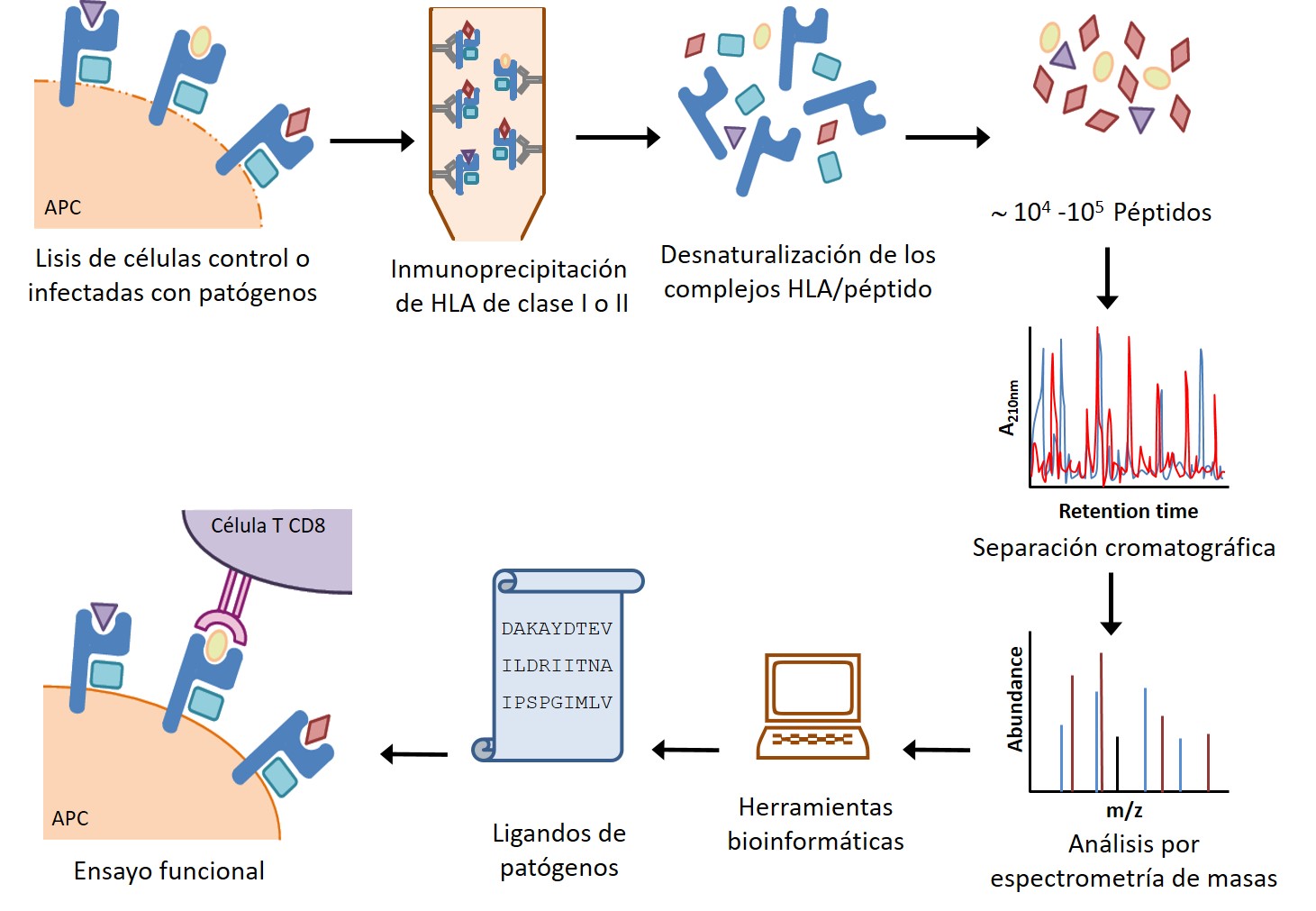
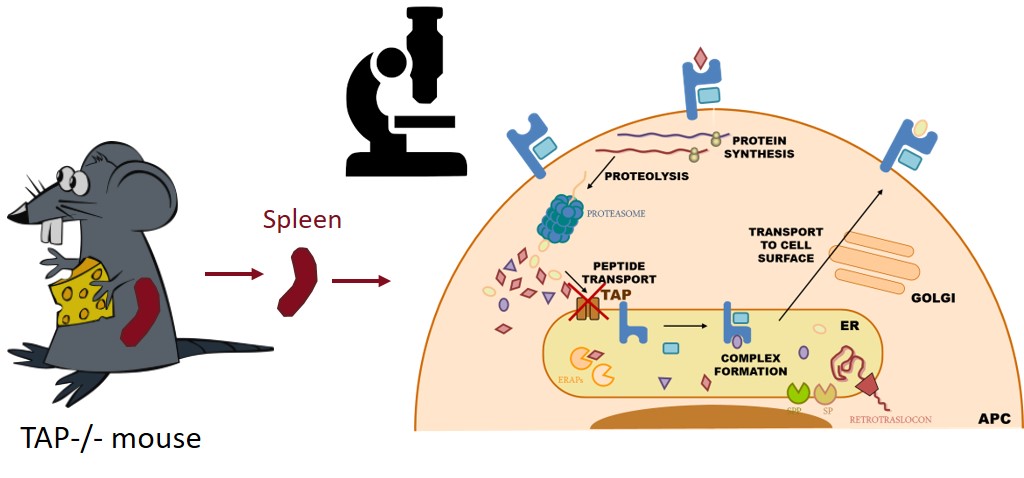
- * Análisis de las respuestas inmunes celulares frente a patógenos virales y bacterianos, mediante técnicas inmunoproteómicas, modelos in vivo con animales transgénicos y muestras humanas.
- * Caracterización de CD69: regulación génica, función reguladora inmune en homeostasis e infección y su uso como diana terapéutica, edición génica por CRISPR en modelos animales y celulares, etc.

* Desarrollo de herramientas inmunoinformáticas que permitan analizar la respuesta inmune celular frente a diversos virus de interés sanitario y determinar la eficacia de sus vacunas a nivel de población mundial.

* Estudio de las respuestas inmunes celulares frente a enfermedades raras (artritis reactiva y síndrome del linfocito desnudo) y crónicas (espondiloartropatías).
* Inclusión de componentes del sistema inmune en la fabricación de tejidos humanos, especialmente piel, para uso clínico, farmacéutico y cosmético.
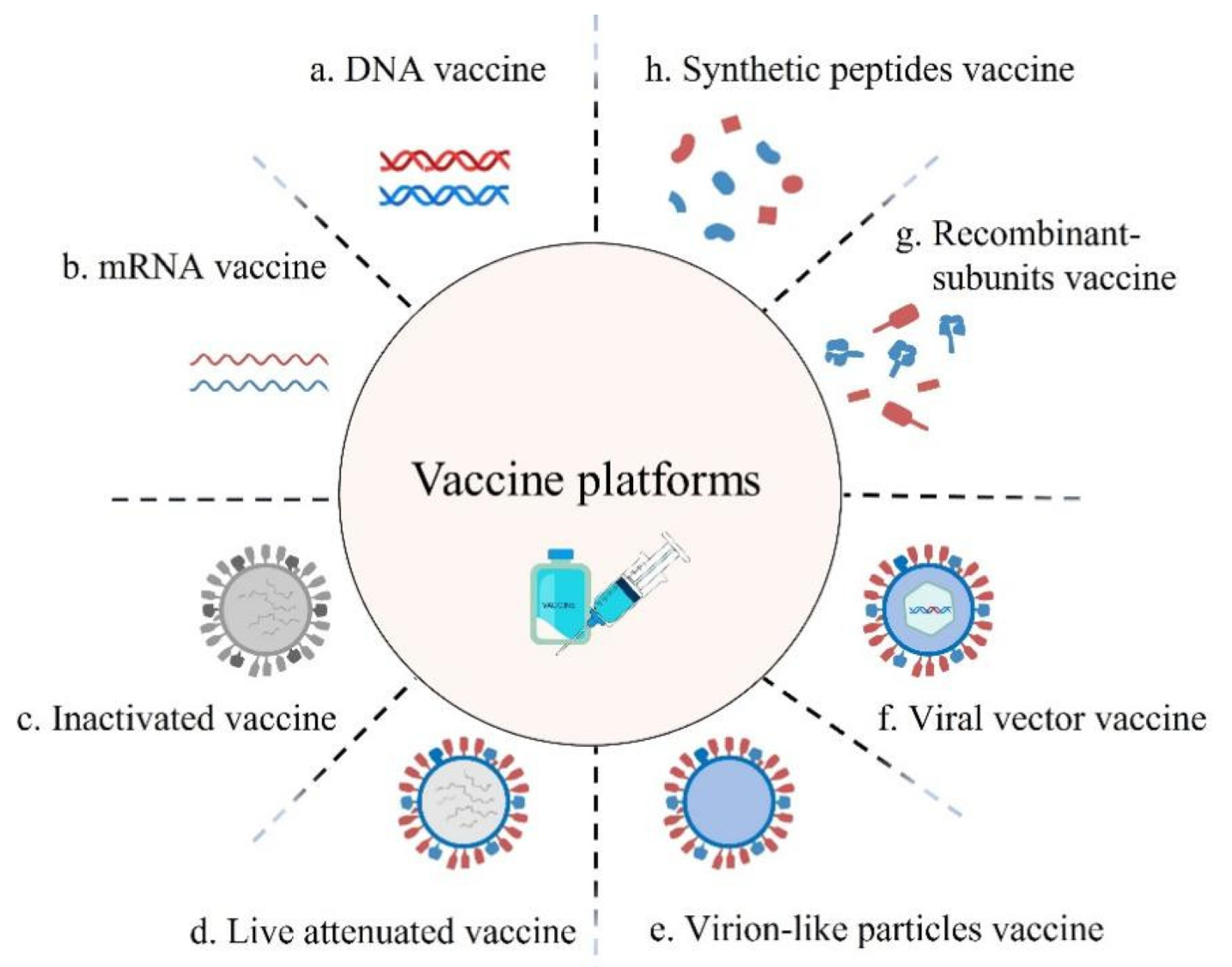
- * Generación de virus recombinantes como vectores vacunales.
Research projects
Content with Investigacion .
Los proyectos del grupo de los últimos años son los siguientes:
Proyecto “La interrelación de CD69 y el procesamiento antigénico en enfermedades infecciosas y autoinmunes" financiado por la Acción Estratégica en Salud del Ministerio de Ciencia, Innovación y Universidades. Año: 2023-2025.
Proyecto “Interacciones génicas y proteicas de CD69 y sus regiones génicas reguladoras con moléculas" financiado por la AEI. Año: 2022-2024.

Proyecto “Nuevas tecnologías de fabricación y optimización de tejidos: la piel como sistema modelo” financiado por el Programa de Actividades de I+D entre grupos de investigación de la Comunidad de Madrid en tecnologías 2018. Año: 2020-2023. Proyecto Coordinado por el Dr. Pablo Acedo de la Universidad Carlos III.
Proyecto “Estudio de CD69 como diana para mejorar el tratamiento de la leucopania y la movilización de células T de memoria de médula ósea" financiado por la Acción Estratégica en Salud del Ministerio de Ciencia, Innovación y Universidades. Año:2020-2024.
Proyecto “Diseño racional de una vacuna contra el virus respiratorio sincitial humano” financiado por la Acción Estratégica en Salud del Ministerio de Ciencia, Innovación y Universidades. Año: 2019-2022
Proyecto “Función de CD69 y sus elementos reguladores" financiado por la Acción Estratégica en Salud del Ministerio de Ciencia, Innovación y Universidades. Año: 2017-2022.
Proyecto “Diseño de vacunas recombinantes poliepitópicas para generar respuestas CD8+ contra virus emergentes” financiado por el Plan Nacional de I+D+i del Ministerio de Economía y Competitividad. Año: 2015-2017.
Proyecto “Análisis de los efectos de CD69 dependientes de S1P1 en modelos de infección e inflamación y estudio de su regulación” financiado por el FIS. Año: 2014-2017.
Proyecto “ADELVAC: Adenovirus con delecciones epitópicas para vacunación” financiado por el programa INNPACTO del Ministerio de Economía y Competitividad. Centro Nacional de Microbiología, Instituto de Salud Carlos III. Año: 2012-2014. Proyecto Coordinado por el Dr. Manel Cascallo de VCN BIOSCIENCES SL.
Proyecto “Diseño de vacunas multiepitópicas recombinantes para aumentar la respuesta inmune celular contra el VRSH” financiado por el Plan Nacional de I+D+i del Ministerio de Ciencia e Innovación. Año: 2012-2014.
Publications
Epidemiology of the Acinetobacter-derived cephalosporinase, carbapenem-hydrolysing oxacillinase and metallo-beta-lactamase genes, and of common insertion sequences, in epidemic clones of Acinetobacter baumannii from Spain
Villalón P, Valdezate S, Medina-Pascual MJ, Carrasco G, Vindel A, Saez-Nieto JA. Epidemiology of the Acinetobacter-derived cephalosporinase, carbapenem-hydrolysing oxacillinase and metallo-beta-lactamase genes, and of common insertion sequences, in epidemic clones of Acinetobacter baumannii from Spain. J Antimicrob Chemother. 2013;68(3):550-3.
PUBMED DOIShortcomings of the commercial MALDI-TOF MS database and use of MLSA as an arbiter in the identification of Nocardia species
Carrasco G, de Dios Caballero J, Garrido N, Valdezate S, Cantón R, Sáez-Nieto JA. Shortcomings of the commercial MALDI-TOF MS database and use of MLSA as an arbiter in the identification of Nocardia species. Front Microbiol. 2016 21;7:542.
PUBMED DOIKinetics of the invasion and egress processes of Babesia divergens, observed by time-lapse video microscopy.
Sevilla E; González LM; Luque D; Gray J; Montero E. 2018. Kinetics of the invasion and egress processes of Babesia divergens, observed by time-lapse video microscopy. Scientific Reports. 8:14116.DOI: 10.1038/s41598-018-32349-7
PUBMED DOIMisdiagnosis of Babesiosis as Malaria, Equatorial Guinea, 2014.
2. Arsuaga M; González LM; Salvador Padial E; Woubshet Dinkessa A; Sevilla E; Trigo E; Puente S; Gray J; Montero E. 2018. Misdiagnosis of Babesiosis as Malaria, Equatorial Guinea, 2014. Emerging Infectious Diseases.24-8, pp.1588-1589.
PUBMED DOIA fatal case of Babesia divergens infection in Northwestern Spain
3. Asensi V; González LM; Fernández-Suárez J; Sevilla E; Navascués RÁ; Suárez ML; Lauret ME; Bernardo A; Carton JA; Montero E. 2018. A fatal case of Babesia divergens infection in Northwestern Spain. Ticks Tick Borne Dis.9-3, pp.730-734.
PUBMED DOIFirst report of Babesia microti-caused babesiosis in Spain.
Arsuaga M*; Gonzalez LM*; Lobo CA; Calle F; Bautista JM; Azcárate IG; Puente S; Montero E. 2016. First report of Babesia microti-caused babesiosis in Spain. Vector Borne Zoonotic Dis.16-10, pp.677-679. (*)= contribuyeron igualmente en este trabajo.
PUBMED DOIThe efficacy of the ultraviolet C pathogen inactivation system in the reduction of Babesia divergens in pooled buffy coat platelets
Castro E, González LM, Rubio JM, Ramiro R, Gironés N, Montero E. 2014. The efficacy of the ultraviolet C pathogen inactivation system in the reduction of Babesia divergens in pooled buffy coat platelets. Transfusion. 54(9): 2207-2216.
PUBMED DOIPneumoviridae fusion proteins as immunogens to induce cross-neutralizing antibody responses
Olmedillas E, Cano O, Martinez I, Luque D, Terron MC, McLellan JS, et al. Chimeric Pneumoviridae fusion proteins as immunogens to induce cross-neutralizing antibody responses. EMBO Mol Med. 2018;10(2):175-87.
PUBMED DOIHigh-Quality Draft Genome of Babesia divergens, the Etiological Agent of Cattle and Human Babesiosis.
8. Cuesta I; González LM; Estrada K; Grande R; Zaballos A; Lobo CA; Barrera J; Sanchez-Flores A; Montero E. 2014. High-Quality Draft Genome of Babesia divergens, the Etiological Agent of Cattle and Human Babesiosis. Genome Announcement. 2: e01194-14.
PUBMED DOIHorizontal gene transmission of the cfr gene to MRSA and Enterococcus: role of Staphylococcus epidermidis as a reservoir and alternative pathway for the spread of linezolid resistance.
Horizontal gene transmission of the cfr gene to MRSA and Enterococcus: role of Staphylococcus epidermidis as a reservoir and alternative pathway for the spread of linezolid resistance. Cafini F, Nguyen le TT, Higashide M, Román F, Prieto J, Morikawa K. J Antimicrob Chemother. 2016 Mar;71(3):587-92.
PUBMEDEmergence of linezolid-resistant coagulase-negative staphylococci in an intensive care unit.
Emergence of linezolid-resistant coagulase-negative staphylococci in an intensive care unit. Balandin B, Lobo B, Orden B, Román F, García E, Martínez R, Valdivia M, Ortega A, Fernández I, Galdos P. Infect Dis (Lond). 2016;48(5):343-9.
PUBMEDClinical, microbiological, and molecular characterization of pediatric invasive infections by Streptococcus pyogenes in Spain in a context of global outbreak
Ramírez de Arellano E, Saavedra-Lozano J, Villalón P, Jové-Blanco A, Grandioso D, Sotelo J, Gamell A, González-López JJ, Cervantes E, Gónzalez MJ, Rello-Saltor V, Esteva C, Sanz-Santaeufemia F, Yagüe G, Manzanares Á, Brañas P, Ruiz de Gopegui E, Carrasco-Colom J, García F, Cercenado E, Mellado I, Del Castillo E, Pérez-Vazquez M, Oteo-Iglesias J, Calvo C; Spanish PedGAS-Net/CIBERINFEC GAS Study Group. Clinical, microbiological, and molecular characterization of pediatric invasive infections by Streptococcus pyogenes in Spain in a context of global outbreak. mSphere. 2024 Mar 26;9(3):e0072923
PUBMED DOICo-occurrence of the cephalosporinase cepA and carbapenemase cfiA genes in a Bacteroides fragilis division II strain, an unexpected finding
Valdezate S, Medina-Pascual MJ, Villalón P, Garrido N, Monzón S, Cuesta I, Cobo F (2024). Co-occurrence of the cephalosporinase cepA and carbapenemase cfiA genes in a Bacteroides fragilis division II strain, an unexpected finding. J Antimicrobial Chem. 2024 Jul 1;79(7):1683-1687
PUBMED DOIExploring the genetic background of the botulism neurotoxin BoNT/B2 in Spain
Valdezate S, Carrasco G, Medina MJ, Garrido N, Del Pino S, Valiente M, Pallarés MP, Villalon P. (2023). Exploring the genetic background of the botulism neurotoxin BoNT/B2 in Spain. Microbiol Spectr. Sep 26;11(5):e0238023
PUBMED DOIFocusing on Gordonia Infections: Distribution, Antimicrobial Susceptibilities and Phylogeny
Pino-Rosa S, Medina-Pascual MJ, Carrasco G, Garrido N, Villalón P, Valiente M, Valdezate S. (2023). Focusing on Gordonia Infections: Distribution, Antimicrobial Susceptibilities and Phylogeny. Antibiotics (Basel). 26;12(11):1568
PUBMED DOIBotulism in Spain: Epidemiology and Outcomes of Antitoxin Treatment, 1997-2019
Peñuelas M, Guerrero-Vadillo M, Valdezate S, Zamora MJ, Leon-Gomez I, Flores-Cuéllar Á, Carrasco G, Díaz-García O, Varela C. (2022). Botulism in Spain: Epidemiology and Outcomes of Antitoxin Treatment, 1997-2019. Toxins (Basel). 20;15(1):2
PUBMED DOIInvasive Streptococcus pyogenes disease in Spain: a microbiological and epidemiological study covering the period 2007-2019
Villalón P, Sáez-Nieto JA, Rubio-López V, Medina-Pascual MJ, Garrido N, Carrasco G, Pino-Rosa S, Valdezate S. (2021). Invasive Streptococcus pyogenes disease in Spain: a microbiological and epidemiological study covering the period 2007-2019. Eur J Clin Microbiol Infect Dis. 2021 Nov;40(11):2295-2303
PUBMED DOIRevisiting the Ancylostoma caninum secretome provides new information on hookworm-host interactions.
Morante T, Shepherd C, Constantinoiu C, Loukas A, Sotillo J. Revisiting the Ancylostoma caninum secretome provides new information on hookworm-host interactions. Proteomics. 2017 Dec;17(23-24).
PUBMED DOIHookworm secreted extracellular vesicles interact with host cells and prevent inducible colitis in mice.
Eichenberger RM, Ryan S, Jones L, Buitrago G, Polster R, Montes de Oca M, Zuvelek J, Giacomin PR, Dent LA, Engwerda CR, Field MA, Sotillo J, Loukas A. Hookworm secreted extracellular vesicles interact with host cells and prevent inducible colitis in mice. Front Immunol. 2018 Apr 30;9:850.
PUBMED DOIHDP2: a ribosomal DNA (NTS-ETS) sequence as a target for species-specific molecular diagnosis of intestinal taeniasis in humans.
Flores MD, Gonzalez LM, Hurtado C, Motta YM, Domínguez-Hidalgo C, Merino FJ, Perteguer MJ, Gárate T. HDP2: a ribosomal DNA (NTS-ETS) sequence as a target for species-specific molecular diagnosis of intestinal taeniasis in humans. Parasit Vectors. 2018 Feb 27;11(1):117. doi: 10.1186/s13071-018-2646-6.
PUBMED DOIAntibody responses to chimeric peptides derived from parasite antigens in mice and other animal species.
Orbegozo-Medina RA, Martínez-Sernández V, Folgueira I, Mezo M, González-Warleta M, Perteguer MJ, Romarís F, Leiro JM, Ubeira FM. Antibody responses to chimeric peptides derived from parasite antigens in mice and other animal species. Mol Immunol. 2018 Dec 17;106:1-11.
PUBMED DOIComparison of T24H-his, GST-T24H and GST-Ts8B2 recombinant antigens in western blot, ELISA and multiplex bead-based assay for diagnosis of neurocysticercosis.
Hernández-González A, Noh J, Perteguer MJ, Gárate T, Handali S. Comparison of T24H-his, GST-T24H and GST-Ts8B2 recombinant antigens in western blot, ELISA and multiplex bead-based assay for diagnosis of neurocysticercosis. Parasit Vectors. 2017 May 15;10(1):237.
PUBMED DOICharacterization of Trichuris muris secreted proteins and extracellular vesicles provides new insights into host-parasite communication.
Eichenberger RM, Talukder MH, Field MA, Wangchuk P, Giacomin P, Loukas A, Sotillo J. Characterization of Trichuris muris secreted proteins and extracellular vesicles provides new insights into host-parasite communication. J Extracell Vesicles. 2018 Jan 21;7(1):1428004.
PUBMED DOIEvaluation of onchocerciasis seroprevalence in Bioko Island (Equatorial Guinea) after years of disease control programmes.
Hernández-González A, Moya L, Perteguer MJ, Herrador Z, Nguema R, Nguema J, Aparicio P, Benito A, Gárate T. Evaluation of onchocerciasis seroprevalence in Bioko Island (Equatorial Guinea) after years of disease control programmes. Parasit Vectors. 2016 Sep 20;9(1):509.
PUBMED DOIChanges in protein expression after treatment with Ancylostoma caninum excretory/secretory products in a mouse model of colitis.
Sotillo J, Ferreira I, Potriquet J, Laha T, Navarro S, Loukas A, Mulvenna J. Changes in protein expression after treatment with Ancylostoma caninum excretory/secretory products in a mouse model of colitis. Sci Rep. 2017 Feb 13;7:41883.
PUBMED DOIFasciola spp: Mapping of the MF6 epitope and antigenic analysis of the MF6p/HDM family of heme-binding proteins.
Martínez-Sernández V, Perteguer MJ, Mezo M, González-Warleta M, Gárate T, Valero MA, Ubeira FM. Fasciola spp: Mapping of the MF6 epitope and antigenic analysis of the MF6p/HDM family of heme-binding proteins. PLoS One. 2017 Nov 21;12(11):e0188520.
PUBMED DOIAn alternative host model of a mixed fungal infection by azole susceptible and resistant Aspergillus spp strains
15. Alcazar-Fuoli L, Buitrago M, Gomez-Lopez A, Mellado E. An alternative host model of a mixed fungal infection by azole susceptible and resistant Aspergillus spp strains. Virulence. 2015;6(4):376-84. doi: 10.1080/21505594.2015.1025192. PMID: 26065322.
PUBMED DOIEffect of pneumococcal conjugate vaccines and SARS-CoV-2 on antimicrobial resistance and the emergence of Streptococcus pneumoniae serotypes with reduced susceptibility in Spain, 2004-20: a national surveillance study
Sempere J, Llamosí M, López Ruiz B, Del Río I, Pérez-García C, Lago D, Gimeno M, Coronel P, González-Camacho F, Domenech M, Yuste J. Effect of pneumococcal conjugate vaccines and SARS-CoV-2 on antimicrobial resistance and the emergence of Streptococcus pneumoniae serotypes with reduced susceptibility in Spain, 2004-20: a national surveillance study. Lancet Microbe. 2022 Oct;3(10):e744-e752.
PUBMED DOISeconeolitsine, the Novel Inhibitor of DNA Topoisomerase I, Protects against Invasive Pneumococcal Disease Caused by Fluoroquinolone-Resistant Strains
Tirado-Vélez JM, Carreño D, Sevillano D, Alou L, Yuste J, de la Campa AG. Seconeolitsine, the Novel Inhibitor of DNA Topoisomerase I, Protects against Invasive Pneumococcal Disease Caused by Fluoroquinolone-Resistant Strains. Antibiotics. 2021 May 13;10(5):573.
PUBMED DOIMinilungs from Human Embryonic Stem Cells to Study the Interaction of Streptococcus pneumoniae with the Respiratory Tract
Sempere J, Rossi SA, Chamorro-Herrero I, González-Camacho F, de Lucas MP, Rojas-Cabañeros JM, Taborda CP, Zaragoza Ó, Yuste J, Zambrano A. Minilungs from Human Embryonic Stem Cells to Study the Interaction of Streptococcus pneumoniae with the Respiratory Tract. Microbiol Spectr. 2022 Jun 29;10(3):e0045322
PUBMED DOIA national longitudinal study evaluating the activity of cefditoren and other antibiotics against non-susceptible Streptococcus pneumoniae strains during the period 2004-20 in Spain
Sempere J, González-Camacho F, Domenech M, Llamosí M, Del Río I, López-Ruiz B, Gimeno M, Coronel P, Yuste J. A national longitudinal study evaluating the activity of cefditoren and other antibiotics against non-susceptible Streptococcus pneumoniae strains during the period 2004-20 in Spain. J Antimicrob Chemother. 2022 Mar 31;77(4):1045-1051.
PUBMED DOINationwide Trends of Invasive Pneumococcal Disease in Spain From 2009 Through 2019 in Children and Adults During the Pneumococcal Conjugate Vaccine Era
de Miguel S, Domenech M, González-Camacho F, Sempere J, Vicioso D, Sanz JC, Comas LG, Ardanuy C, Fenoll A, Yuste J. Nationwide Trends of Invasive Pneumococcal Disease in Spain From 2009 Through 2019 in Children and Adults During the Pneumococcal Conjugate Vaccine Era. Clin Infect Dis. 2021 Dec 6;73(11):e3778-e3787
PUBMED DOIPulmonary BCG induces lung-resident macrophage activation and confers long-term protection against tuberculosis
7. Mata E, Tarancón R, Guerrero C, Moreo E, Moreau F, Uranga S, Gomez AB, Marinova D, Domenech M, Gonzalez-Camacho F, Monzon M, Badiola J, Dominguez-Andres J, Yuste J, Anel A, Peixoto A, Martin C, Aguilo N. Pulmonary BCG induces lung-resident macrophage activation and confers long-term protection against tuberculosis. Sci Immunol. 2021 Sep 24;6(63):eabc2934
PUBMED DOIVaccination with LytA, LytC, or Pce of Streptococcus pneumoniae Protects against Sepsis by Inducing IgGs That Activate the Complement System
Corsini B, Aguinagalde L, Ruiz S, Domenech M, Yuste J. Vaccination with LytA, LytC, or Pce of Streptococcus pneumoniae Protects against Sepsis by Inducing IgGs That Activate the Complement System. Vaccines. 2021 Feb 23;9(2):186.
PUBMED DOIAn increase in negative supercoiling in bacteria reveals topology-reacting gene clusters and a homeostatic response mediated by the DNA topoisomerase I gene
Ferrándiz MJ, Martín-Galiano AJ, Arnanz C, Camacho-Soguero I, Tirado-Vélez JM, de la Campa AG. 2016. Nucl Acids Res. 44:7292-7303 (2016).
PUBMED DOITyrosine kinase 2 modulates splenic B cells through type I IFN and TLR7 signaling.
Bodega-Mayor I, Delgado-Wicke P, Arrabal A, Alegría-Carrasco E, Nicolao-Gómez A, Jaén-Castaño M, Espadas C, Dopazo A, Martín-Gayo E, Gaspar ML, de Andrés B, Fernández-Ruiz E. Cell Mol Life Sci. 2024 Apr 29;81(1):199.
PUBMED DOI
Additional Information
The research activity of the Viral Biology group since its beginnings in the 1980s has focused on respiratory viruses, especially on the study of the mechanisms of virus entry into the cell, evolutionary aspects, antigenic properties and vaccine development.
Currently, the group's objectives are focused on the characterisation of the immune response and the development of vaccines against human pneumoviruses: human respiratory syncytial virus (hRSV) and human metapneumovirus (hMPV).
Both viruses are considered to be important respiratory pathogens of high clinical relevance, especially in the paediatric population.
Safe and effective vaccines against these viruses are currently not available. Soluble protein subunits based on the fusion protein (F-protein) of hRSV and hMPV are being developed in the laboratory by protein engineering for use as vaccines against human pneumoviruses.
On the other hand, and thanks to the characterisation of the type of humoral response induced by the F proteins of these viruses, the laboratory is also involved in the isolation of monoclonal antibodies and nanoantibodies for use as treatments against these viruses.
The research activity of the Viral Biology group since its beginnings in the 1980s has focused on respiratory viruses, especially on the study of the mechanisms of virus entry into the cell, evolutionary aspects, antigenic properties and vaccine development.
Currently, the group's objectives are focused on the characterisation of the immune response and the development of vaccines against human pneumoviruses: human respiratory syncytial virus (hRSV) and human metapneumovirus (hMPV).
Both viruses are considered to be important respiratory pathogens of high clinical relevance, especially in the paediatric population.
Safe and effective vaccines against these viruses are currently not available. Soluble protein subunits based on the fusion protein (F-protein) of hRSV and hMPV are being developed in the laboratory by protein engineering for use as vaccines against human pneumoviruses.
On the other hand, and thanks to the characterisation of the type of humoral response induced by the F proteins of these viruses, the laboratory is also involved in the isolation of monoclonal antibodies and nanoantibodies for use as treatments against these viruses.