



We protect your health through science
Investigation
Medical Entomology
Publications
Comparison of two highly discriminatory typing methods to analyze Aspergillus fumigatus azole resistance
Garcia-Rubio R, Escribano P, Gomez A, Guinea J, and Mellado E. Comparison of two highly discriminatory typing methods to analyze Aspergillus fumigatus azole resistance. Frontiers in Microbiology 2018. Jul 20;9:1626.
PUBMED DOIEvaluation of the possible influence of trailing and paradoxical effects on the clinical outcome of patients with candidemia.
Rueda C, Puig-Asensio M, Guinea J, Almirante B, Cuenca-Estrella M, Zaragoza O. Evaluation of the possible influence of trailing and paradoxical effects on the clinical outcome of patients with candidemia. CANDIPOP Project from GEIH-GEMICOMED (SEIMC) and REIPI. Clin Microbiol Infect. 2017 Jan; 23(1):49.e1-49.e8.
PUBMED DOIDevelopment and Validation of a High-Resolution Melting Assay To Detect Azole Resistance in Aspergillus fumigatus.
Bernal-Martínez L, Gil H, Rivero-Menéndez O, Gago S, Cuenca-Estrella M, Mellado E, Alastruey-Izquierdo A. Development and Validation of a High-Resolution Melting Assay To Detect Azole Resistance in Aspergillus fumigatus. Antimicrob Agents Chemother. 2017 Nov 22;61(12). pii: e01083-17.
PUBMED DOICervicofacial lymphadenitis due Mycobacterium mantenii: rapid and reliable identification by MALDI-TOF MS.
Nebreda T, Andres AG, Fuentes S, Calleja R, Jimenez MS. Cervicofacial lymphadenitis due Mycobacterium mantenii: rapid and reliable identification by MALDI-TOF MS. New Microbes and New Infections .2018. March 22:1-3.
PUBMED DOIContent with Investigacion .
-
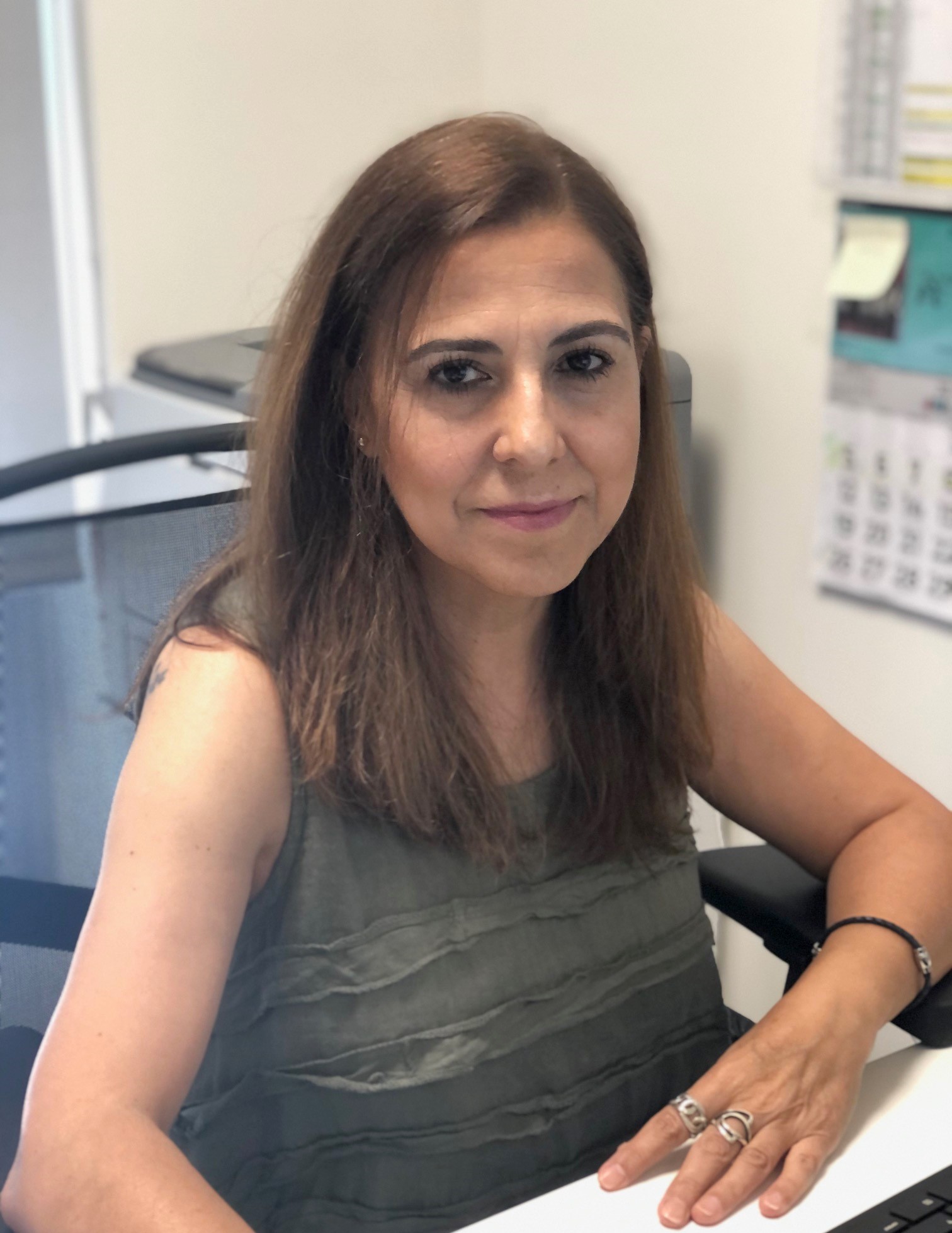
Isabel Jado García
Científico Titular OPIS, Director laboratorio
-
Raquel Escudero Nieto
Científico Titular OPIS, Director laboratorio
-
Escolástica Chaparro Tercero
Técnico de Laboratorio
-
Ave María Vila-Coro Laviña
Auxiliar de Investigación
-
María Elena Andrés Galván
Ayudante de Investigación.
Técnico superior en laboratorio de diagnóstico clínico en 2013 y Técnico superior en laboratorio de análisis y control de calidad en 2015. Lleva vinculada a la Unidad de Neumococos desde 2022 como ayudante de investigación y es personal de plantilla. Anteriormente estuvo contratada en el Instituto de recursos naturales y agrobiología de Salamanca (IRNASA) del CSIC.

List of staff
Additional Information
The Medical Entomology Laboratory has accumulated extensive experience in this field, especially in entomological field studies, biology of arthropods of medical interest, vector competence and vector control. Also, in the molecular detection of Leishmania infantum promastigotes in naturally parasitized phlebotomine sand flies, in the molecular identification of blood ingested by hematophagous arthropods and in the study of the immunomodulatory properties of proteins present in the saliva of phlebotomine sand flies and mosquitoes. Our laboratory is currently co-leading the studies of vectors and wild reservoirs of leishmaniasis in the leishmaniasis focus of Fuenlabrada, Madrid. In this sense, we have studied the role of asymptomatic individuals as reservoirs in the outbreak by xenodiagnosis. On the other hand, we have participated since 2007 in the Entomological Surveillance Program in Airports and Ports against Potential Vectors of Exotic Infectious Diseases, a program that is allowing to develop the expansion map in Spain of Aedes albopictus. In 2016-2017, we carried out surveillance of Ae. albopictus in the Community of Castilla-La Mancha. On the other hand, we conducted studies on the role of patients with post-kala-azar dermal leishmaniasis (PKDL) in the transmission of the parasite in Bangladesh and Sudan. In addition, we participate in research studying ticks transmitting Crimean-Congo hemorrhagic fever in Spain.
Currently, it maintains confidentiality agreements with several companies participating in the evaluation of molecules with activity against pathogens in vectors (GSK), in the development of vector traps using artificial intelligence algorithms (Irideon, Spain), and in the evaluation of repellents against phlebotomine sand flies (IRSEA, France).
The laboratory actively participates in outreach activities such as the Science Week or the European Researchers' Night, among others, making medical entomology science available to the general population.
The Medical Entomology Laboratory has accumulated extensive experience in this field, especially in entomological field studies, biology of arthropods of medical interest, vector competence and vector control. Also, in the molecular detection of Leishmania infantum promastigotes in naturally parasitized phlebotomine sand flies, in the molecular identification of blood ingested by hematophagous arthropods and in the study of the immunomodulatory properties of proteins present in the saliva of phlebotomine sand flies and mosquitoes. Our laboratory is currently co-leading the studies of vectors and wild reservoirs of leishmaniasis in the leishmaniasis focus of Fuenlabrada, Madrid. In this sense, we have studied the role of asymptomatic individuals as reservoirs in the outbreak by xenodiagnosis. On the other hand, we have participated since 2007 in the Entomological Surveillance Program in Airports and Ports against Potential Vectors of Exotic Infectious Diseases, a program that is allowing to develop the expansion map in Spain of Aedes albopictus. In 2016-2017, we carried out surveillance of Ae. albopictus in the Community of Castilla-La Mancha. On the other hand, we conducted studies on the role of patients with post-kala-azar dermal leishmaniasis (PKDL) in the transmission of the parasite in Bangladesh and Sudan. In addition, we participate in research studying ticks transmitting Crimean-Congo hemorrhagic fever in Spain.
Currently, it maintains confidentiality agreements with several companies participating in the evaluation of molecules with activity against pathogens in vectors (GSK), in the development of vector traps using artificial intelligence algorithms (Irideon, Spain), and in the evaluation of repellents against phlebotomine sand flies (IRSEA, France).
The laboratory actively participates in outreach activities such as the Science Week or the European Researchers' Night, among others, making medical entomology science available to the general population.