



We protect your health through science
Investigation
Medical Entomology
Publications
Lorente, E., E. Barnea, C. Mir, A. Admon, and D. López. 2020. The HLA-DP peptide repertoire from human respiratory syncytial virus is focused on major structural proteins with the exception of the viral polymerase. J Proteomics. 221:103759.
Lorente, E., E. Barnea, C. Mir, A. Admon, and D. López. 2020. The HLA-DP peptide repertoire from human respiratory syncytial virus is focused on major structural proteins with the exception of the viral polymerase. J Proteomics. 221:103759.
PUBMED DOIMarquez, A., M. Gomez-Fontela, S. Lauzurica, R. Candorcio-Simon, D. Munoz-Martín, M. Morales, M. Ubago, C. Toledo, P. Lauzurica, and C. Molpeceres. 2020. Fluorescence enhanced BA-LIFT for single cell detection and isolation. Biofabrication. 12:025019.
Marquez, A., M. Gomez-Fontela, S. Lauzurica, R. Candorcio-Simon, D. Munoz-Martín, M. Morales, M. Ubago, C. Toledo, P. Lauzurica, and C. Molpeceres. 2020. Fluorescence enhanced BA-LIFT for single cell detection and isolation. Biofabrication. 12:025019.
PUBMED DOILorente, E., M. Marcilla, P. G. de la Sota, A. Quijada-Freire, C. Mir, and D. López. 2021. Acid Stripping after Infection Improves the Detection of Viral HLA Class I Natural Ligands Identified by Mass Spectrometry. Int.J.Mol.Sci. 22.
Lorente, E., M. Marcilla, P. G. de la Sota, A. Quijada-Freire, C. Mir, and D. López. 2021. Acid Stripping after Infection Improves the Detection of Viral HLA Class I Natural Ligands Identified by Mass Spectrometry. Int.J.Mol.Sci. 22.
PUBMED DOIde la Sota, P. G., E. Lorente, L. Notario, C. Mir, O. Zaragoza, and D. López. 2021. Mitoxantrone Shows In Vitro, but Not In Vivo Antiviral Activity against Human Respiratory Syncytial Virus. Biomedicines. 9.
de la Sota, P. G., E. Lorente, L. Notario, C. Mir, O. Zaragoza, and D. López. 2021. Mitoxantrone Shows In Vitro, but Not In Vivo Antiviral Activity against Human Respiratory Syncytial Virus. Biomedicines. 9.
PUBMED DOIPredicted Epitope Abundance Supports Vaccine-Induced Cytotoxic Protection Against SARS-CoV-2 Variants of Concern.
Martín-Galiano, A. J., F. Diez-Fuertes, M. J. McConnell, and D. López. 2021. Predicted Epitope Abundance Supports Vaccine-Induced Cytotoxic Protection Against SARS-CoV-2 Variants of Concern. Front Immunol. 12:732693.
PUBMED DOIPrediction of Conserved HLA Class I and Class II Epitopes from SARS-CoV-2 Licensed Vaccines Supports T-Cell Cross-Protection against SARS-CoV-1.
López, D. 2022. Prediction of Conserved HLA Class I and Class II Epitopes from SARS-CoV-2 Licensed Vaccines Supports T-Cell Cross-Protection against SARS-CoV-1. Biomedicines. 10.
PUBMED DOIAbundance, Betweenness Centrality, Hydrophobicity, and Isoelectric Points Are Relevant Factors in the Processing of Parental Proteins of the HLA Class II Ligandome.
Lorente, E., A. J. Martín-Galiano, D. M. Kadosh, A. Barriga, J. Garcia-Arriaza, C. Mir, M. Esteban, A. Admon, and D. López. 2022. Abundance, Betweenness Centrality, Hydrophobicity, and Isoelectric Points Are Relevant Factors in the Processing of Parental Proteins of the HLA Class II Ligandome. J.Proteome.Res. 21:164-171.
DOICross-Recognition of SARS-CoV-2 B-Cell Epitopes with Other Betacoronavirus Nucleoproteins
Tajuelo, A., M. López-Siles, V. Mas, P. Perez-Romero, J. M. Aguado, V. Briz, M. J. McConnell, A. J. Martín-Galiano, and D. López. 2022. Cross-Recognition of SARS-CoV-2 B-Cell Epitopes with Other Betacoronavirus Nucleoproteins. Int.J.Mol.Sci. 23.
PUBMEDPredicted HLA Class I and Class II Epitopes From Licensed Vaccines Are Largely Conserved in New SARS-CoV-2 Omicron Variant of Concern.
López, D. 2022. Predicted HLA Class I and Class II Epitopes From Licensed Vaccines Are Largely Conserved in New SARS-CoV-2 Omicron Variant of Concern. Front Immunol. 13:832889.
PUBMEDGarcia-Arriaza, J., M. Esteban, and D. López. 2021
Garcia-Arriaza, J., M. Esteban, and D. López. 2021. Modified Vaccinia Virus Ankara as a Viral Vector for Vaccine Candidates against Chikungunya Virus. Biomedicines. 9.
PUBMEDDiagnósitico microbiológico y control de la legionelosis
Pelaz Antolín, C., et al., En Procedimientos en Microbiología Clínica, E.C.y.R. Cantón, Editor. 2005, SEIMC. p. 1-72.
PUBMEDLegionella-Biofilms-Amebas, un problema industrial, de sanidad ambiental y de salud pública
Juana María González-Rubio, Celia Játiva, Almudena Cascajero, Fernando González-Camacho. Infoplagas, nº 112, agosto 2023 pags: 20-24. (Artículo de divulgación).
DOIPrograma de Legionelosis. En Echevarría Mayo JE y Oteo Iglesias J (Editores). Programas de Vigilancia Microbiológica pags: 74-80. Centro Nacional de Microbiología, Madrid: Instituto de Salud Carlos III, 2021.
Bellido B y Pelaez C: Programa de Legionelosis. En Echevarría Mayo JE y Oteo Iglesias J (Editores). Programas de Vigilancia Microbiológica pags: 74-80. Centro Nacional de Microbiología, Madrid: Instituto de Salud Carlos III, 2021.
Programa de Legionelosis. En Echevarría Mayo JE y Oteo Iglesias J (Editores) Programas de Vigilancia Microbiológica Centro Nacional de Microbiología.
Fernando González-Camacho y Almudena Cascajero. Programa de Legionelosis. En Echevarría Mayo JE y Oteo Iglesias J (Editores) Programas de Vigilancia Microbiológica Centro Nacional de Microbiología. Volumen 2:77-89. 2021-2022 Majadahonda (Madrid); Instituto de Salud Carlos III, Centro Nacional de Microbiología: 2023.
Chikungunya virus infections among travellers returning to Spain, 2008 to 2014
3. Maria Dolores Fernandez Garcia; Mathieu Bangert; Fernando de Ory; Arantxa Potente; Lourdes Hernandez; Fatima Lasala; Laura Herrero; Francisca Molero; Anabel Negredo; Ana Vázquez; Teodora Minguito; Pilar Balfagón; Jesus de la Fuente; Sabino Puente; Eva Ramírez de Arellano; Mar Lago; Miguel Martinez; Joaquim Gascón; Francesca Norman; Rogelio Lopez Velez; Elena Sulleiro; Diana Pou; Nuria Serre; Ricardo Fernández Roblas; Antonio Tenorio; Leticia Franco; Maria Paz Sanchez Seco. Chikungunya virus infections among travellers returning to Spain, 2008 to 2014. Euro surveillance : bulletin Europeen sur les maladies transmissibles = European communicable disease bulletin. 21 - 36, (Sweden): 08/09/2016. ISSN 1560-7917
PUBMED DOILegionella feeleii: Ubiquitous Pathogen in the Environment and Causative Agent of Pneumonia
Vaccaro L, Gomes TS, Izquierdo F, Magnet A, Llorens Berzosa S, Ollero D, Salso S, Alhambra A, Gómez C, López Cano M, Pelaz C, Bellido Samaniego B, Del Aguila C, Fenoy S, Hurtado-Marcos C. Front Microbiol. 2021;12:707187.
DOIContent with Investigacion .
-
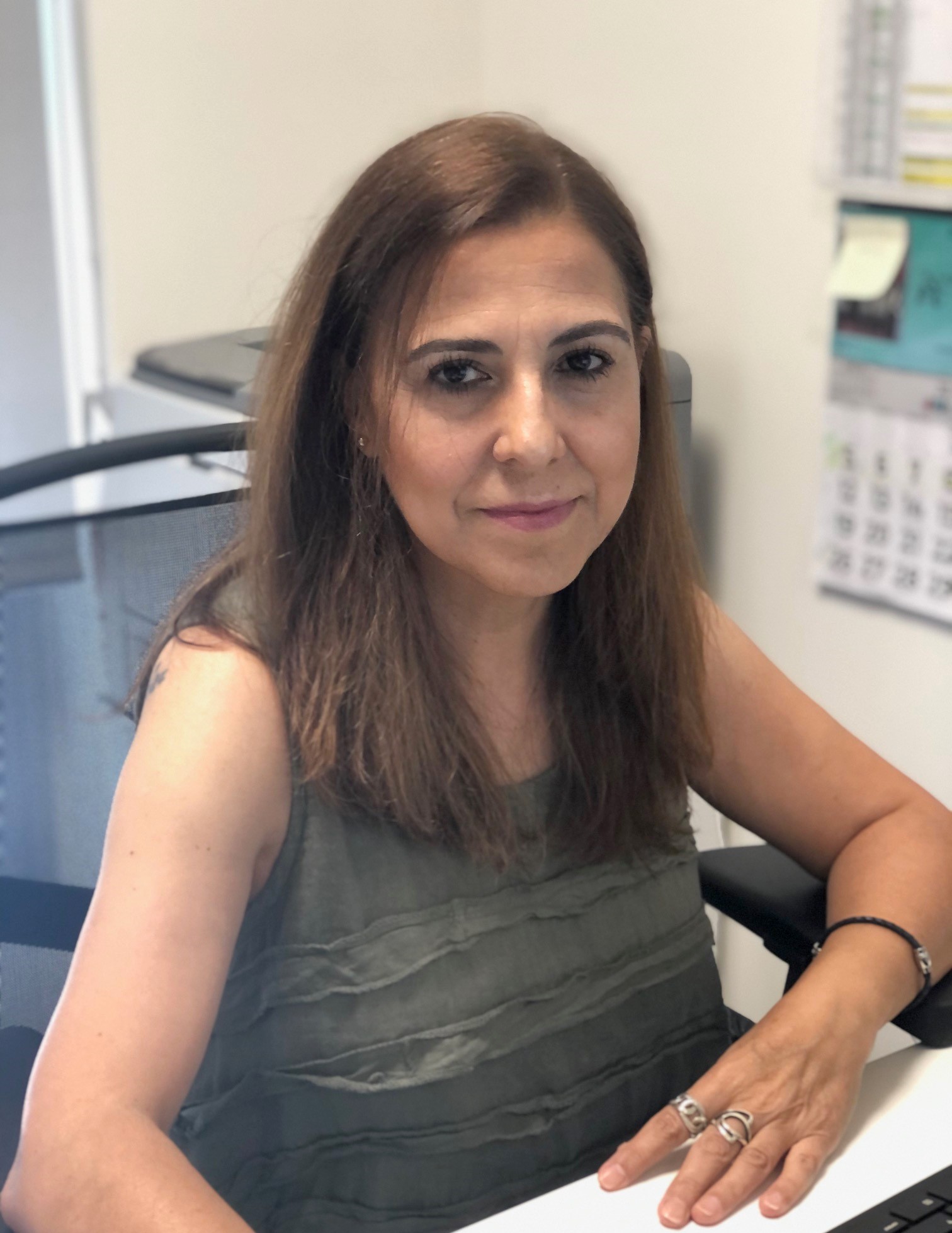
Isabel Jado García
Científico Titular OPIS, Director laboratorio
-
Raquel Escudero Nieto
Científico Titular OPIS, Director laboratorio
-
Escolástica Chaparro Tercero
Técnico de Laboratorio
-
Ave María Vila-Coro Laviña
Auxiliar de Investigación
-
María Elena Andrés Galván
Ayudante de Investigación.
Técnico superior en laboratorio de diagnóstico clínico en 2013 y Técnico superior en laboratorio de análisis y control de calidad en 2015. Lleva vinculada a la Unidad de Neumococos desde 2022 como ayudante de investigación y es personal de plantilla. Anteriormente estuvo contratada en el Instituto de recursos naturales y agrobiología de Salamanca (IRNASA) del CSIC.

List of staff
Additional Information
The Medical Entomology Laboratory has accumulated extensive experience in this field, especially in entomological field studies, biology of arthropods of medical interest, vector competence and vector control. Also, in the molecular detection of Leishmania infantum promastigotes in naturally parasitized phlebotomine sand flies, in the molecular identification of blood ingested by hematophagous arthropods and in the study of the immunomodulatory properties of proteins present in the saliva of phlebotomine sand flies and mosquitoes. Our laboratory is currently co-leading the studies of vectors and wild reservoirs of leishmaniasis in the leishmaniasis focus of Fuenlabrada, Madrid. In this sense, we have studied the role of asymptomatic individuals as reservoirs in the outbreak by xenodiagnosis. On the other hand, we have participated since 2007 in the Entomological Surveillance Program in Airports and Ports against Potential Vectors of Exotic Infectious Diseases, a program that is allowing to develop the expansion map in Spain of Aedes albopictus. In 2016-2017, we carried out surveillance of Ae. albopictus in the Community of Castilla-La Mancha. On the other hand, we conducted studies on the role of patients with post-kala-azar dermal leishmaniasis (PKDL) in the transmission of the parasite in Bangladesh and Sudan. In addition, we participate in research studying ticks transmitting Crimean-Congo hemorrhagic fever in Spain.
Currently, it maintains confidentiality agreements with several companies participating in the evaluation of molecules with activity against pathogens in vectors (GSK), in the development of vector traps using artificial intelligence algorithms (Irideon, Spain), and in the evaluation of repellents against phlebotomine sand flies (IRSEA, France).
The laboratory actively participates in outreach activities such as the Science Week or the European Researchers' Night, among others, making medical entomology science available to the general population.
The Medical Entomology Laboratory has accumulated extensive experience in this field, especially in entomological field studies, biology of arthropods of medical interest, vector competence and vector control. Also, in the molecular detection of Leishmania infantum promastigotes in naturally parasitized phlebotomine sand flies, in the molecular identification of blood ingested by hematophagous arthropods and in the study of the immunomodulatory properties of proteins present in the saliva of phlebotomine sand flies and mosquitoes. Our laboratory is currently co-leading the studies of vectors and wild reservoirs of leishmaniasis in the leishmaniasis focus of Fuenlabrada, Madrid. In this sense, we have studied the role of asymptomatic individuals as reservoirs in the outbreak by xenodiagnosis. On the other hand, we have participated since 2007 in the Entomological Surveillance Program in Airports and Ports against Potential Vectors of Exotic Infectious Diseases, a program that is allowing to develop the expansion map in Spain of Aedes albopictus. In 2016-2017, we carried out surveillance of Ae. albopictus in the Community of Castilla-La Mancha. On the other hand, we conducted studies on the role of patients with post-kala-azar dermal leishmaniasis (PKDL) in the transmission of the parasite in Bangladesh and Sudan. In addition, we participate in research studying ticks transmitting Crimean-Congo hemorrhagic fever in Spain.
Currently, it maintains confidentiality agreements with several companies participating in the evaluation of molecules with activity against pathogens in vectors (GSK), in the development of vector traps using artificial intelligence algorithms (Irideon, Spain), and in the evaluation of repellents against phlebotomine sand flies (IRSEA, France).
The laboratory actively participates in outreach activities such as the Science Week or the European Researchers' Night, among others, making medical entomology science available to the general population.