



We protect your health through science
Investigation
Bacterial Genetics
Research Lines
Content with Investigacion .
Inmunología Microbiana e Inmunogenética
1. Análisis de la respuesta innata de mamíferos en la infección por Leishmania.
2. Caracterización inmunoproteómica en :
a. Streptococcus suis
b. Lactococcus garviae
c. Mycobacterium spp
3. Desarrollo de inmunoensayos analíticos basados en anticuerpos monoclonales (AcM) para detectar y cuantificar antígenos de origen animal, vegetal y microbiano.
4. Desarrollo y caracterización de AcM frente a los componentes del sistema del Complemento. Aplicación diagnóstica.
5. Desarrollo de reactivos de referencia y diseño de inmunoensayos para la evaluación cualitativa y cuantitativa de toxinas clostridiales.
6. Oferta tecnológica de producción de AcM y policlonales frente a substancias de interés industrial y biomédico.
El grupo está interesado en el estudio de la respuesta inmune desde una perspectiva multidisciplinar que incluye aproximaciones bioquímicas, biotecnológicas, genómicas, inmunoinformáticas y proteómicas, que junto con el uso adicional de modelos in vivo se encaminan al diseño de estrategias terapéuticas frente a diversas enfermedades crónicas, infecciosas y raras que poseen un claro componente inmunológico en su etiología.
Las principales líneas de investigación que está desarrollando el grupo en la actualidad son:
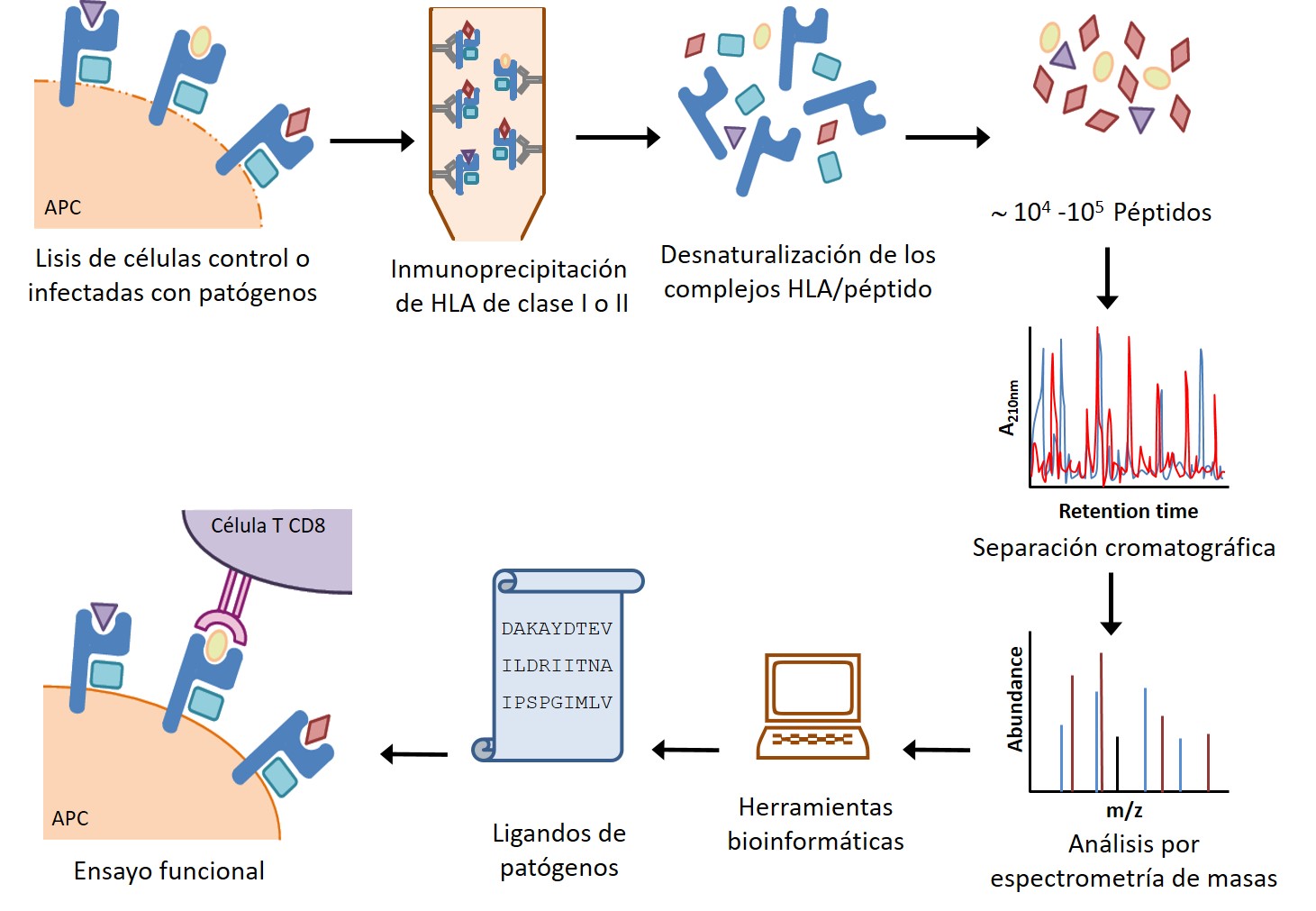
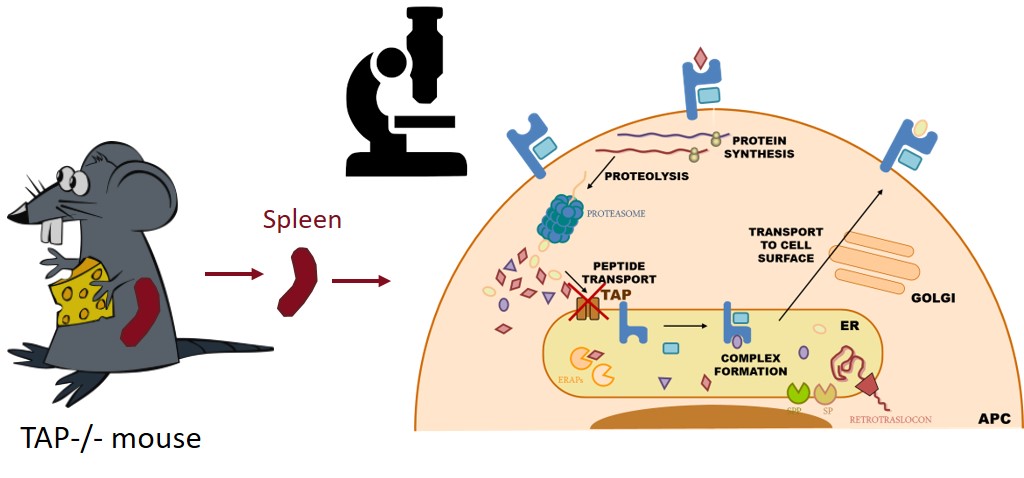
- * Análisis de las respuestas inmunes celulares frente a patógenos virales y bacterianos, mediante técnicas inmunoproteómicas, modelos in vivo con animales transgénicos y muestras humanas.
- * Caracterización de CD69: regulación génica, función reguladora inmune en homeostasis e infección y su uso como diana terapéutica, edición génica por CRISPR en modelos animales y celulares, etc.

* Desarrollo de herramientas inmunoinformáticas que permitan analizar la respuesta inmune celular frente a diversos virus de interés sanitario y determinar la eficacia de sus vacunas a nivel de población mundial.

* Estudio de las respuestas inmunes celulares frente a enfermedades raras (artritis reactiva y síndrome del linfocito desnudo) y crónicas (espondiloartropatías).
* Inclusión de componentes del sistema inmune en la fabricación de tejidos humanos, especialmente piel, para uso clínico, farmacéutico y cosmético.
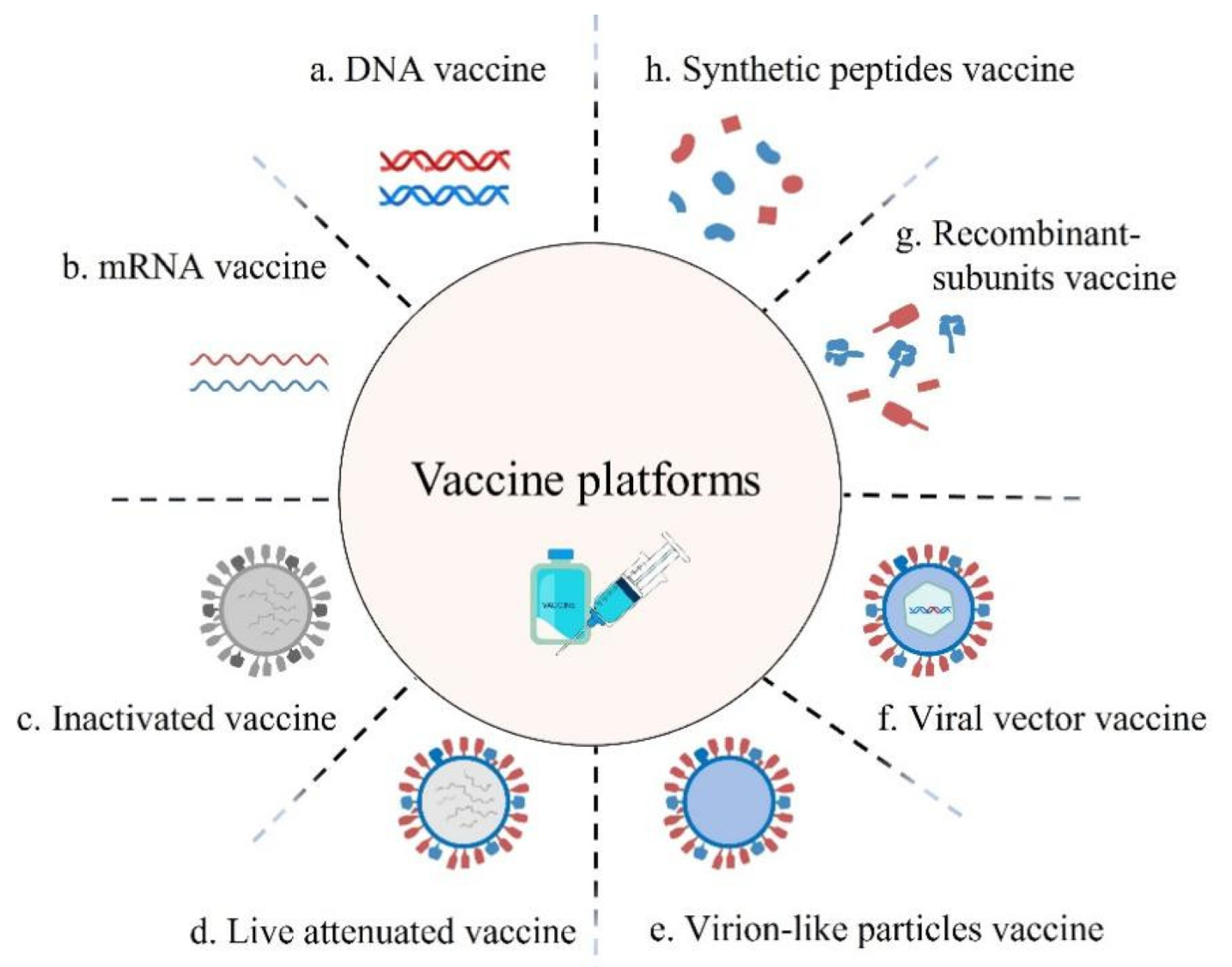
- * Generación de virus recombinantes como vectores vacunales.
Research projects
Content with Investigacion .
Los proyectos del grupo de los últimos años son los siguientes:
Proyecto “La interrelación de CD69 y el procesamiento antigénico en enfermedades infecciosas y autoinmunes" financiado por la Acción Estratégica en Salud del Ministerio de Ciencia, Innovación y Universidades. Año: 2023-2025.
Proyecto “Interacciones génicas y proteicas de CD69 y sus regiones génicas reguladoras con moléculas" financiado por la AEI. Año: 2022-2024.

Proyecto “Nuevas tecnologías de fabricación y optimización de tejidos: la piel como sistema modelo” financiado por el Programa de Actividades de I+D entre grupos de investigación de la Comunidad de Madrid en tecnologías 2018. Año: 2020-2023. Proyecto Coordinado por el Dr. Pablo Acedo de la Universidad Carlos III.
Proyecto “Estudio de CD69 como diana para mejorar el tratamiento de la leucopania y la movilización de células T de memoria de médula ósea" financiado por la Acción Estratégica en Salud del Ministerio de Ciencia, Innovación y Universidades. Año:2020-2024.
Proyecto “Diseño racional de una vacuna contra el virus respiratorio sincitial humano” financiado por la Acción Estratégica en Salud del Ministerio de Ciencia, Innovación y Universidades. Año: 2019-2022
Proyecto “Función de CD69 y sus elementos reguladores" financiado por la Acción Estratégica en Salud del Ministerio de Ciencia, Innovación y Universidades. Año: 2017-2022.
Proyecto “Diseño de vacunas recombinantes poliepitópicas para generar respuestas CD8+ contra virus emergentes” financiado por el Plan Nacional de I+D+i del Ministerio de Economía y Competitividad. Año: 2015-2017.
Proyecto “Análisis de los efectos de CD69 dependientes de S1P1 en modelos de infección e inflamación y estudio de su regulación” financiado por el FIS. Año: 2014-2017.
Proyecto “ADELVAC: Adenovirus con delecciones epitópicas para vacunación” financiado por el programa INNPACTO del Ministerio de Economía y Competitividad. Centro Nacional de Microbiología, Instituto de Salud Carlos III. Año: 2012-2014. Proyecto Coordinado por el Dr. Manel Cascallo de VCN BIOSCIENCES SL.
Proyecto “Diseño de vacunas multiepitópicas recombinantes para aumentar la respuesta inmune celular contra el VRSH” financiado por el Plan Nacional de I+D+i del Ministerio de Ciencia e Innovación. Año: 2012-2014.
Publications
Cryo-EM near-atomic structure of a dsRNA fungal virus shows ancient structural motifs preserved in the dsRNA viral lineage.
Luque D., Gómez-Blanco J., Garriga D., Brilot A.F., González J.M., Havens W.M., Carrascosa J.L., Trus B.L., Verdaguer N., Ghabrial S.A., Castón J.R. 2014. Cryo-EM near-atomic structure of a dsRNA fungal virus shows ancient structural motifs preserved in the dsRNA viral lineage. Proc Natl Acad Sci U S A 111(21):7641-7646. IF: 9.674, D1
PUBMED DOINew insights into rotavirus entry machinery: stabilization of rotavirus spike conformation is independent of trypsin cleavage
Rodríguez J.M., Chichón F.J., Martín-Forero E., González-Camacho F., Carrascosa J.L., Castón J.R., Luque D*. 2014. New insights into rotavirus entry machinery: stabilization of rotavirus spike conformation is independent of trypsin cleavage. PLoS Pathog. 10(5):e1004157. IF: 7.562, D1. * Corresponding autor.
PUBMED DOIEfficacy and safety assessment of a TRAF6-targeted nanoimmunotherapy in atherosclerotic mice and non-human primates.
3. Lameijer M, Binderup T, van Leent M, Senders M, Fay F. Seijkens T, Kroon J, Stroes E, Kjaer A, Ochando J, Reiner T, Pérez-Medina C, Calcagno C, Fischer E, Zhang B, Temel R, Swirski F, Nahrendorf M, Fayad Z, Lutgens E, Mulder W and Duivenvoorden R. Efficacy and safety assessment of a TRAF6-targeted nanoimmunotherapy in atherosclerotic mice and non-human primates. Nature Biomedical Engineering. 2018. 2: 279–292.
PUBMED DOINeutrophil derived CSF1 induces macrophage polarization and promotes transplantation tolerance.
4. Braza MS, Conde P, Garcia MR, Cortegano I, Brahmachary M, Pothula V, Fay F, Boros P, Werner SW, Ginhoux F, Mulder WJ, and Ochando J. Neutrophil derived CSF1 induces macrophage polarization and promotes transplantation tolerance. Am J Transplant. 2018.
PUBMED DOIDC-SIGN(+) Macrophages Control the Induction of Transplantation Tolerance
9. Conde P, Rodriguez M, van der Touw W, Jimenez A, Burns M, Miller J, Brahmachary M, Chen HM, Boros P, Rausell-Palamos F, Yun TJ, Riquelme P, Rastrojo A, Aguado B, Stein-Streilein J, Tanaka M, Zhou L, Zhang J, Lowary TL, Ginhoux F, Park CG, Cheong C, Brody J, Turley SJ, Lira SA, Bronte V, Gordon S, Heeger PS, Merad M, Hutchinson J, Chen SH, Ochando J. 2015. DC-SIGN(+) Macrophages Control the Induction of Transplantation Tolerance. Immunity. 16;42(6):1143-58.
PUBMED DOIProteomic characterisation of bovine and avian purified protein derivatives and identification of specific antigens for serodiagnosis of bovine tuberculosis
2.- Proteomic characterisation of bovine and avian purified protein derivatives and identification of specific antigens for serodiagnosis of bovine tuberculosis. Antonio Infantes-Lorenzo, Jose; Moreno, Inmaculada; Angeles Risalde, Maria; et ál. CLINICAL PROTEOMICS Volumen: 14 Número de artículo: 36 Fecha de publicación: NOV 2 2017
PUBMED DOIFunctional and structural characterization of four mouse monoclonal antibodies to complement C3 with potential therapeutic and diagnostic applications.
3.- Functional and structural characterization of four mouse monoclonal antibodies to complement C3 with potential therapeutic and diagnostic applications. Subias Hidalgo, Marta; Yebenes, Hugo; Rodriguez-Gallego, Cesar; et ál..EUROPEAN JOURNAL OF IMMUNOLOGY Volumen: 47 Número: 3 Páginas: 504-515 Fecha de publicación: MAR 2017
PUBMED DOIImmunoproteomic characterisation of Mycoplasma mycoides subspecies capri by mass spectrometry analysis of two- dimensional electrophoresis spots and western blot
5.- Immunoproteomic characterisation of Mycoplasma mycoides subspecies capri by mass spectrometry analysis of two- dimensional electrophoresis spots and western blot. Churchward, Colin P.; Rosales, Ruben S.; Gielbert, Adriana; et ál..JOURNAL OF PHARMACY AND PHARMACOLOGY Volumen: 67 Número: 3 Número especial: SI Páginas: 364-371 Fecha de publicación: MAR 2015
PUBMED DOIEfficacy of low doses of amphotericin B plus allicin against experimental visceral leishmaniasis.
6.- Efficacy of low doses of amphotericin B plus allicin against experimental visceral leishmaniasis. Corral, M. Jesus; Serrano, Dolores R.; Moreno, Inmaculada; et ál..JOURNAL OF ANTIMICROBIAL CHEMOTHERAPY Volumen: 69 Número: 12 Páginas: 3268-3274 Fecha de publicación: DEC 2014
PUBMED DOIA Novel Antibody against Human Factor B that Blocks Formation of the C3bB Proconvertase and Inhibits Complement Activation in Disease Models
7.- A Novel Antibody against Human Factor B that Blocks Formation of the C3bB Proconvertase and Inhibits Complement Activation in Disease Models. Subias, Marta; Tortajada, Agustin; Gastoldi, Sara; et ál..JOURNAL OF IMMUNOLOGY Volumen: 193 Número: 11 Páginas: 5567-5575 Fecha de publicación: DEC 2014
PUBMED DOIDetection of anti-Leishmania infantum antibodies in sylvatic lagomorphs from an epidemic area of Madrid using the indirect immunofluorescence antibody test
8.- Detection of anti-Leishmania infantum antibodies in sylvatic lagomorphs from an epidemic area of Madrid using the indirect immunofluorescence antibody test. Moreno, Inmaculada; Alvarez, Julio; Garcia, Nerea; et ál..VETERINARY PARASITOLOGY Volumen: 199 Número: 3-4 Páginas: 264-267 Fecha de publicación: 2014
PUBMED DOIEvidence of Leishmania infantum Infection in Rabbits (Oryctolagus cuniculus) in a Natural Area in Madrid, Spain.
9.- Evidence of Leishmania infantum Infection in Rabbits (Oryctolagus cuniculus) in a Natural Area in Madrid, Spain. Garcia, Nerea; Moreno, Inmaculada; Alvarez, Julio; et ál..BIOMED RESEARCH INTERNATIONAL Número de artículo: 318254 Fecha de publicación: 2014
PUBMED DOIMucus-Activatable Shiga Toxin Genotype stx2d in Escherichia coli O157:H7
2. Sánchez, S., Llorente, M.T., Herrera-León, L., Ramiro, R., Nebreda, S., Remacha, M.A., Herrera-León, S. Mucus-activatable shiga toxin genotype stx2d in Escherichia coli O157:H7. (2017) Emerging Infectious Diseases, 23 (8), pp. 1431-1433.
PUBMED DOIMultinational outbreak of travel-related Salmonella Chester infections in europe, summers 2014 and 2015
3. Fonteneau, L., Da Silva, N.J., Fabre, L., Ashton, P., Torpdahl, M., Müller, L., Bouchrif, B., El Boulani, A., Valkanou, E., Mattheus, W., Friesema, I., Herrera Leon, S., Varela Martínez, C., Mossong, J., Severi, E., Grant, K., Weill, F., Gossner, C.M., Bertrand, S., Dallman, T., Le Hello, S. Multinational outbreak of travel-related Salmonella Chester infections in europe, summers 2014 and 2015. (2017) Eurosurveillance, 22 (7).
PUBMED DOIProspective use of whole genome sequencing (WGS) detected a multi-country outbreak of Salmonella Enteritidis
4. Inns, T., Ashton, P.M., Herrera-Leon, S., Lighthill, J., Foulkes, S., Jombart, T., Rehman, Y., Fox, A., Dallman, T., De Pinna, E., Browning, L., Coia, J.E., Edeghere, O., Vivancos, R. Prospective use of whole genome sequencing (WGS) detected a multi-country outbreak of Salmonella Enteritidis (2017) Epidemiology and Infection, 145 (2), pp. 289-298.
PUBMED DOIPlasmid-mediated quinolone resistance in different diarrheagenic Escherichia coli pathotypes responsible for complicated, noncomplicated, and traveler's diarrhea cases.
5. Herrera-Leon, S., Llorente, M.T., Sanchez, S. Plasmid-mediated quinolone resistance in different diarrheagenic Escherichia coli pathotypes responsible for complicated, noncomplicated, and traveler's diarrhea cases. (2016) Antimicrobial Agents and Chemotherapy, 60 (3), pp. 1950-1951.
PUBMED DOIMolecular Epidemiology and Antibiotic Susceptibility of Vibrio cholerae Associated with a Large Cholera Outbreak in Ghana in 2014.
6. Eibach, D., Herrera-León, S., Gil, H., Hogan, B., Ehlkes, L., Adjabeng, M., Kreuels, B., Nagel, M., Opare, D., Fobil, J.N., May, J. Molecular Epidemiology and Antibiotic Susceptibility of Vibrio cholerae Associated with a Large Cholera Outbreak in Ghana in 2014. (2016) PLoS Neglected Tropical Diseases, 10 (5).
PUBMED DOIAdditional Information
Streptococcus pneumoniae is a human pathogen that, despite the development of vaccines, continues to be an important cause of mortality and morbidity. We investigate the mechanisms of antibiotic resistance in this bacterium. On the one hand by identifying new therapeutic targets and on the other hand by investigating the molecular basis of the action of antibiotics already used in clinical practice (the fluoroquinolones levofloxacin and moxifloxacin) or not yet used (seconeolitsine). For this purpose, we used a multidisciplinary analysis involving genomics, transcriptomics and proteomics to understand the organization of the S. pneumoniae chromosome and the identification of the factors that stabilize this organization, including ncRNAs. Changes in the level of global supercoiling, either by inhibition of gyrase (decrease) or by inhibition of topoisomerase I (increase) alter the transcriptome. The modulated genes are located in domains, whose genes show specific functional characteristics. The aim is to identify new factors essential for S. pneumoniae physiology and to characterize transcriptional regulation in response to topological stress. In addition, RNA interference technology and CRISPR systems will be used as novel antibacterials. These studies will establish the bases for translational research aimed at the development of new therapeutic targets for the treatment of pneumococcal diseases.
Streptococcus pneumoniae is a human pathogen that, despite the development of vaccines, continues to be an important cause of mortality and morbidity. We investigate the mechanisms of antibiotic resistance in this bacterium. On the one hand by identifying new therapeutic targets and on the other hand by investigating the molecular basis of the action of antibiotics already used in clinical practice (the fluoroquinolones levofloxacin and moxifloxacin) or not yet used (seconeolitsine). For this purpose, we used a multidisciplinary analysis involving genomics, transcriptomics and proteomics to understand the organization of the S. pneumoniae chromosome and the identification of the factors that stabilize this organization, including ncRNAs. Changes in the level of global supercoiling, either by inhibition of gyrase (decrease) or by inhibition of topoisomerase I (increase) alter the transcriptome. The modulated genes are located in domains, whose genes show specific functional characteristics. The aim is to identify new factors essential for S. pneumoniae physiology and to characterize transcriptional regulation in response to topological stress. In addition, RNA interference technology and CRISPR systems will be used as novel antibacterials. These studies will establish the bases for translational research aimed at the development of new therapeutic targets for the treatment of pneumococcal diseases.