



We protect your health through science
Investigation
Hepatitis C and VIH/VHC coinfection
Research Lines
Content with Investigacion .
Hepatitis C y otros virus RNA
A) Respuesta de anticuerpos neutralizantes frente al virus de la Hepatitis C (VHC) en pacientes infectados.
Aproximadamente 58 millones de personas están infectadas crónicamente con el VHC en el mundo. Estas personas tienen un riesgo elevado de desarrollar cirrosis y carcinoma hepático. Diversos estudios apuntan a que los anticuerpos neutralizantes de amplio espectro frente al VHC tienen un papel importante en la protección frente a la infección.
El objetivo de esta línea es analizar las características (título, avidez, capacidad neutralizante, amplitud) de la respuesta de anticuerpos frente al VHC, tanto en personas infectadas solo con el VHC como en pacientes coinfectados con VHC y VIH. También estudiamos la duración de esa respuesta después de la eliminación del VHC mediante tratamiento antiviral. Determinar cuáles son los títulos, la amplitud y la duración de los anticuerpos neutralizantes después del tratamiento es esencial para diseñar estrategias encaminadas a proteger a las personas de la infección por VHC.
B) Desarrollo de pruebas diagnósticas rápidas para detectar la proteína “core" del VHC en sangre de individuos infectados.
En las etapas iniciales, la hepatitis C es asintomática, por lo que menos del 20% de las personas infectadas con el VHC a nivel mundial son conscientes de que lo están. Por lo tanto, es fundamental detectar esas personas infectadas para evitar que la enfermedad progrese y que contagien a otras.
El objetivo de esta línea es el desarrollo de una prueba de diagnóstico rápido para facilitar la detección y el control del VHC. Nuestro propósito es que sea un ensayo fácil de usar en el punto de atención, sensible, fiable, rápido y económico, y que detecte infección activa. Este ensayo se basará en la detección del antígeno “core" del VHC en sangre mediante ensayos de cromatografía de flujo lateral y nanosistemas dendríticos.
C) Regulación de la respuesta inmune innata frente al virus respiratorio sincitial (VRS) y al coronavirus tipo 2 del síndrome respiratorio agudo grave (SARS-CoV-2) en pacientes infectados.
El VRS produce bronquiolitis y neumonía principalmente en niños pequeños y ancianos. A nivel mundial, aproximadamente 33 millones de niños sufren infecciones del tracto respiratorio inferior al año debidas a este virus. Una respuesta inmune caracterizada por un exceso de inflamación parece estar relacionada con la patología asociada a las infecciones graves.
El objetivo de esta línea es analizar cómo se inicia y cómo se regula esa respuesta inflamatoria en las células epiteliales respiratorias infectadas. Esta información puede ser relevante para desarrollar nuevos tratamientos que modulen la respuesta inmune frente al VRS y así evitar la inmunopatología asociada a la infección.
Estudios similares se están llevando a cabo en pacientes infectados con el SARS-CoV-2. El objetivo es analizar la respuesta inmune innata tanto en el tracto respiratorio superior como en sangre para encontrar biomarcadores que se asocien con gravedad.
D) Respuesta de anticuerpos frente al SARS-CoV-2 en pacientes infectados.
Los anticuerpos neutralizantes son fundamentales en la protección de numerosas infecciones, incluida la del SARS-CoV-2. Nuestro objetivo es estudiar la respuesta de anticuerpos (títulos, capacidad neutralizante, afinidad, duración, etc.) en diferentes cohortes de pacientes infectados con este virus (mujeres embarazadas, immunodeprimidos), lo que proporcionará una valiosa información sobre cuáles son los niveles y características de los anticuerpos que confieren protección frente al SARS-CoV-2.
Research projects
Content with Investigacion .
Proyectos como investigador principal
1.- Título del proyecto: Desarrollo de un ensayo de diagnóstico rápido para el cribado de la infección activa del virus de la hepatitis C basado en la detección del “core" (VHCAgc). Duración: 01/01/2020 - 31/12/2022. Entidad financiadora: Instituto de Salud Carlos III (PI19CIII/00009). Cuantía de la subvención: 53.000 €. Investigador responsable: Isidoro Martínez
2.- Título del proyecto: Ubiquitinación/deubiquitinación: control del equilibrio entre inflamación y replicación viral en infecciones por el virus respiratorio sincitial humano. Duración: 01/01/2016 - 31/12/2019. Entidad financiadora: Instituto de Salud Carlos III (PI15CIII/00024). Cuantía de la subvención: 81.500 €. Investigador responsable: Isidoro Martínez
3.- Título del proyecto: Regulación por deubiquitinasas de la respuesta inflamatoria inducida por el virus respiratorio sincitial humano. Duración: 01/01/2012 - 31/12/ 2015. Entidad financiadora: Fondo de Investigaciones Sanitarias (PI11/00590). Cuantía de la subvención: 86.212 €. Investigador responsable: Isidoro Martínez
4.- Título del proyecto: Interacciones entre el virus respiratorio sincitial humano y la célula huésped: El sistema del activador del plasminógeno (uroquinasa) y su receptor. Duración: 01/01/2009 - 31/12/2012. Entidad financiadora: Fondo de Investigaciones Sanitarias (PI08/0702). Cuantía de la subvención: 114.950 €. Investigador responsable: Isidoro Martínez
5.- Título del proyecto: Cambios en la expresión de genes celulares tras la infección por el virus respiratorio sincitial humano: Relevancia patológica. Duración: 01/01/2005 - 31/12/ 2007. Entidad financiadora: Fondo de Investigaciones Sanitarias (PI04/0864). Cuantía de la subvención: 97.750 €. Investigador responsable: Isidoro Martínez
6.- Título del proyecto: Cambios en la expresión de genes celulares tras la infección por el virus respiratorio sincitial humano: Relevancia patológica. Duración: 01/11/2003 - 30/09/ 2007. Entidad financiadora: Ministerio de Ciencia y Tecnología (Progama Ramón y Cajal). Cuantía de la subvención: 135.697,59 €. Investigador responsable: Isidoro Martínez
Proyectos como investigador asociado
1.- Título del proyecto: CIBER de Enfermedades Infecciosas. Duración: 5 años (2022-2026). Entidad financiadora: Instituto de Salud Carlos III (CB21/13/00044). Cuantía de la subvención: 300.000 €. Investigador responsable: Salvador Resino.
2.- Título del proyecto: Identification of Biomarkers that Predict Severity in COVID-19 patients. Duración: 3 años 1 mes (1 marzo 2020-31 marzo 2023). Entidad financiadora: Canadian Institutes of Health Research (CIHR) (OV2-170357). Cuantía de la subvención: 1.000.000 $. Investigador responsable: David Kelvin.
3.- Título del proyecto: Coordinación de actividades de investigación en el CNM para realizar una respuesta integradora de actividades frente a la pandemia por SARS-COV2 en España. Duración: 12 meses. Entidad financiadora: Instituto de Salud Carlos III (COV20_00679). Cuantía de la subvención: 325.909,46 €. Investigador responsable: Inmaculada Casas.
4.- Título del proyecto: Infección por COVID-19 en pacientes infectados por VIH incluídos en CoRIS. Duración: 12 meses. Entidad financiadora: Instituto de Salud Carlos III (COV20_00108). Cuantía de la subvención: 67.885,00 €. Investigador responsable: Juan Berenguer
5.- Título del proyecto: Factores de riesgo, pronóstico personalizados y seguimiento a un año de los enfermos ingresados en las unidades de Cuidados Intensivos Españolas infectados por el virus COVID19: CIBERESUCICOVID. Duración: 12 meses. Entidad financiadora: Instituto de Salud Carlos III (COV20_00110). Cuantía de la subvención: 1.750.000,00 €. Investigador responsable: Antoni Torres Martí
Publications
Fernandez-Garcia MD, Meertens L, Chazal M, Hafirassou ML, Dejarnac O, Zamborlini A, Despres P, Sauvonnet N, Arenzana-Seisdedos F, Jouvenet N, Amara A. Vaccine and Wild-Type Strains of Yellow Fever Virus Engage Distinct Entry Mechanisms and Differentially Stimulate Antiviral Immune Responses.
Fernandez-Garcia MD, Meertens L, Chazal M, Hafirassou ML, Dejarnac O, Zamborlini A, Despres P, Sauvonnet N, Arenzana-Seisdedos F, Jouvenet N, Amara A. Vaccine and Wild-Type Strains of Yellow Fever Virus Engage Distinct Entry Mechanisms and Differentially Stimulate Antiviral Immune Responses. mBio. 2016 Feb 9;7(1):e01956-15. doi: 10.1128/mBio.01956-15. PMID: 26861019; PMCID:PMC4752603.
Identification and whole-genome characterization of a recombinant Enterovirus B69 isolated from a patient with Acute Flaccid Paralysis in Niger, 2015
Fernandez-Garcia MD, Majumdar M, Kebe O, Ndiaye K, Martin J. Identification and whole-genome characterization of a recombinant Enterovirus B69 isolated from a patient with Acute Flaccid Paralysis in Niger, 2015. Sci Rep. 2018 Feb 1;8(1):2181. doi: 10.1038/s41598-018-20346-9. PMID: 29391547; PMCID: PMC5795009.
Majumdar M, Sharif S, Klapsa D, Wilton T, Alam MM, Fernandez-Garcia MD, Rehman L, Mujtaba G, McAllister G, Harvala H, Templeton K, Mee ET, Asghar H, Ndiaye K, Minor PD, Martin J. Environmental Surveillance Reveals Complex Enterovirus Circulation Patterns in Human Populations. Open Forum Infect Dis. 2018
Majumdar M, Sharif S, Klapsa D, Wilton T, Alam MM, Fernandez-Garcia MD, Rehman L, Mujtaba G, McAllister G, Harvala H, Templeton K, Mee ET, Asghar H, Ndiaye K, Minor PD, Martin J. Environmental Surveillance Reveals Complex Enterovirus Circulation Patterns in Human Populations. Open Forum Infect Dis. 2018 Oct 1;5(10):ofy250. doi: 10.1093/ofid/ofy250. PMID: 30377626; PMCID: PMC6201154.
Fernandez-Garcia MD, Majumdar M, Kebe O, Fall AD, Kone M, Kande M, Dabo M, Sylla MS, Sompare D, Howard W, Faye O, Martin J, Ndiaye K. Emergence of Vaccine-Derived Polioviruses during Ebola Virus Disease Outbreak, Guinea, 2014-2015.
Fernandez-Garcia MD, Majumdar M, Kebe O, Fall AD, Kone M, Kande M, Dabo M, Sylla MS, Sompare D, Howard W, Faye O, Martin J, Ndiaye K. Emergence of Vaccine-Derived Polioviruses during Ebola Virus Disease Outbreak, Guinea, 2014-2015. Emerg Infect Dis. 2018 Jan;24(1):65-74. doi: 10.3201/eid2401.171174. PMID:29260690; PMCID: PMC5749474.
Content with Investigacion .
-

Maribel Jiménez Alonso
Tenured Scientist
ORCID code: 0000-0002-5615-3087
Doctor in Pharmacy from the Complutense University of Madrid (1994) and Extraordinary Doctorate Award. She started her research activity at ISCIII in 1990 in the field of leishmaniasis. Currently, she is the head of the LEM where she develops her scientific work in the field of entomological surveillance of phlebotomine sandflies in the CM and other studies in the field of molecular biology, mainly applied to the model of Leishmania infantum and its vector Phlebotomus perniciosus. Member of the team of experts of the ISCIII that participates in the elaboration of Rapid Risk Assessments and in the working groups in charge of the elaboration of National Plans of Prevention, Surveillance and Control of Vector-borne Diseases of the CCAES, Ministry of Health. She is currently “Operational Focal Point” for vector-borne diseases at national level for the One Health-Vectornet network (EFSA and ECDC) and coordinator of the VectorNet-Spain network since July 2024. In addition, she is a member of the expert committee of the Network of Surveillance and Control of Vectors with public health interest in the Community of Madrid. In addition, she is part of a research group from CIBER (CIBERINFEC; CB21/13/00110).
-
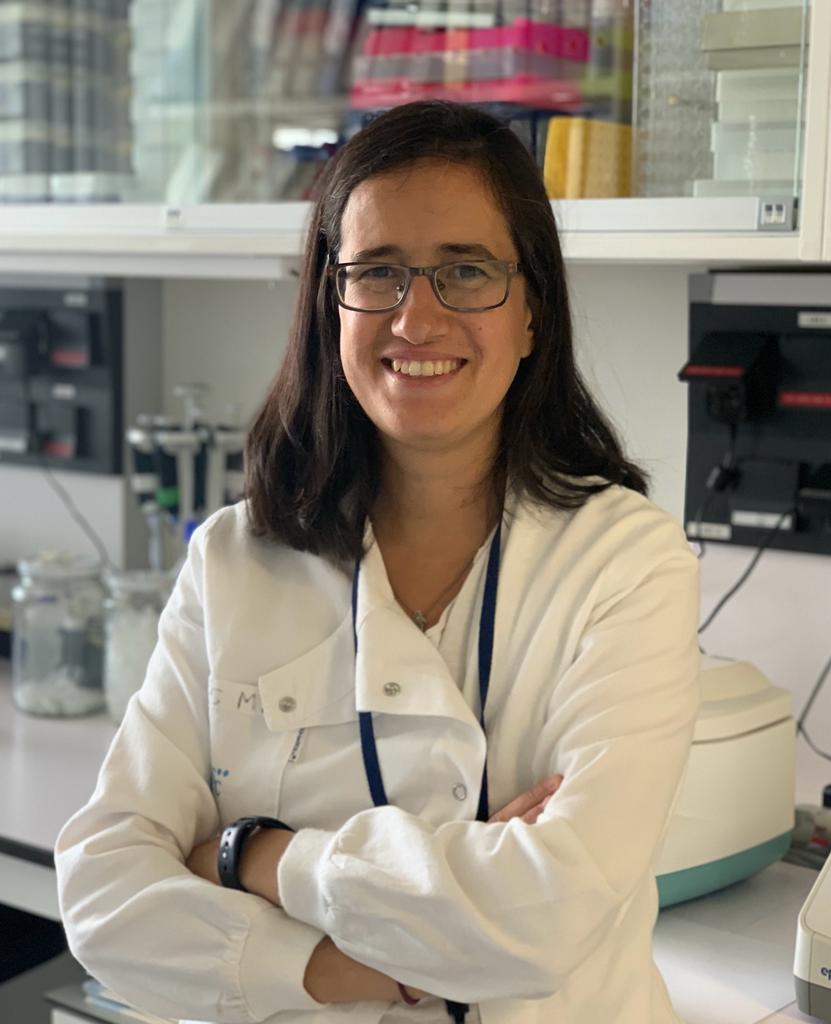
Inés Martín Martín
Tenured Scientist
ORCID code: 0000-0002-0956-7324
Within Medical Entomology, my work focuses on the study of phlebotomine sand flies and culicidae as vectors of leishmaniasis and arbovirosis, respectively. In 2014 I obtained my PhD degree “cum laude” with European mention from the Complutense University of Madrid. My PhD Thesis (developed at the Instituto de Salud Carlos III), focused on the study of phlebotomine sandfly saliva. Subsequently, during my postdoctoral period, I worked on insect gene editing, molecular, biochemical and functional characterization of insect saliva proteins and their role in the infection and transmission of pathogens. Most of my scientific career has been developed at the Laboratory of Malaria and Vector Research, National Institutes of Health (NIH), USA. Since 2021 I am a Senior Scientist at the Laboratory of Medical Entomology (ISCIII).
-

Ricardo Molina Moreno
Doctor Ad Honorem
ORCID code: 0000-0001-6662-173X
Doctor in Biological Sciences from the Complutense University of Madrid (1994). In 1979 he began his professional career at the Instituto de Salud Carlos III (ISCIII), where he became a researcher in 1985. He was in charge of the Medical Entomology Laboratory from that year until his retirement in 2023. He is currently a doctor linked “Ad Honorem”. He has extensive experience in medical entomology, advising the Ministry of Health (CCAES) and Health Departments of Autonomous Communities, on surveillance and control of arthropods transmitting vector-borne diseases. In recent years he has been involved in surveillance programs in Spain for leishmaniasis vectors, especially in the Fuenlabrada outbreak, and for viruses causing Crimean-Congo hemorrhagic fever and dengue. Also in the surveillance of invasive exotic mosquitoes, especially Aedes albopictus, in ports and airports. In his last stage he has been part of the research group within the CIBER (CIBERINFEC; CB21/13/00110).
-

Marcos López de Felipe Escudero
Predoctoral contract FPU
ORCID code: 0000-0002-2919-836X
Graduated in Biology from the Autonomous University of Madrid and Master in Tropical Parasitic Diseases from the University of Valencia. He started his professional career in 2019 in surveillance and management of hematophagous diptera of veterinary-medical interest, as well as other urban pests. In 2024 he began his work at the Instituto de Salud Carlos III (ISCIII) within the framework of the project “Evaluation of the anti-leishmanicidal effect of the bacterium Tc1 and its derivatives in the intravectorial cycle of the parasite” directed by Dr. Inés Martín Martín where he continues after the award of a FPU fellowship. He has extensive experience in medical entomology, especially in surveillance and vector control and taxonomic identification. Her career so far has focused mainly on the study of phlebotomine sand flies, simulids and culicidae, with special attention to citizen science.
-

Eva Pérez Martínez
Clinical and Biomedical Laboratory Technician
ORCID code: 0000-0002-6553-9969
Graduated in 2019 from the Advanced Vocational Training Program in Clinical and Biomedical Laboratory Sciences. I began my professional career in 2020 at Eurofins Megalab laboratories. In 2024, I started working as a freelance professional on an international project focused on the bioecology of phlebotomine sand flies in urban environments across the Mediterranean Basin, conducting fieldwork in Spain, Italy, Greece, and southern France within the framework of citizen science. Since 2025, I have been part of the Medical Entomology Laboratory at the Instituto de Salud Carlos III (ISCIII), where I work as a laboratory technician on the project “Biochemical and functional characterization of salivary proteins from Phlebotomus perniciosus and their role in Leishmania infantum infection (PERNIPROT)”, led by Dr. Inés Martín Martín.


List of staff