



We protect your health through science
Investigation
Hepatitis C and VIH/VHC coinfection
Research Lines
Content with Investigacion .
Mechanisms of pathogenic fungal host adaptation: Morphogenesis in Cryptococcus neoformans
One of the main mechanisms by which fungi are able to cause disease in humans is their ability to evade the immune response and adapt to the environmental conditions found in the host. In this regard, one of the yeasts that has the greatest ability to adapt to the host is Cryptococcus neoformans. This fungus is found in the environment, and is acquired by inhalation, although the most typical picture is meningitis in immunocompromised patients, mainly HIV+. The main phenotypic characteristic is the presence of a polysaccharide capsule surrounding the cell, which is considered a virulence factor. In addition, C. neoformans is able to increase cell size significantly forming “titan” cells, which can reach a diameter of more than 70 microns. In the laboratory, we are interested in the role of these titan cells in the virulence of C. neoformans. Recently, we have described in vitro media in which C. neoformans forms pseudo-titan cells, which has allowed us to identify new factors and pathways involved in this process.
Mechanisms of action of antifungals
In parallel, we have a line whose main objective is to characterize the mechanisms of action of antifungals. Specifically, we have focused our work on the effect of Amphotericin B (AmB). For decades it has been thought that this antifungal causes cell death after binding to ergosterol and pore formation. Our results indicate that this antifungal also induces strong oxidative stress in the cell, which occurs before cell integrity is lost. Furthermore, we have shown that oxidative stress is necessary for the fungicidal action of AmB. These results open the door to design new strategies to improve its efficiency in patients.
New therapeutic strategies
Work with AmB has led to research aimed at improving antifungal therapies. In particular, we have used the strategy of “off-patent” drug repositioning to search for new activities. Using this approach, we have identified several drugs that increase the effectiveness of AmB against major pathogenic yeasts, such as the antibiotic erythromycin. This approach has allowed us to identify drugs with antifungal activity against emerging pathogens, such as Candida auris.
Research projects
Content with Investigacion .
Projects with public funding
TITLE: Virulence factors of pathogenic yeasts and their influence on the host.
FUNDING ENTITY: Ministry of Education and Science.
POSITION HELD: Principal Investigator, Contracted “Ramón y Cajal”.
START/FINISH: 2006-2007
AMOUNT: 15,000 EUROS
TITLE: Characterization of fungal giant cells and their role during infection in mammals.
FINANCING ENTITY: Instituto de Salud Carlos III
POSITION HELD: Principal Investigator, Contracted “Ramón y Cajal”.
START/FINISH: 2006-2007
AMOUNT: 55,000 EUROS
TITLE: Search and identification of genes involved in the resistance to antifungal agents in
Cryptococcus neoformans
FUNDING ENTITY: Ministry of Science and Innovation.
POSITION HELD: Principal Investigator, Contracted “Ramón y Cajal”.
START/FINISH: 2008-2010
AMOUNT: 25,000 EUROS
COLLABORATORS: Juan Luis Rodríguez Tudela (National Center of Microbiology, ISCIII. Madrid); Manuel Cuenca Estrella (National Center of Microbiology, ISCIII. Madrid); Maria Jose Gianinni (Faculdade de Ciências Farmacêuticas-UNESP). Brazil
TITLE: Role of morphological changes of the pathogenic yeast Cryptococcus neoformans during host infection.
FUNDING ENTITY: Ministry of Science and Innovation. National Plan Program “Non-oriented Fundamental Research”, area of Biomedicine, SAF2008-03761.
POSITION HELD: Principal Investigator, Contracted “Ramón y Cajal”.
START/END: 2009-2011
AMOUNT: 46,000 EUROS
PROJECT TITLE: Identification of the molecular mechanisms involved in the morphogenesis of Cryptococcus neoformans and study of their function during infection.
FUNDING ENTITY: Ministry of Science and Innovation, National Plan for Non-Oriented Fundamental Research, Biomedicine Area, Referencia: SAF2011-25140
DURATION FROM: January 2012 UNTIL: December 2014
PRINCIPAL INVESTIGATOR: Oscar Zaragoza Hernández
This project has an FPI grantee granted.
SUBSIDY: 90.000 euros
TITLE: Importance of morphogenesis in the virulence of pathogenic yeast Cryptococcus neoformans and improvement of amphotericin B-based cryptococcosis therapy. Reference: SAF2014-25140
FUNDING ENTITY: MINECO (Call for R+D+I Projects “RETOS INVESTIGACION)
POSITION HELD: Principal Investigator
START/FINISH: 2015-2017
Funding: 100.000 €.
TITLE: Study of the molecular basis and factors inducing morphological changes in Cryptococcus neoformans and characterization of new therapeutic strategies. Reference: SAF2017-86912-R
FUNDING ENTITY: MINECO (Call for R+D+I Projects “RETOS INVESTIGACION)
POSITION HELD: Principal Investigator
START/END: 2018-2020
Funding: 106.000 €.
TITLE: Mechanisms of adaptation of the pathogenic yeast Cryptococcus neoformans to the lung. Reference: PID2020-114546RB
FUNDING ENTITY: Ministry of Science and Innovation, State Research Agency (Call “Proyectos I+D+I” 2020 - Modalities “Research Challenges” and “Knowledge Generation”).
POSITION HELD: Principal Researcher
START/END: 01/09/2021-31/05/2025
Funding: 143,990 €.

TITLE: Precision medicine against antimicrobial resistance. MePRAM Project.
FUNDING ENTITY: Research Projects on Precision Personalized Medicine of the Strategic Action in Health 2021-2023, under the PERTE for Vanguard Health and charged to the European funds of the Recovery, Transformation and Resilience Plan.
POSITION: Collaborator (Principal Investigator: Jesús Oteo Iglesias)
START/FINISH: 2023-2025
Funding: 4.339.500 €.
TITLE: Centre for Biomedical Research in Network. Infectious Diseases Area (CIBERINFEC)
Funding Agency: Insituto de Salud Carlos III. Reference: CB21/13/00105
Dates: 2022-2026 Funding: 85.000 € (first year)
PI: Emilia Mellado Terrado / CoPI: Óscar Zaragoza Hernández

TITLE: Study of the genetic, metabolic and cellular determinants that influence titan cell formation in the fungal pathogen Cryptococcus neoformans and correlation with antifungal exposure.
CALL FOR PROJECTS: Knowledge Generation Projects.
FUNDING ENTITY. State Research Agency. Ministry of Science, Innovation and Universities.
REFERENCE: Project PID2023-148686OB-I00 Project funded by MICIU/AEI/10.13039/501100011033 and by FEDER, EU.
PRINCIPAL INVESTIGATOR: Oscar Zaragoza Hernández
START/END: 2024-2027
FUNDING: 180.000 €.

TITLE: Characterization of azole-resistant Candida parapsilosis isolates associated with hospital outbreaks: New strategies for their detection and treatment.
CALL: Strategic Action in Intramural Health.
FUNDING ENTITY. Carlos III Health Institute.
REFERENCE: AESI-2024 PI24CIII/00051
PRINCIPAL RESEARCHER: Oscar Zaragoza Hernández / Laura Alcázar Fuoli
START/FINISH: /01/012025-31/12/2027
FUNDING: 70.000 €.
Projects financed by biotechnology companies
PROJECT TITLE: Amphores. Evaluation of the induction of oxidative damage by Amphoterin B in susceptible and resistant yeast species.
FUNDING ENTITY: Gilead
DURATION FROM: 2011 TO: 2012
PRINCIPAL INVESTIGATOR: Oscar Zaragoza Hernández
GRANT: 55,000 euros
TITLE: Fungomics. Evaluation of the activity of amphotericin B and other antifungals against human pathogenic fungi.
FINANCING ENTITY: Gilead
POSITION HELD: Principal Investigator
START/END: 2019-2020
TITLE: Antifungal susceptibility testing of a set of Candida spp to CD101 and anidulafungin in five microdilution plates.
FUNDING ENTITY: Cidara
POSITION HELD: Principal Investigator
START/END: 2018
TITLE: Cidara MultiCentre EUCAST study
FUNDING ENTITY: Cidara
POSITION HELD: Principal Investigator
START/END: 2016
TITLE: Characterization of triazole-resistant Candida parapsilosis isolates from Spanish hospitals
FUNDING ENTITY: Gilead Science
POSITION HELD: Principal Investigator
START/END: 2022-2023
TITLE: EUCAST multicentre MIC testing of manogepix meeting EUCAST ECOFF setting criteria
FUNDING ENTITY: Pfizer
POSITION HELD: Principal Investigator
START/END: 2023
Publications
Factors associated with Leishmania asymptomatic infection: results from a cross-sectional survey in highland northern Ethiopia
Custodio E, Gadisa E, Sordo L, Cruz I, Moreno J, Nieto J, Chicharro C, Aseffa A, Abraham Z, Hailu T, Cañavate C. Factors associated with Leishmania asymptomatic infection: results from a cross-sectional survey in highland northern Ethiopia. PLoS Negl Trop Dis. 2012;6(9):e1813.
PUBMED DOICytokine Release Assays as Tests for Exposure to Leishmania, and for Confirming Cure from Leishmaniasis, in Solid Organ Transplant Recipients.
Carrillo E, Carrasco-Antón N, López-Medrano F, Salto E, Fernández L, San Martín JV, Alvar J, Aguado JM, Moreno J. Cytokine Release Assays as Tests for Exposure to Leishmania, and for Confirming Cure from Leishmaniasis, in Solid Organ Transplant Recipients. PLoS Negl Trop Dis. 2015 Oct 23;9(10):e0004179.
PUBMED DOIChemotactic Protein 1 in Plasma from Soluble Leishmania Antigen-Stimulated Whole Blood as a Potential Biomarker of the Cellular Immune Response to Leishmania infantum
Ibarra-Meneses AV, Sanchez C, Alvar J, Moreno J, Carrillo E. Monocyte Chemotactic Protein 1 in Plasma from Soluble Leishmania Antigen-Stimulated Whole Blood as a Potential Biomarker of the Cellular Immune Response to Leishmania infantum. Front Immunol. 2017 Sep 29;8:1208.
PUBMED DOICytokines and chemokines measured in dried SLA-stimulated whole blood spots for asymptomatic Leishmania infantum and Leishmania donovani infection.
Ibarra-Meneses AV, Mondal D, Alvar J, Moreno J, Carrillo E. Cytokines and chemokines measured in dried SLA-stimulated whole blood spots for asymptomatic Leishmania infantum and Leishmania donovani infection. Sci Rep. 2017 Dec 8;7(1):17266.
PUBMED DOICellular Markers of Active Disease and Cure in Different Forms of Leishmania infantum-Induced Disease.
Botana L, Matía B, San Martin JV, Romero-Maté A, Castro A, Molina L, Fernandez L, Ibarra-Meneses A, Aguado M, Sánchez C, Horrillo L, Chicharro C, Nieto J, Ortega S, Ruiz-Giardin JM, Carrillo E, Moreno J. Cellular Markers of Active Disease and Cure in Different Forms of Leishmania infantum-Induced Disease. Front Cell Infect Microbiol. 2018 Nov 13;8:381.
PUBMED DOICarroll MW et al. Temporal and spatial analysis of the 2014-2015 Ebola virus outbreak in West Africa. Nature.
Carroll MW et al. Temporal and spatial analysis of the 2014-2015 Ebola virus outbreak in West Africa. Nature. 2015 Aug 6;524(7563):97-101. doi: 10.1038/nature14594. Epub 2015 Jun 17. PMID: 26083749.
Content with Investigacion .
-
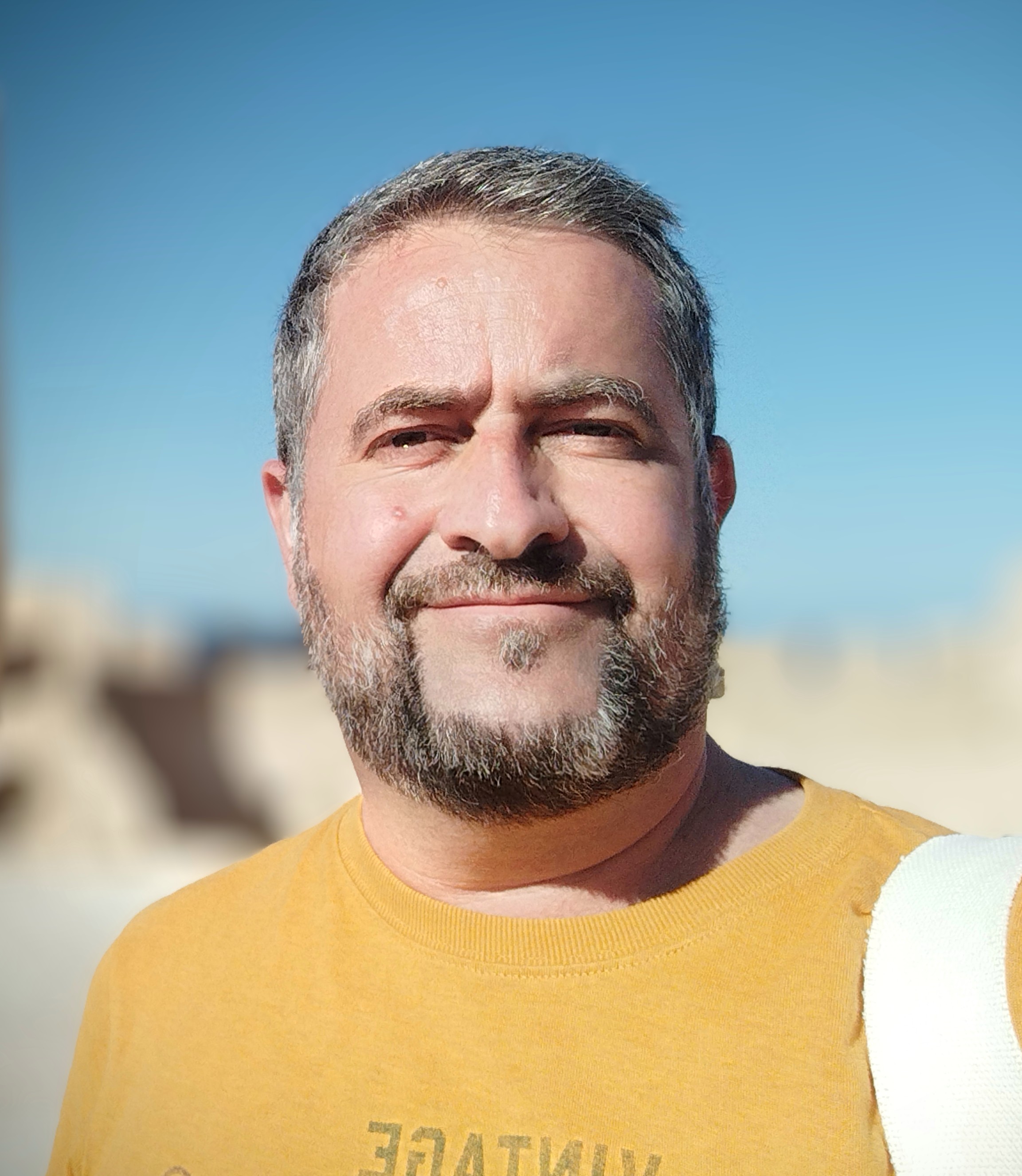
Horacio Gil Gil
Research Scientist
ORCID code: 0000-0002-7114-6686
Degree in Veterinary Medicine in 1995 and PhD in Veterinary Medicine in 2002 from the University of Zaragoza. He did his PhD thesis at NEIKER Tecknalia (Derio, Vizcaya) and the National Center for Microbiology of Instituto de Salud Carlos III (CNM-ISCIII, Majadahonda, Madrid) on the biological cycle of Lyme disease in the Basque Country. After that, he developed his postdoctoral training in different aspects of the pathogenesis of tularemia at the Center for Infectious Diseases, Stony Brook University, New York (USA) for 3 years. In December 2005, he joined the Reference and Research Laboratory in Special Pathogens of the CNM-ISCIII where he developed diagnostic, reference and research activities, in Bartonella, Leptospira and pathogens of interest in bioterrorism. Between 2014-2016 he participated in the European Program for the Training of Microbiologists in Public Health (EUPHEM), organized by the European Centre for Disease Prevention and Control. During this program, he participated in an international mission for the investigation of a cholera outbreak in Ghana, proposed by the Bernhard Nocht Institute for Tropical Diseases in Hamburg (Germany). In December 2016, he worked as a laboratory consultant for the World Health Organization at their office in Phnom Penh (Cambodia). Subsequently, he worked one year with Médecins Sans Frontières as director and quality manager of the TB laboratory in Nukus (Uzbekistan).
In 2019, he joined the HIV Variability and Biology Unit at CNM-ISCIII, where he developed different reference and research activities, including his contribution to the molecular epidemiological surveillance of HIV-1 in Spain and the study of HIV-1 antiretroviral resistance. Since September 2022 he has been leading the Human Papillomavirus Unit at the CNM-ISCIII. -
Alicia Inés García Señán
Predoctoral Student UNED
Degree in Pharmacy in 2013 from the Complutense University of Madrid. She completed specialized health training in Microbiology and Parasitology at the Complejo Asistencial Universitario de Salamanca (2014-2018). During this period he studied a master's degree in Tropical Diseases at the University of Salamanca (2016). She has developed her professional activity as a clinical microbiologist at the Hospital de Santa Bárbara (Soria) (2018), Hospital Universitario Vall d'Hebrón (Barcelona) (2019-2022), and Hospital Central de la Defensa (Gómez Ulla) C.S.V.E, since 2022. In September 2024 she has started PhD studies at the Human Papillomavirus Unit of the CNM-ISCIII.
-
Manuela Rodríguez Vargas
Técnico de Laboratorio


List of staff