



We protect your health through science
Investigation
Hepatitis and other infectious diseases
Research Lines
Content with Investigacion .
Biomarcadores y Multiómicas
A) Inmunopatogenia de hepatitis víricas
Historia natural de la hepatitis C crónica e impacto de la eliminación del virus de la hepatitis C (VHC) en pacientes coinfectados VIH/VHC:
La progresión de la historia natural de la infección por el VHC es más acelerada en pacientes coinfectados por el VIH. En estos pacientes, aunque el tratamiento de la infección por VHC con antivirales de acción directa (DAAs) reduce el riesgo de complicaciones hepáticas y muerte, los cambios fisiopatológicos no se normalizan por completo y persiste el riesgo residual de complicaciones hepáticas y no hepáticas. Por tanto, es de vital importancia, estudiar el impacto de la eliminación del VHC sobre la evolución de la enfermedad hepática a largo plazo, así como el efecto sobre las comorbilidades asociadas.
Eventos no definitorios de SIDA en personas VIH: Impacto de la hepatitis B y D.
La infección por VIH promueve una disfunción inmunitaria caracterizada por una activación inmunitaria exacerbada e inflamación crónica. El tratamiento antirretroviral no restaura completamente la salud ya que las personas viviendo con VIH en tratamiento tienen un mayor riesgo que la población general de desarrollar eventos adversos clínicos. En este contexto, las hepatitis B y D parecen promover estos eventos, sin embargo, todavía existe poca información sobre su potencial impacto. Esta línea está enfocada al estudio de biomarcadores pronósticos del desarrollo de eventos extrahepáticos.
- B) Enfoques ómicos para potenciar la medicina de precisión
Determinantes genéticos: susceptibilidad y progresión de enfermedades infecciosas:
La susceptibilidad a la infección y progresión de las enfermedades infecciosas es variable entre individuos con factores de riesgo similares, lo que sugiere que el background genético es un factor importante. Sin embargo, todavía a día de hoy se desconocen muchos de los factores genéticos implicados en la variabilidad interpersonal en la respuesta a enfermedades infecciosas, siendo de alta relevancia impulsar este campo.
Huella metabolómica implicada en la susceptibilidad y progresión de enfermedades infecciosas
La metabolómica constituye una herramienta poderosa para identificar nuevos biomarcadores de diagnóstico y pronóstico. También implica el monitoreo en tiempo real de los fenotipos metabólicos a lo largo del tiempo y en respuesta a los tratamientos, para informar mejor sobre la toma de decisiones clínicas. Las hepatitis víricas, así como otras infecciones contribuyen a una cascada de alteraciones metabólicas sistémicas en el huésped que pueden tener un fuerte impacto en la progresión de la enfermedad.
Impacto del microbioma en enfermedades infecciosas
Los avances en las tecnologías de secuenciación han acelerado la investigación sobre el microbioma humano, con hallazgos prometedores que muestran un gran potencial para revolucionar el conocimiento fisiopatológico de enfermedades, así como su prevención y tratamiento. Cuando aumenta la permeabilidad intestinal, o hay un crecimiento excesivo de bacterias, puede producirse translocación de bacterias derivadas del intestino a la sangre que provocan la activación de células inmunes contribuyendo a un estado de inflamación y activación inmunitaria persistente.
Integración de ómicas e identificación de biomarcadores moleculares tempranos en enfermedades infecciosas.
El uso de un enfoque multiómico es un campo emergente para obtener conocimientos profundos sobre los sistemas biológicos y lograr un progreso significativo en la comprensión de la interacción huésped-patógeno. Se espera que las plataformas de análisis multiómicos revolucionen el diagnóstico y la clasificación de enfermedades infecciosas, ya que la integración de datos y conocimientos es clave para desentrañar los factores de riesgo y la construcción de mejores modelos predictivos de enfermedad. Este enfoque se está aplicando a diferentes enfermedades infecciosas tales como la infección por el VHC, VHB, VHD, VIH, y COVID-19, entre otros.
Research projects
Content with Investigacion .
1. PI21CIII/00033 - Título: Análisis multi-ómico para evaluar el impacto a largo plazo de la erradicación del VHC en pacientes coinfectados por VIH/VHC con cirrosis. Investigador principal: María Ángeles Jiménez Sousa. Organismo Financiador: ISCIII - Fondo de Investigación Sanitaria (FIS). AESI 2021. Financiación: 92.000 euros. Duración: 2022-2024 (3 años).
2. COV20/0114 - Título: Integración de ómicas frente al COVID-19. Investigador principal: María Angeles Jiménez Sousa / Amanda Fernández Rodríguez. Organismo Financiador: Instituto de Salud Carlos III. Financiación: 131.969 euros. Duración: 2020-2021 (1 año).
3. CP17CIII/00007 - Título: Impacto del metaboloma, microbioma bacteriano y viroma en la evolución de pacientes cirróticos, con y sin VIH, que eliminan el VHC con tratamiento antiviral. Investigador principal: María Angeles Jiménez Sousa. Organismo Financiador: ISCIII - Fondo de Investigación Sanitaria (FIS). AESI 2017. Financiación: 100.000 euros. Duración: 2019-2021 (3 años).
4. PI18CIII/00028: Enfermedad hepática avanzada en pacientes cirróticos infectados por el VHC: Análisis metabolómico. Investigador principal: María Angeles Jiménez Sousa. Organismo Financiador: ISCIII - Fondo de Investigación Sanitaria (FIS). AESI 2018. Financiación: 26.900 euros. Duración: 2019-2021 (3 años).
Formando parte del equipo investigador:
1. 925.581 - Título: Estudio de los factores genéticos asociados al desarrollo de secuelas en el paciente crítico post-COVID. Investigador principal: Rafael Blancas Gómez-Casero. Organismo Financiador: FUAX-Santander 2022. Financiación: 27.000 euros. Duración: 1/04/2022-31/03/2023 (1 año).
2. IISP 60091 - Título: Genetic contribution to weight gain after initiation of antiretroviral therapy in patients with HIV infection RIS EPICLIN 01-2020. Organismo Financiador: Merck Sharp & Dohme Corp. Importe: 68.701 €. Fecha de Convocatoria: 2020. Duración: 18 meses. Investigador principal: Juan Berenguer; HGU "Gregorio Marañón", Unidad de Enfermedades Infecciosas/VIH.
3. COV20/00622 - Título: Determinantes genéticos y biomarcadores genómicos de riesgo en pacientes con infección por coronavirus SARS-COV-2. Organismo Financiador: Instituto de Salud Carlos III. Importe: 597.900 €. Fecha de Convocatoria: 2020. Duración: 1 año. Investigador principal: Ángel Carracedo Álvarez; Universidad de Santiago de Compostela.
4. CIVP19A5953: Búsqueda de biomarcadores en vesículas extracelulares para el diagnóstico y pronóstico del shock séptico post-quirúrgico. IP: Eduardo Tamayo Gómez;.Fundación Ramón Areces. 2019-2021. 70.567€.
La Dra. María Angeles Jiménez Sousa lidera tres subproyectos del consorcio “Spanish COalition to Unlock Research on host Genetics on COVID-19 (http://www.scourge-covid.org/)" que surgió a partir de uno de los proyectos del fondo COVID-ISCIII (REF:COV20_00622). Esta propuesta engloba a más de 60 grupos españoles, 9 biobancos y 22 grupos de investigación de distintos países Latinoaméricanos (México, Cuba, República Dominicana, Nicaragua, Colombia, Ecuador, Perú, Paraguay, Brasil, Uruguay y Argentina) y está alineada con el “The COVID-9 Host Genetics Initiative" (https://www.covid19hg.org/).
Publications
Hepatitis C virus influences HIV-1 viral splicing in coinfected patients.
Martínez-Román P, López-Huertas MR, Crespo-Bermejo C, Arca-Lafuente S, Cortegano I, Valle-Millares D, Gaspar ML, Martín-Carbonero, Domínguez-Domínguez L, Ryan P, De los Santos I, De la Fuente Moral S, Fernández-Rodríguez A, Coiras M, Briz V, on behalf of COVIHEP. Hepatitis C virus influences HIV-1 viral splicing in coinfected patients. J Clin Med 2020, 9 (7): 2091.
PUBMED DOIrotist enteroparasites in wild boar (Sus scrofa ferus) and black Iberian pig (Sus scrofa domesticus) in southern Spain: a protective effect on hepatitis E acquisition?
Rivero-Juárez A, Dashti A, López-López P, Salimo Muadica A, Risalde MA, Köster PC, Machuca I, Bailo B, Hernández de Mingo M, Dacal E, García-Bocanegra I, Saugar JM, Calero-Bernal R, González-Barrio D, Rivero A, Briz V, Carmena D. Protist enteroparasites in wild boar (Sus scrofa ferus) and black Iberian pig (Sus scrofa domesticus) in southern Spain: a protective effect on hepatitis E acquisition? Parasites & Vectors 2020, 13: 281
PUBMED DOIEpidemiological trend of hepatitis C-related liver events in Spain (2000-2015): A nationwide population-based study.
7. Rivero-Juárez A, Dashti A, López-López P, Salimo Muadica A, Risalde MA, Köster PC, Machuca I, Bailo B, Hernández de Mingo M, Dacal E, García-Bocanegra I, Saugar JM, Calero-Bernal R, González-Barrio D, Rivero A, Briz V, Carmena D. Protist enteroparasites in wild boar (Sus scrofa ferus) and black Iberian pig (Sus scrofa domesticus) in southern Spain: a protective effect on hepatitis E acquisition? Parasites & Vectors 2020, 13: 281
PUBMED DOIMultidisciplinary Group of viral coinfection HIV/Hepatitis (COVIHEP). HCV-coinfection is related to an increased HIV-1 reservoir size in cART-treated HIV patients: a cross-sectional study.
López-Huertas MR, Palladino C, Garrido-Arquero M, Esteban-Cartelle B, Sánchez-Carrillo M, Martínez-Román P, Martín-Carbonero L, Ryan P, Domínguez-Domínguez L, Santos ID, Moral SDLF, Benito JM, Rallón N, Alcamí J, Resino S, Fernández-Rodríguez A, Coiras M, Briz V*, on behalf of the Multidisciplinary Group of viral coinfection HIV/Hepatitis (COVIHEP). HCV-coinfection is related to an increased HIV-1 reservoir size in cART-treated HIV patients: a cross-sectional study. Sci Rep 2019: 9 (1); 5606.
PUBMED DOIPersistent Low-Level Viremia in treatment HIV infection: An unresolved status.
3. Crespo-Bermejo C, Ramírez de Arellano E, Lara-Aguilar V, Martínez-Román P, Arca Lafuente S, Gómez-Lus ML, Martín-Carbonero L, Briz V. Persistent Low-Level Viremia in treatment HIV infection: An unresolved status. Virulencia 2021, 12: 2919-2931.
PUBMED DOIFull coding hepatitis E virus genotype 3 genome amplification method.
Muñoz-Chimeno M, Forero JE, Echevarría JM, Muñoz-Bellido JL, Vázquez-López L, Morago L, García-Galera MC, Avellón A. Full coding hepatitis E virus genotype 3 genome amplification method. J Virol Methods. 2016 Apr;230:18-23.
PUBMED DOIComparative sensitivity of commercial tests for hepatitis E genotype 3 virus antibody detection.
• Avellón A, Morago L, García-Galera del Carmen M, Muñoz M, Jose-Manuel Echevarría JM. Comparative sensitivity of commercial tests for hepatitis E genotype 3 virus antibody detection. J Med Virol. 2015 Nov;87(11):1934-9.
PUBMED DOIContent with Investigacion .
-

Maribel Jiménez Alonso
Tenured Scientist
ORCID code: 0000-0002-5615-3087
Doctor in Pharmacy from the Complutense University of Madrid (1994) and Extraordinary Doctorate Award. She started her research activity at ISCIII in 1990 in the field of leishmaniasis. Currently, she is the head of the LEM where she develops her scientific work in the field of entomological surveillance of phlebotomine sandflies in the CM and other studies in the field of molecular biology, mainly applied to the model of Leishmania infantum and its vector Phlebotomus perniciosus. Member of the team of experts of the ISCIII that participates in the elaboration of Rapid Risk Assessments and in the working groups in charge of the elaboration of National Plans of Prevention, Surveillance and Control of Vector-borne Diseases of the CCAES, Ministry of Health. She is currently “Operational Focal Point” for vector-borne diseases at national level for the One Health-Vectornet network (EFSA and ECDC) and coordinator of the VectorNet-Spain network since July 2024. In addition, she is a member of the expert committee of the Network of Surveillance and Control of Vectors with public health interest in the Community of Madrid. In addition, she is part of a research group from CIBER (CIBERINFEC; CB21/13/00110).
-
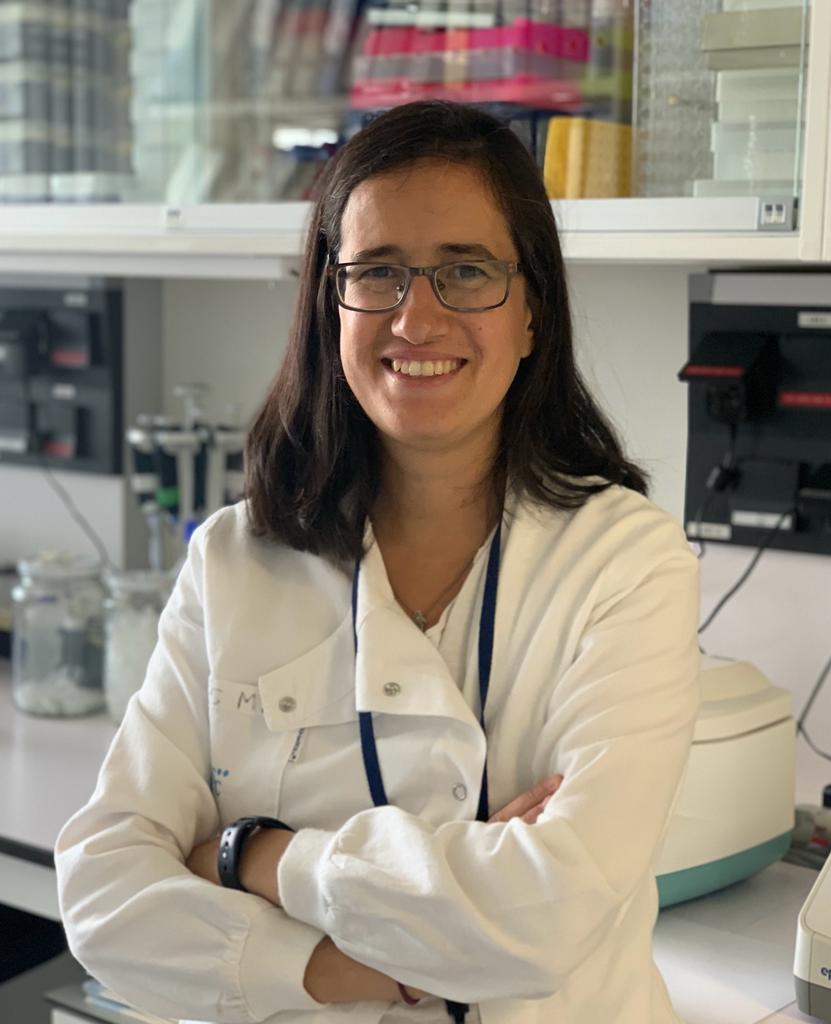
Inés Martín Martín
Tenured Scientist
ORCID code: 0000-0002-0956-7324
Within Medical Entomology, my work focuses on the study of phlebotomine sand flies and culicidae as vectors of leishmaniasis and arbovirosis, respectively. In 2014 I obtained my PhD degree “cum laude” with European mention from the Complutense University of Madrid. My PhD Thesis (developed at the Instituto de Salud Carlos III), focused on the study of phlebotomine sandfly saliva. Subsequently, during my postdoctoral period, I worked on insect gene editing, molecular, biochemical and functional characterization of insect saliva proteins and their role in the infection and transmission of pathogens. Most of my scientific career has been developed at the Laboratory of Malaria and Vector Research, National Institutes of Health (NIH), USA. Since 2021 I am a Senior Scientist at the Laboratory of Medical Entomology (ISCIII).
-

Ricardo Molina Moreno
Doctor Ad Honorem
ORCID code: 0000-0001-6662-173X
Doctor in Biological Sciences from the Complutense University of Madrid (1994). In 1979 he began his professional career at the Instituto de Salud Carlos III (ISCIII), where he became a researcher in 1985. He was in charge of the Medical Entomology Laboratory from that year until his retirement in 2023. He is currently a doctor linked “Ad Honorem”. He has extensive experience in medical entomology, advising the Ministry of Health (CCAES) and Health Departments of Autonomous Communities, on surveillance and control of arthropods transmitting vector-borne diseases. In recent years he has been involved in surveillance programs in Spain for leishmaniasis vectors, especially in the Fuenlabrada outbreak, and for viruses causing Crimean-Congo hemorrhagic fever and dengue. Also in the surveillance of invasive exotic mosquitoes, especially Aedes albopictus, in ports and airports. In his last stage he has been part of the research group within the CIBER (CIBERINFEC; CB21/13/00110).
-

Marcos López de Felipe Escudero
Predoctoral contract FPU
ORCID code: 0000-0002-2919-836X
Graduated in Biology from the Autonomous University of Madrid and Master in Tropical Parasitic Diseases from the University of Valencia. He started his professional career in 2019 in surveillance and management of hematophagous diptera of veterinary-medical interest, as well as other urban pests. In 2024 he began his work at the Instituto de Salud Carlos III (ISCIII) within the framework of the project “Evaluation of the anti-leishmanicidal effect of the bacterium Tc1 and its derivatives in the intravectorial cycle of the parasite” directed by Dr. Inés Martín Martín where he continues after the award of a FPU fellowship. He has extensive experience in medical entomology, especially in surveillance and vector control and taxonomic identification. Her career so far has focused mainly on the study of phlebotomine sand flies, simulids and culicidae, with special attention to citizen science.
-

Eva Pérez Martínez
Clinical and Biomedical Laboratory Technician
ORCID code: 0000-0002-6553-9969
Graduated in 2019 from the Advanced Vocational Training Program in Clinical and Biomedical Laboratory Sciences. I began my professional career in 2020 at Eurofins Megalab laboratories. In 2024, I started working as a freelance professional on an international project focused on the bioecology of phlebotomine sand flies in urban environments across the Mediterranean Basin, conducting fieldwork in Spain, Italy, Greece, and southern France within the framework of citizen science. Since 2025, I have been part of the Medical Entomology Laboratory at the Instituto de Salud Carlos III (ISCIII), where I work as a laboratory technician on the project “Biochemical and functional characterization of salivary proteins from Phlebotomus perniciosus and their role in Leishmania infantum infection (PERNIPROT)”, led by Dr. Inés Martín Martín.


List of staff