



We protect your health through science
Investigation
Immunobiology
Research Lines
Content with Investigacion .
Hepatitis
- Diseño de métodos diagnósticos para el estudio de los virus de las hepatitis (VH) A, B, C, D, E: Diseñamos sistemas de PCR para su detección y caracterización.
- Evaluación de métodos diagnósticos de los VH. Colaboramos con empresas para estudios de sensibilidad y especificidad de equipos diagnósticos.
- Estudios de Seroprevalencia de los virus de las hepatitis.
- Epidemiología genómica de genomas completos de VHA, VHB, VHC, VHD y VHE en colaboración con el ECDC. Estudios de trazabilidad del VHE.
- Caracterización molecular de virus de las hepatitis mediante secuenciación masiva: a) VHB: mutantes de escape HBsAg (prevalencia y efectos en la detección del HBsAg). Estudio de mutaciones en epítopos de estimulación inmune y mutaciones asociadas a evolución clínica desfavorable.
- b) VHC: resistencias a los antivirales de acción directa. Análisis molecular de subtipos poco frecuentes.
c) Estudios filogenéticos del VHD.
d) Análisis genómico del VHE.
e) Investigación etiológica de hepatitis no filiadas mediante estudios de metagenómica.
- b) VHC: resistencias a los antivirales de acción directa. Análisis molecular de subtipos poco frecuentes.
Research projects
Content with Investigacion .
1. Proyecto CIBEREPS 2022. Microbiological and genomic investigation of hepatitis in children by metagenomic approach in case and control subjects (IP: Ana Avellón).
2023-2024. En colaboración con el Hospital San Joan de Deu de Barcelona.
2. MPY 501-19: Tracking hepatitis E virus infection by means of epidemiological research and whole genome sequencing. Project TrazHE. (IP: Ana Avellón). 2020-2024.
3. Proyecto CIBEREPS 2021 Metagenomic sequencing to identify viral aetiologies in undiagnosed paediatric cases of meningitis and encephalitis (IP: D. Tarragó). 2021-2022.
4. MPY 383/19 (PEJ2018-004446-A). Ayudas para la promoción de empleo joven e implantación de la garantía juvenil en I+D+I. análisis de la complejidad de secuencias de los virus de la hepatitis A, B, C; D y E (VHA, VHB, VHC, VHD y VHE) mediante técnicas de secuenciación masiva. (IP: Ana Avellón). 2020-2021.
5. MPY 1285/16 Movilidad "Salvador de Madariaga" programa estatal de promoción de talento y su empleabilidad. (IP: Ana Avellón). 2016.
Publications
Lorente, E., E. Barnea, C. Mir, A. Admon, and D. López. 2020. The HLA-DP peptide repertoire from human respiratory syncytial virus is focused on major structural proteins with the exception of the viral polymerase. J Proteomics. 221:103759.
Lorente, E., E. Barnea, C. Mir, A. Admon, and D. López. 2020. The HLA-DP peptide repertoire from human respiratory syncytial virus is focused on major structural proteins with the exception of the viral polymerase. J Proteomics. 221:103759.
PUBMED DOIMarquez, A., M. Gomez-Fontela, S. Lauzurica, R. Candorcio-Simon, D. Munoz-Martín, M. Morales, M. Ubago, C. Toledo, P. Lauzurica, and C. Molpeceres. 2020. Fluorescence enhanced BA-LIFT for single cell detection and isolation. Biofabrication. 12:025019.
Marquez, A., M. Gomez-Fontela, S. Lauzurica, R. Candorcio-Simon, D. Munoz-Martín, M. Morales, M. Ubago, C. Toledo, P. Lauzurica, and C. Molpeceres. 2020. Fluorescence enhanced BA-LIFT for single cell detection and isolation. Biofabrication. 12:025019.
PUBMED DOILorente, E., M. Marcilla, P. G. de la Sota, A. Quijada-Freire, C. Mir, and D. López. 2021. Acid Stripping after Infection Improves the Detection of Viral HLA Class I Natural Ligands Identified by Mass Spectrometry. Int.J.Mol.Sci. 22.
Lorente, E., M. Marcilla, P. G. de la Sota, A. Quijada-Freire, C. Mir, and D. López. 2021. Acid Stripping after Infection Improves the Detection of Viral HLA Class I Natural Ligands Identified by Mass Spectrometry. Int.J.Mol.Sci. 22.
PUBMED DOIde la Sota, P. G., E. Lorente, L. Notario, C. Mir, O. Zaragoza, and D. López. 2021. Mitoxantrone Shows In Vitro, but Not In Vivo Antiviral Activity against Human Respiratory Syncytial Virus. Biomedicines. 9.
de la Sota, P. G., E. Lorente, L. Notario, C. Mir, O. Zaragoza, and D. López. 2021. Mitoxantrone Shows In Vitro, but Not In Vivo Antiviral Activity against Human Respiratory Syncytial Virus. Biomedicines. 9.
PUBMED DOIPredicted Epitope Abundance Supports Vaccine-Induced Cytotoxic Protection Against SARS-CoV-2 Variants of Concern.
Martín-Galiano, A. J., F. Diez-Fuertes, M. J. McConnell, and D. López. 2021. Predicted Epitope Abundance Supports Vaccine-Induced Cytotoxic Protection Against SARS-CoV-2 Variants of Concern. Front Immunol. 12:732693.
PUBMED DOIPrediction of Conserved HLA Class I and Class II Epitopes from SARS-CoV-2 Licensed Vaccines Supports T-Cell Cross-Protection against SARS-CoV-1.
López, D. 2022. Prediction of Conserved HLA Class I and Class II Epitopes from SARS-CoV-2 Licensed Vaccines Supports T-Cell Cross-Protection against SARS-CoV-1. Biomedicines. 10.
PUBMED DOIAbundance, Betweenness Centrality, Hydrophobicity, and Isoelectric Points Are Relevant Factors in the Processing of Parental Proteins of the HLA Class II Ligandome.
Lorente, E., A. J. Martín-Galiano, D. M. Kadosh, A. Barriga, J. Garcia-Arriaza, C. Mir, M. Esteban, A. Admon, and D. López. 2022. Abundance, Betweenness Centrality, Hydrophobicity, and Isoelectric Points Are Relevant Factors in the Processing of Parental Proteins of the HLA Class II Ligandome. J.Proteome.Res. 21:164-171.
DOICross-Recognition of SARS-CoV-2 B-Cell Epitopes with Other Betacoronavirus Nucleoproteins
Tajuelo, A., M. López-Siles, V. Mas, P. Perez-Romero, J. M. Aguado, V. Briz, M. J. McConnell, A. J. Martín-Galiano, and D. López. 2022. Cross-Recognition of SARS-CoV-2 B-Cell Epitopes with Other Betacoronavirus Nucleoproteins. Int.J.Mol.Sci. 23.
PUBMEDPredicted HLA Class I and Class II Epitopes From Licensed Vaccines Are Largely Conserved in New SARS-CoV-2 Omicron Variant of Concern.
López, D. 2022. Predicted HLA Class I and Class II Epitopes From Licensed Vaccines Are Largely Conserved in New SARS-CoV-2 Omicron Variant of Concern. Front Immunol. 13:832889.
PUBMEDGarcia-Arriaza, J., M. Esteban, and D. López. 2021
Garcia-Arriaza, J., M. Esteban, and D. López. 2021. Modified Vaccinia Virus Ankara as a Viral Vector for Vaccine Candidates against Chikungunya Virus. Biomedicines. 9.
PUBMEDDiagnósitico microbiológico y control de la legionelosis
Pelaz Antolín, C., et al., En Procedimientos en Microbiología Clínica, E.C.y.R. Cantón, Editor. 2005, SEIMC. p. 1-72.
PUBMEDLegionella-Biofilms-Amebas, un problema industrial, de sanidad ambiental y de salud pública
Juana María González-Rubio, Celia Játiva, Almudena Cascajero, Fernando González-Camacho. Infoplagas, nº 112, agosto 2023 pags: 20-24. (Artículo de divulgación).
DOIPrograma de Legionelosis. En Echevarría Mayo JE y Oteo Iglesias J (Editores). Programas de Vigilancia Microbiológica pags: 74-80. Centro Nacional de Microbiología, Madrid: Instituto de Salud Carlos III, 2021.
Bellido B y Pelaez C: Programa de Legionelosis. En Echevarría Mayo JE y Oteo Iglesias J (Editores). Programas de Vigilancia Microbiológica pags: 74-80. Centro Nacional de Microbiología, Madrid: Instituto de Salud Carlos III, 2021.
Programa de Legionelosis. En Echevarría Mayo JE y Oteo Iglesias J (Editores) Programas de Vigilancia Microbiológica Centro Nacional de Microbiología.
Fernando González-Camacho y Almudena Cascajero. Programa de Legionelosis. En Echevarría Mayo JE y Oteo Iglesias J (Editores) Programas de Vigilancia Microbiológica Centro Nacional de Microbiología. Volumen 2:77-89. 2021-2022 Majadahonda (Madrid); Instituto de Salud Carlos III, Centro Nacional de Microbiología: 2023.
Chikungunya virus infections among travellers returning to Spain, 2008 to 2014
3. Maria Dolores Fernandez Garcia; Mathieu Bangert; Fernando de Ory; Arantxa Potente; Lourdes Hernandez; Fatima Lasala; Laura Herrero; Francisca Molero; Anabel Negredo; Ana Vázquez; Teodora Minguito; Pilar Balfagón; Jesus de la Fuente; Sabino Puente; Eva Ramírez de Arellano; Mar Lago; Miguel Martinez; Joaquim Gascón; Francesca Norman; Rogelio Lopez Velez; Elena Sulleiro; Diana Pou; Nuria Serre; Ricardo Fernández Roblas; Antonio Tenorio; Leticia Franco; Maria Paz Sanchez Seco. Chikungunya virus infections among travellers returning to Spain, 2008 to 2014. Euro surveillance : bulletin Europeen sur les maladies transmissibles = European communicable disease bulletin. 21 - 36, (Sweden): 08/09/2016. ISSN 1560-7917
PUBMED DOILegionella feeleii: Ubiquitous Pathogen in the Environment and Causative Agent of Pneumonia
Vaccaro L, Gomes TS, Izquierdo F, Magnet A, Llorens Berzosa S, Ollero D, Salso S, Alhambra A, Gómez C, López Cano M, Pelaz C, Bellido Samaniego B, Del Aguila C, Fenoy S, Hurtado-Marcos C. Front Microbiol. 2021;12:707187.
DOIContent with Investigacion .
-
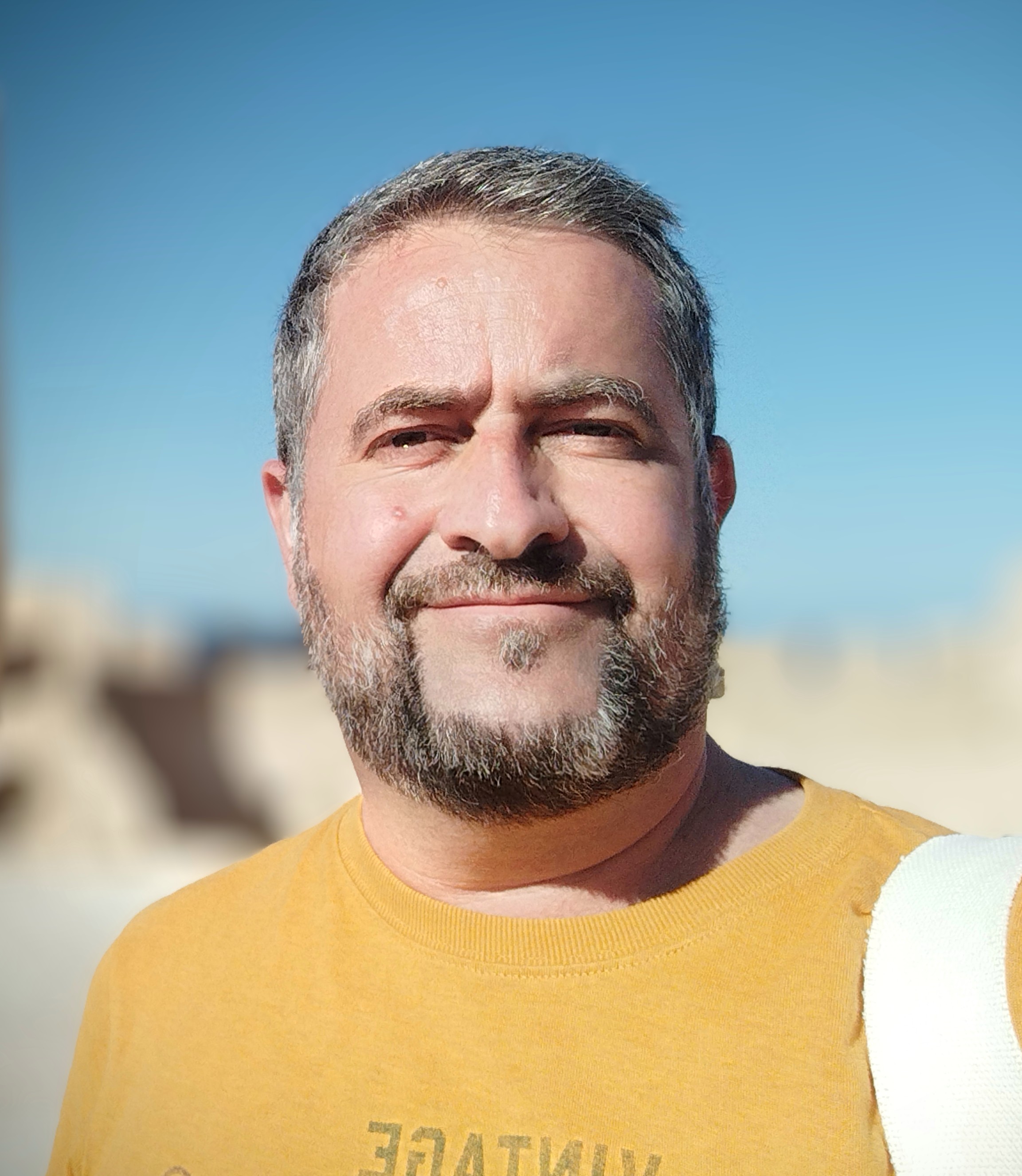
Horacio Gil Gil
Research Scientist
ORCID code: 0000-0002-7114-6686
Degree in Veterinary Medicine in 1995 and PhD in Veterinary Medicine in 2002 from the University of Zaragoza. He did his PhD thesis at NEIKER Tecknalia (Derio, Vizcaya) and the National Center for Microbiology of Instituto de Salud Carlos III (CNM-ISCIII, Majadahonda, Madrid) on the biological cycle of Lyme disease in the Basque Country. After that, he developed his postdoctoral training in different aspects of the pathogenesis of tularemia at the Center for Infectious Diseases, Stony Brook University, New York (USA) for 3 years. In December 2005, he joined the Reference and Research Laboratory in Special Pathogens of the CNM-ISCIII where he developed diagnostic, reference and research activities, in Bartonella, Leptospira and pathogens of interest in bioterrorism. Between 2014-2016 he participated in the European Program for the Training of Microbiologists in Public Health (EUPHEM), organized by the European Centre for Disease Prevention and Control. During this program, he participated in an international mission for the investigation of a cholera outbreak in Ghana, proposed by the Bernhard Nocht Institute for Tropical Diseases in Hamburg (Germany). In December 2016, he worked as a laboratory consultant for the World Health Organization at their office in Phnom Penh (Cambodia). Subsequently, he worked one year with Médecins Sans Frontières as director and quality manager of the TB laboratory in Nukus (Uzbekistan).
In 2019, he joined the HIV Variability and Biology Unit at CNM-ISCIII, where he developed different reference and research activities, including his contribution to the molecular epidemiological surveillance of HIV-1 in Spain and the study of HIV-1 antiretroviral resistance. Since September 2022 he has been leading the Human Papillomavirus Unit at the CNM-ISCIII. -
Alicia Inés García Señán
Predoctoral Student UNED
Degree in Pharmacy in 2013 from the Complutense University of Madrid. She completed specialized health training in Microbiology and Parasitology at the Complejo Asistencial Universitario de Salamanca (2014-2018). During this period he studied a master's degree in Tropical Diseases at the University of Salamanca (2016). She has developed her professional activity as a clinical microbiologist at the Hospital de Santa Bárbara (Soria) (2018), Hospital Universitario Vall d'Hebrón (Barcelona) (2019-2022), and Hospital Central de la Defensa (Gómez Ulla) C.S.V.E, since 2022. In September 2024 she has started PhD studies at the Human Papillomavirus Unit of the CNM-ISCIII.
-

Manuela Rodríguez Vargas
Técnico de Laboratorio


List of staff
Additional Information
Doctoral theses
“Expression and functionality of tlr2 and tlr4 in lymphomyeloid populations present in the lung and lymphoid organs during embryonic and neonatal life in mouse models.” Carolina Ruiz Sánchez. Complutense University of Madrid, 2022
Master's thesis
Detection and characterization of extracellular vesicles of platelet origin in lung supernatants from SPN-infected animals. Marta Paris, Alcalá University, 2024
Study of TLR-dependent activation in the RAW 264.7 macrophage line. Iñigo Merino de Saracho, Alcalá University, 2023
Study of the functionality of TLR receptors in the lung and other lymphoid organs in B cell populations using the neonatal mouse model. Yolanda Campanero, Alcalá University, 2023
Exploratory study of T lymphoid progenitors in the neonatal mouse lung. Alejandro Arrabal, Complutense University of Madrid, 2022
Study of B lymphoid differentiation in mice deficient for CD5 and CD6 molecules. Cristina Martín, Alcalá University, 2022
Role of platelets and their progenitor cells in two animal models of infection: SPN and RSV. Ana de Lucas Rius, Alcalá University, 2020
Pilot study of RSV infection in the mouse model: cellular phenotype of myeloid and lymphoid populations in the lung in two animal models of infection: SPN and RSV. Juan Antonio Martín Quesada, Alcalá University, 2020
B cell response during Streptococcus pneumoniae infection. Eva Castro, 2020
Study of the hematopoietic potential of neonatal lung cells in the mouse model. Ana Cogollo García, Alcalá University, 2018
Innate immune response to S. pneumoniae in the lung. Rodrigo Sánchez, Complutense University of Madrid, 2018
Neonatal immunity in the mouse model: localization and function of the innate and adaptive response. Alba Ezequiel Fernández, Alcalá University, 2017
Characterization of immunoglobulin gene diversity in the mouse model of TLR4 homeostasis and activation by bacterial lipopolysaccharide. Cristina García Caballero, Alcalá University, 2017
Altered lymphopoiesis and splenic B cell subsets on Telomerase Activity Deficient Mice (TERC-/-). Juliana Manosalva, Complutense University of Madrid, 2017
Study of the Immune Response in Nasopharyngeal Washings of Infants with Bronchiolitis. Isabel Martín Barrios, Complutense University of Madrid, 2016
Dynamics of B1-REL lymphocytes in the in vivo immunization model with DNP-LPS. Inmaculada Sanz Ramos University Alcalá, 2015
Megakaryocyte differentiation pathways in the mouse model. Marta Cobos Briz, Alcalá University, 2015
Role of megakaryocytes in infectious processes. Melania Guerrero Hue, Complutense University of Madrid, 2015
Final degree projects
Study of new bacterial vaccines in the mouse (Mus musculus) infection model due to Streptococcus pneumoniae. Alejandro Arrabal, Polytechnic University of Madrid, 2021
Megakaryocytes and platelets in SPN respiratory infection: Role of TLR4. Óscar González Hervás, Complutense University of Madrid, 2021
Study of the immune response mediated by pseudo-innate B lymphocytes against TLR4-dependent immunization models. Rodrigo Sánchez, Complutense University of Madrid, 2017.
Study of the diversity in the immunoglobulin repertoire in healthy individuals. Isabel Martín, Francisco de Vitoria University, 2015.
Dynamics of hematopoietic populations in the perinatal spleen. Inmaculada Sanz, Alcalá University, 2014
Teaching in training courses
Training course: Introduction to Flow Cytometry (from 2015 to present)
Training Course: Flow Cytometry Data Analysis (2018 to present)
Outreach / Citizen Science
• Collaboration in the 4th+Company CAM program.
• Collaboration with the ISCIII Scientific Culture Unit in Science Week at the ISCIII
• Scientific Dissemination Project "Talking about Science", carried out in Majadahonda primary, secondary and high school schools, since 2015 in collaboration with the Department of Education and Youth of the Majadahonda City Council: “How your Immune System works and healthy lifestyle habits to take care of it”
Doctoral theses
“Expression and functionality of tlr2 and tlr4 in lymphomyeloid populations present in the lung and lymphoid organs during embryonic and neonatal life in mouse models.” Carolina Ruiz Sánchez. Complutense University of Madrid, 2022
Master's thesis
Detection and characterization of extracellular vesicles of platelet origin in lung supernatants from SPN-infected animals. Marta Paris, Alcalá University, 2024
Study of TLR-dependent activation in the RAW 264.7 macrophage line. Iñigo Merino de Saracho, Alcalá University, 2023
Study of the functionality of TLR receptors in the lung and other lymphoid organs in B cell populations using the neonatal mouse model. Yolanda Campanero, Alcalá University, 2023
Exploratory study of T lymphoid progenitors in the neonatal mouse lung. Alejandro Arrabal, Complutense University of Madrid, 2022
Study of B lymphoid differentiation in mice deficient for CD5 and CD6 molecules. Cristina Martín, Alcalá University, 2022
Role of platelets and their progenitor cells in two animal models of infection: SPN and RSV. Ana de Lucas Rius, Alcalá University, 2020
Pilot study of RSV infection in the mouse model: cellular phenotype of myeloid and lymphoid populations in the lung in two animal models of infection: SPN and RSV. Juan Antonio Martín Quesada, Alcalá University, 2020
B cell response during Streptococcus pneumoniae infection. Eva Castro, 2020
Study of the hematopoietic potential of neonatal lung cells in the mouse model. Ana Cogollo García, Alcalá University, 2018
Innate immune response to S. pneumoniae in the lung. Rodrigo Sánchez, Complutense University of Madrid, 2018
Neonatal immunity in the mouse model: localization and function of the innate and adaptive response. Alba Ezequiel Fernández, Alcalá University, 2017
Characterization of immunoglobulin gene diversity in the mouse model of TLR4 homeostasis and activation by bacterial lipopolysaccharide. Cristina García Caballero, Alcalá University, 2017
Altered lymphopoiesis and splenic B cell subsets on Telomerase Activity Deficient Mice (TERC-/-). Juliana Manosalva, Complutense University of Madrid, 2017
Study of the Immune Response in Nasopharyngeal Washings of Infants with Bronchiolitis. Isabel Martín Barrios, Complutense University of Madrid, 2016
Dynamics of B1-REL lymphocytes in the in vivo immunization model with DNP-LPS. Inmaculada Sanz Ramos University Alcalá, 2015
Megakaryocyte differentiation pathways in the mouse model. Marta Cobos Briz, Alcalá University, 2015
Role of megakaryocytes in infectious processes. Melania Guerrero Hue, Complutense University of Madrid, 2015
Final degree projects
Study of new bacterial vaccines in the mouse (Mus musculus) infection model due to Streptococcus pneumoniae. Alejandro Arrabal, Polytechnic University of Madrid, 2021
Megakaryocytes and platelets in SPN respiratory infection: Role of TLR4. Óscar González Hervás, Complutense University of Madrid, 2021
Study of the immune response mediated by pseudo-innate B lymphocytes against TLR4-dependent immunization models. Rodrigo Sánchez, Complutense University of Madrid, 2017.
Study of the diversity in the immunoglobulin repertoire in healthy individuals. Isabel Martín, Francisco de Vitoria University, 2015.
Dynamics of hematopoietic populations in the perinatal spleen. Inmaculada Sanz, Alcalá University, 2014
Teaching in training courses
Training course: Introduction to Flow Cytometry (from 2015 to present)
Training Course: Flow Cytometry Data Analysis (2018 to present)
Outreach / Citizen Science
• Collaboration in the 4th+Company CAM program.
• Collaboration with the ISCIII Scientific Culture Unit in Science Week at the ISCIII
• Scientific Dissemination Project "Talking about Science", carried out in Majadahonda primary, secondary and high school schools, since 2015 in collaboration with the Department of Education and Youth of the Majadahonda City Council: “How your Immune System works and healthy lifestyle habits to take care of it”