



We protect your health through science
Investigation
Microbial Immunology and Immunogenetics
Research Lines
Content with Investigacion .
Research
The Molecular Virology group focuses its research on the study of HIV-1 genetic variation and viral evolution using both in vitro and ex vivo approaches, structured around the following research lines:
- Non-progressor patients. These patients maintain control of the disease in the absence of antiretroviral therapy and have therefore been proposed as a model of functional cure. Our objective is to study the contribution of viral factors to disease control through biological characterization and analysis of viral evolution in individuals with undetectable viral loads (elite controllers, EC), compared with individuals showing other patterns of viral control.
- Viral envelope. This viral protein is key in determining viral fitness. Therefore, its functionality significantly affects infection progression. In collaboration with Dr. Blanco and Dr. Valenzuela, we study which specific events (CD4 binding, fusogenicity, etc.) are associated with envelope functionality. To this end, we have analyzed envelopes from individuals with different patterns of disease progression. Some of these have been contributed to the AIDS Research Network envelope biobank for broader use.
- Dual infection. Infection with more than one viral variant (either through co-infection or superinfection) may have consequences for infection pathogenesis. Within our group, different aspects of DI have been analyzed, including its detection in non-progressor patients, its prevalence and incidence in Spain, and its influence on the neutralizing antibody response.
- Molecular Epidemiology. The group has analyzed viral evolution throughout the epidemic in Spain and in other countries (the Netherlands, Italy, Germany, Uruguay, Panama, Brazil, etc.).
- Role of amino acid residues in reverse transcriptase. We study the role of specific amino acid residues in HIV-1 reverse transcriptase in enzymatic function and replication capacity using an infectious molecular clone previously obtained by the group.
- “In vitro” variability. Serial passage studies have been used to detect the mechanisms responsible for the gain or loss of viral fitness.
- Antiviral studies. We have analyzed the selection of resistance mutations in vitro against different antivirals, as well as the effect of these mutations on viral fitness, and the activity of new antivirals such as ATR inhibitors.
Virological Diagnosis and Reference in HIV and HTLV Infections
The research group provides diagnostic and reference activities through the service portfolio of the National Center for Microbiology to the entire Spanish National Health System.
These services include:
-
Diagnosis and reference of HIV infection (types 1 and 2) through detection of specific antibodies and detection of proviral DNA by PCR.
-
Diagnosis and reference of HTLV-I/II infection through detection of specific antibodies and detection of proviral DNA by PCR. Quantification of HTLV-1 proviral load by real-time PCR.
European Union Reference Laboratory (EURL) in the field of in vitro diagnostic medical devices for microbiological diagnosis (IVD) of HIV and HTLV (Regulation 2023/2713 of December 5th, 2023). Our role is to confirm the reliability and effectiveness of devices for detecting these pathogens and to ensure their specific performance requirements through laboratory testing before they can be marketed within the European Union.
Research projects
Content with Investigacion .
- Towards a functional cure: Implications of early antiretroviral therapy and hormonal changes on the HIV reservoir in perinatally infected adolescents. Health Research Fund (FIS) – Carlos III Health Institute (01/01/2026 – 31/12/2028). €72,000. PI: María Pernas, Concepción Casado.
- Determination of factors associated with protection against Human Immunodeficiency Virus type 1 reinfection: Identification of correlates of protection. 9th Gilead Fellowship Program for Biomedical Research, Gilead Sciences, S.L. (01/07/2023 – 30/06/2025). €16,330. PI: María Pernas.
- Impact of the envelope on HIV viral replication: New avenues for vaccine development. Health Research Fund (FIS) – Carlos III Health Institute (01/01/2020 – 31/12/2023). €53,000. PI: María Pernas, Concepción Casado.
- Study of HIV-1 virulence in recently infected patients and its contribution, together with clinical and epidemiological factors, to disease progression. Ministry of Economy and Competitiveness. State Program for Scientific and Technical Research and Innovation (30/12/2016 – 30/06/2021). €145,000. PI: Concepción Casado, Cecilio López-Galíndez.
-Contribution of HIV-1 dual infection to virological and clinical evolution in homo/bisexual men. Health Research Fund (FIS) – Carlos III Health Institute (01/01/2014 – 31/01/2016). €74,410. PI: Cecilio López-Galíndez.
- Characterization of non-pathogenic HIV variants obtained “ex vivo” and “in vitro” for the study of disease pathogenesis. Ministry of Science and Innovation (01/01/2011 – 31/01/2014). €169,400. PI: Cecilio López-Galíndez.
- Spanish AIDS Research Network (RIS-RETIC). Carlos III Health Institute (02/01/2017 – 02/01/2022). €195,212. PI: Cecilio López-Galíndez, Concepción Casado.

Publications
High-Quality Draft Genome of Babesia divergens, the Etiological Agent of Cattle and Human Babesiosis.
8. Cuesta I; González LM; Estrada K; Grande R; Zaballos A; Lobo CA; Barrera J; Sanchez-Flores A; Montero E. 2014. High-Quality Draft Genome of Babesia divergens, the Etiological Agent of Cattle and Human Babesiosis. Genome Announcement. 2: e01194-14.
PUBMED DOIHorizontal gene transmission of the cfr gene to MRSA and Enterococcus: role of Staphylococcus epidermidis as a reservoir and alternative pathway for the spread of linezolid resistance.
Horizontal gene transmission of the cfr gene to MRSA and Enterococcus: role of Staphylococcus epidermidis as a reservoir and alternative pathway for the spread of linezolid resistance. Cafini F, Nguyen le TT, Higashide M, Román F, Prieto J, Morikawa K. J Antimicrob Chemother. 2016 Mar;71(3):587-92.
PUBMEDEmergence of linezolid-resistant coagulase-negative staphylococci in an intensive care unit.
Emergence of linezolid-resistant coagulase-negative staphylococci in an intensive care unit. Balandin B, Lobo B, Orden B, Román F, García E, Martínez R, Valdivia M, Ortega A, Fernández I, Galdos P. Infect Dis (Lond). 2016;48(5):343-9.
PUBMEDClinical, microbiological, and molecular characterization of pediatric invasive infections by Streptococcus pyogenes in Spain in a context of global outbreak
Ramírez de Arellano E, Saavedra-Lozano J, Villalón P, Jové-Blanco A, Grandioso D, Sotelo J, Gamell A, González-López JJ, Cervantes E, Gónzalez MJ, Rello-Saltor V, Esteva C, Sanz-Santaeufemia F, Yagüe G, Manzanares Á, Brañas P, Ruiz de Gopegui E, Carrasco-Colom J, García F, Cercenado E, Mellado I, Del Castillo E, Pérez-Vazquez M, Oteo-Iglesias J, Calvo C; Spanish PedGAS-Net/CIBERINFEC GAS Study Group. Clinical, microbiological, and molecular characterization of pediatric invasive infections by Streptococcus pyogenes in Spain in a context of global outbreak. mSphere. 2024 Mar 26;9(3):e0072923
PUBMED DOICo-occurrence of the cephalosporinase cepA and carbapenemase cfiA genes in a Bacteroides fragilis division II strain, an unexpected finding
Valdezate S, Medina-Pascual MJ, Villalón P, Garrido N, Monzón S, Cuesta I, Cobo F (2024). Co-occurrence of the cephalosporinase cepA and carbapenemase cfiA genes in a Bacteroides fragilis division II strain, an unexpected finding. J Antimicrobial Chem. 2024 Jul 1;79(7):1683-1687
PUBMED DOIExploring the genetic background of the botulism neurotoxin BoNT/B2 in Spain
Valdezate S, Carrasco G, Medina MJ, Garrido N, Del Pino S, Valiente M, Pallarés MP, Villalon P. (2023). Exploring the genetic background of the botulism neurotoxin BoNT/B2 in Spain. Microbiol Spectr. Sep 26;11(5):e0238023
PUBMED DOIFocusing on Gordonia Infections: Distribution, Antimicrobial Susceptibilities and Phylogeny
Pino-Rosa S, Medina-Pascual MJ, Carrasco G, Garrido N, Villalón P, Valiente M, Valdezate S. (2023). Focusing on Gordonia Infections: Distribution, Antimicrobial Susceptibilities and Phylogeny. Antibiotics (Basel). 26;12(11):1568
PUBMED DOIContent with Investigacion .
-

Maribel Jiménez Alonso
Tenured Scientist
ORCID code: 0000-0002-5615-3087
Doctor in Pharmacy from the Complutense University of Madrid (1994) and Extraordinary Doctorate Award. She started her research activity at ISCIII in 1990 in the field of leishmaniasis. Currently, she is the head of the LEM where she develops her scientific work in the field of entomological surveillance of phlebotomine sandflies in the CM and other studies in the field of molecular biology, mainly applied to the model of Leishmania infantum and its vector Phlebotomus perniciosus. Member of the team of experts of the ISCIII that participates in the elaboration of Rapid Risk Assessments and in the working groups in charge of the elaboration of National Plans of Prevention, Surveillance and Control of Vector-borne Diseases of the CCAES, Ministry of Health. She is currently “Operational Focal Point” for vector-borne diseases at national level for the One Health-Vectornet network (EFSA and ECDC) and coordinator of the VectorNet-Spain network since July 2024. In addition, she is a member of the expert committee of the Network of Surveillance and Control of Vectors with public health interest in the Community of Madrid. In addition, she is part of a research group from CIBER (CIBERINFEC; CB21/13/00110).
-
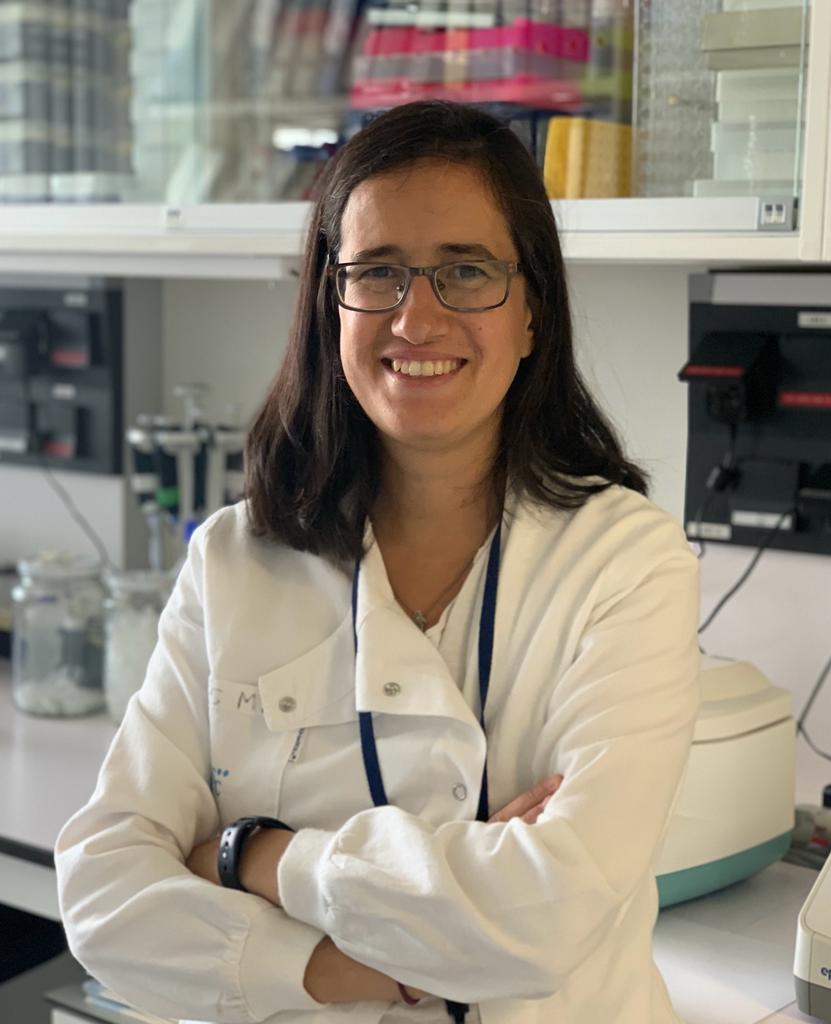
Inés Martín Martín
Tenured Scientist
ORCID code: 0000-0002-0956-7324
Within Medical Entomology, my work focuses on the study of phlebotomine sand flies and culicidae as vectors of leishmaniasis and arbovirosis, respectively. In 2014 I obtained my PhD degree “cum laude” with European mention from the Complutense University of Madrid. My PhD Thesis (developed at the Instituto de Salud Carlos III), focused on the study of phlebotomine sandfly saliva. Subsequently, during my postdoctoral period, I worked on insect gene editing, molecular, biochemical and functional characterization of insect saliva proteins and their role in the infection and transmission of pathogens. Most of my scientific career has been developed at the Laboratory of Malaria and Vector Research, National Institutes of Health (NIH), USA. Since 2021 I am a Senior Scientist at the Laboratory of Medical Entomology (ISCIII).
-

Ricardo Molina Moreno
Doctor Ad Honorem
ORCID code: 0000-0001-6662-173X
Doctor in Biological Sciences from the Complutense University of Madrid (1994). In 1979 he began his professional career at the Instituto de Salud Carlos III (ISCIII), where he became a researcher in 1985. He was in charge of the Medical Entomology Laboratory from that year until his retirement in 2023. He is currently a doctor linked “Ad Honorem”. He has extensive experience in medical entomology, advising the Ministry of Health (CCAES) and Health Departments of Autonomous Communities, on surveillance and control of arthropods transmitting vector-borne diseases. In recent years he has been involved in surveillance programs in Spain for leishmaniasis vectors, especially in the Fuenlabrada outbreak, and for viruses causing Crimean-Congo hemorrhagic fever and dengue. Also in the surveillance of invasive exotic mosquitoes, especially Aedes albopictus, in ports and airports. In his last stage he has been part of the research group within the CIBER (CIBERINFEC; CB21/13/00110).
-

Marcos López de Felipe Escudero
Predoctoral contract FPU
ORCID code: 0000-0002-2919-836X
Graduated in Biology from the Autonomous University of Madrid and Master in Tropical Parasitic Diseases from the University of Valencia. He started his professional career in 2019 in surveillance and management of hematophagous diptera of veterinary-medical interest, as well as other urban pests. In 2024 he began his work at the Instituto de Salud Carlos III (ISCIII) within the framework of the project “Evaluation of the anti-leishmanicidal effect of the bacterium Tc1 and its derivatives in the intravectorial cycle of the parasite” directed by Dr. Inés Martín Martín where he continues after the award of a FPU fellowship. He has extensive experience in medical entomology, especially in surveillance and vector control and taxonomic identification. Her career so far has focused mainly on the study of phlebotomine sand flies, simulids and culicidae, with special attention to citizen science.
-

Eva Pérez Martínez
Clinical and Biomedical Laboratory Technician
ORCID code: 0000-0002-6553-9969
Graduated in 2019 from the Advanced Vocational Training Program in Clinical and Biomedical Laboratory Sciences. I began my professional career in 2020 at Eurofins Megalab laboratories. In 2024, I started working as a freelance professional on an international project focused on the bioecology of phlebotomine sand flies in urban environments across the Mediterranean Basin, conducting fieldwork in Spain, Italy, Greece, and southern France within the framework of citizen science. Since 2025, I have been part of the Medical Entomology Laboratory at the Instituto de Salud Carlos III (ISCIII), where I work as a laboratory technician on the project “Biochemical and functional characterization of salivary proteins from Phlebotomus perniciosus and their role in Leishmania infantum infection (PERNIPROT)”, led by Dr. Inés Martín Martín.


List of staff