



We protect your health through science
Investigation
AIDS Immunopathology
Research Lines
Content with Investigacion .
Patogénesis e inmunidad viral
A) Desarrollo de metodología point of care frente a hepatitis virales en el reservorio del VIH
El tratamiento precoz de las hepatitis virales reduce el deterioro progresivo del hígado y evita el trasplante hepático. Resulta esencial disponer de métodos diagnóstico rápido, sencillos y coste-efectivos, para el cribado, en la vigilancia epidemiológica y el diagnóstico virológico temprano de enfermedades virales hepáticas. Línea de investigación llevada a cabo en colaboración con el Dr. Ricardo Madrid (BioAssays S.L).
B) Impacto de la coinfección y eliminación de las hepatitis virales en el reservorio del VIH
La coinfección por el VHC impacta en el reservorio del VIH, principal obstáculo para eliminar esta infección. Se realizan distintos abordajes del estudio del reservorio del VIH en pacientes VIH+ con distinta exposición al VHC, y tras su eliminación espontánea o con antivirales de acción directa, con el objetivo de identificar y proponer nuevas estrategias de eliminación/curación del VIH. Esta línea de Investigación se desarrolla en el seno del Grupo Multidisciplinar COVIHEP (COinfección por VIH y HEPatitis).
C) Identificación de marcadores de senescencia inducida por virus y estrategias paliativas
Las infecciones virales inducen una senescencia acelerada cuyo impacto afecta a la evolución de la enfermedad y a posibles comorbilidades. Nuestro objetivo es profundizar en los mecanismos que desencadenan la inmunosenescencia y estrés oxidativo asociado a infecciones virales e identificar nuevas estrategias terapéuticas que palien el envejecimiento prematuro en estos pacientes.
D) Impacto de SARS-CoV-2 en la infección por el VIH y hepatitis virales
Se desconocen las complicaciones a largo plazo de la infección por SARS-CoV-2 en personas que viven con VIH y/o hepatitis virales que podrían experimentar un desarrollo clínico de la enfermedad más desfavorable. La identificación de biomarcadores de gravedad no invasivos (como en sangre/plasma) resulta de especial interés en estos pacientes.
E) Origen y Epidemiología de la enfermedad hepática
Estudio del origen y la dinámica de transmisión espacio-temporal de los virus hepáticos, clave para el entendimiento de su evolución y propagación, así como en el análisis de la carga global de las enfermedades, lo que podría ayudar a desarrollar programas de Salud Pública encaminados a prevenir y frenar su transmisión.
F) Impacto de la viremia de bajo grado del VIH
Se desconoce tanto el origen como los mecanismos de la viremia de bajo grado, presente entre el 3 y 16% que las personas que viven con VIH. Su presencia podría desembocar en un mayor riesgo de sufrir comorbilidades relacionadas con enfermedades cardiovasculares, cáncer y trastornos metabólicos.
G) Calidad del aire y su impacto en poblaciones vulnerables
La contaminación del aire agrava las patologías infecciosas y la salud cardiovascular y respiratoria. La evolución de la enfermedad en personas con enfermedades crónicas con VIH y hepatitis puede verse agravada tras la inhalación continua de contaminantes ambientales. Línea de investigación llevada a cabo en colaboración con el CNSA y el CNE del ISCIII.
H) Coinfección por VHE y protistas entéricos en el reservorio humano y animal: vigilancia e investigación
La coinfección entre virus y protistas entéricos podría influir en la cotransmisión y patogenicidad de dichas especies. Línea de investigación, bajo el concepto “One Health” que se centra en la vigilancia y estudio de la coinfección del VHE y protistas entéricos. Colaboración con el grupo multidisciplinar COHEPROEN (COinfección HEpatitis y PROtistas ENtéricos).
Research projects
Content with Investigacion .
A) Proyectos de investigación financiados en los últimos 10 años
-
Como investigadora principal
1. Impact of long-tem HCV eradication on HIV infection: integration of Immune-virologic HIV markers, host transcriptome, and plasma microbiome data. Ministerio de Ciencia (Proyectos de Generación de Conocimiento 2021). Expediente: PID2021-126781OB-I00 financiado por por MICIU/AEI /10.13039/501100011033 y por FEDER, UE Septiembre 2022 - agosto 2025. 157.300€.

2. Identificación de biomarcadores inmunológicos asociados a las infecciones virales crónicas hepatitis C y VIH relacionados con la infección por SARS-COV-2 y su pronóstico. Consejo de Educación e Investigación. Comunidad de Madrid. Doctorados Industriales. Expediente: IND2020/BMD-17373. 2021-2024. 150.000€.
3. Impacto de la erradicación y aclaramiento del VHC con los nuevos antivirales de acción directa, en pacientes coinfectados VIH/VHC en el reservorio VIH en sangre periférica y sistema inmune. Organismo Financiador: Fondo de Investigación Sanitaria (ISCIII). Expediente: PI18CIII/00020. 2019-2021. 154.000€.
4. Desarrollo de un sistema de diagnóstico in vitro para la determinación del virus de la Hepatitis C mediante nanosondas. Organismo Financiador: Comunidad Autónoma de Madrid. Doctorados Industriales. Expediente: IND2017/BMD7683. 2018-2020. 128.000€.
5. Validación preclínica de un nuevo método de diagnóstico in vitro para la determinación de la infección por el virus de la hepatitis C en humanos. Organismo financiador: BioAssays SL. Expediente: MVP-325/19. 2019-2023. 193.400€.
6. Estudio del reservorio VIH en sangre periférica y su relación con la infección por VHC, sistema inmune y perfil de microARNs. Organismo Financiador: Fondo de Investigación Sanitaria (ISCIII). Expediente: PI15CIII/00031. 2016-2018. 154.000€.
7. Development of a cell-based assay to characterize resistance mutations and drug susceptibility to protease inhibitors against hepatitis C virus and evaluation in vivo as predictors of failure. Organismo Financiador: Fondo de Investigación Sanitaria (ISCIII). Expediente: CP13/00098. 2014-2016. 120.000€.
- Como investigadora asociada
1. URBANOME (Urban Observatory for Multi-participatory Enhancement of Health and Wellbeing). IP: Saúl García Dos Santos-Alves. Agencia Financiadora: Horizon 2020 H2020-SC1-BHC-2018-2020 / H2020-SC1-2020-Two-Stage-RTDework. Call topic: Innovative actions for improving urban health and wellbeing - addressing environment, climate and socioeconomic factors". Expediente: 945391. 01/04/2021 - 01/04/2025. 268.000 €.
2. Antibiotics, hormones, persistent and mobile organic contaminants and pathogens, the complex mixture in agriculture and livestock scenario. Risk to health or natural attenuation? (Nat4Health). IP: Ana de Santiago y Raffaella Meffe. Agencia Financiadora: Ministerio de ciencia e Innovación. Convocatoria: Proyectos I+D+i 2020. Modalidad: Retos Investigación. Expediente: PID2020-118521RB-I00. 01/09/2021 - 01/09/2025. 170.000 €.
3. Inmunopatogenía del VIH. Red Temática De Investigación Cooperativa (RIS). Expediente: RD16CIII/00025. IP: Salvador Resino. (Instituto de Salud Carlos III). 01/01/2017-06/03/2022. 250.000 €.
4. Efectos de la erradicación del VHC en pacientes con cirrosis avanzada por VHC. Una aproximación traslacional. Investigador principal: Salvador Resino García. Organismo Financiador: Fondo de Investigación Sanitaria (ISCIII). Expediente: PI14/CIII/00011. 2016-2018. 154.000 €.
5. Desarrollo y mecanismo de acción de dendrímeros como microbicidas para frenar la infección por el VIH por transmisión sexual (vaginal y anal): prueba de concepto. IP: Mª Angeles Muñoz Fernández. Organismo Financiador: Fondo de Investigación Sanitaria (ISCIII). Expediente: PI13/02016. 2014-2016. 180.000 €.
6. Peptides-associated dendrimers in dendritic cells for the development of new nano-HIV vaccines. DENPEPTHIV. EuroNanoMed. IP: Mª Angeles Muñoz Fernández. Organismo financiador: Instituto de Salud Carlos III. Proyectos al amparo del Espacio Europeo de Investigación dentro del VII Programa Europeo. FP7 Cooperation Work Programme: Health-2010. Expediente: PS09102669. 2010-2013. 220.000 €.
Publications
Diagnostic Performance of the HCV Core Antigen Test To Identify Hepatitis C in HIV-Infected Patients: a Systematic Review and Meta-Analysis
4. Sepúlveda-Crespo D; Treviño-Nakoura A; Bellon JM; Jiménez-Sousa MA; Ryan P; Martínez I; Fernández-Rodríguez A (AC); Resino S. (7/8). 2022. Diagnostic Performance of the HCV Core Antigen Test To Identify Hepatitis C in HIV-Infected Patients: a Systematic Review and Meta-Analysis.Journal of clinical microbiology. pp.e0133122. ISSN 0095-1137.
DOIMetabolic Profiling at COVID-19 Onset Shows Disease Severity and Sex-Specific Dysregulation
6. Ceballos FC; Virseda-Berdices A; Resino S; et al; Jiménez-Sousa MÁ (AC). (19/19). 2022. Metabolic Profiling at COVID-19 Onset Shows Disease Severity and Sex-Specific Dysregulation.Frontiers in immunology. 13, pp.925558. WOS (78)
DOINovel genes and sex differences in COVID-19 severity
7. Cruz R; Almeida SD; Heredia ML; et al; Fernández-Rodríguez A; Carracedo Á. (51/168). 2022. Novel genes and sex differences in COVID-19 severity. Human molecular genetics. ISSN 0964-6906.
DOIDifferent HCV Exposure Drives Specific miRNA Profile in PBMCs of HIV Patients
8. Valle-Millares D; Brochado-Kith O; Martín-Carbonero L; et al; Fernández-Rodríguez A (AC). (22/22). 2021. Different HCV exposure drives specific miRNA profile in PBMCs of HIV patients Biomedicines. MDPI. 9-11, pp.1627.
DOIContent with Investigacion .
-
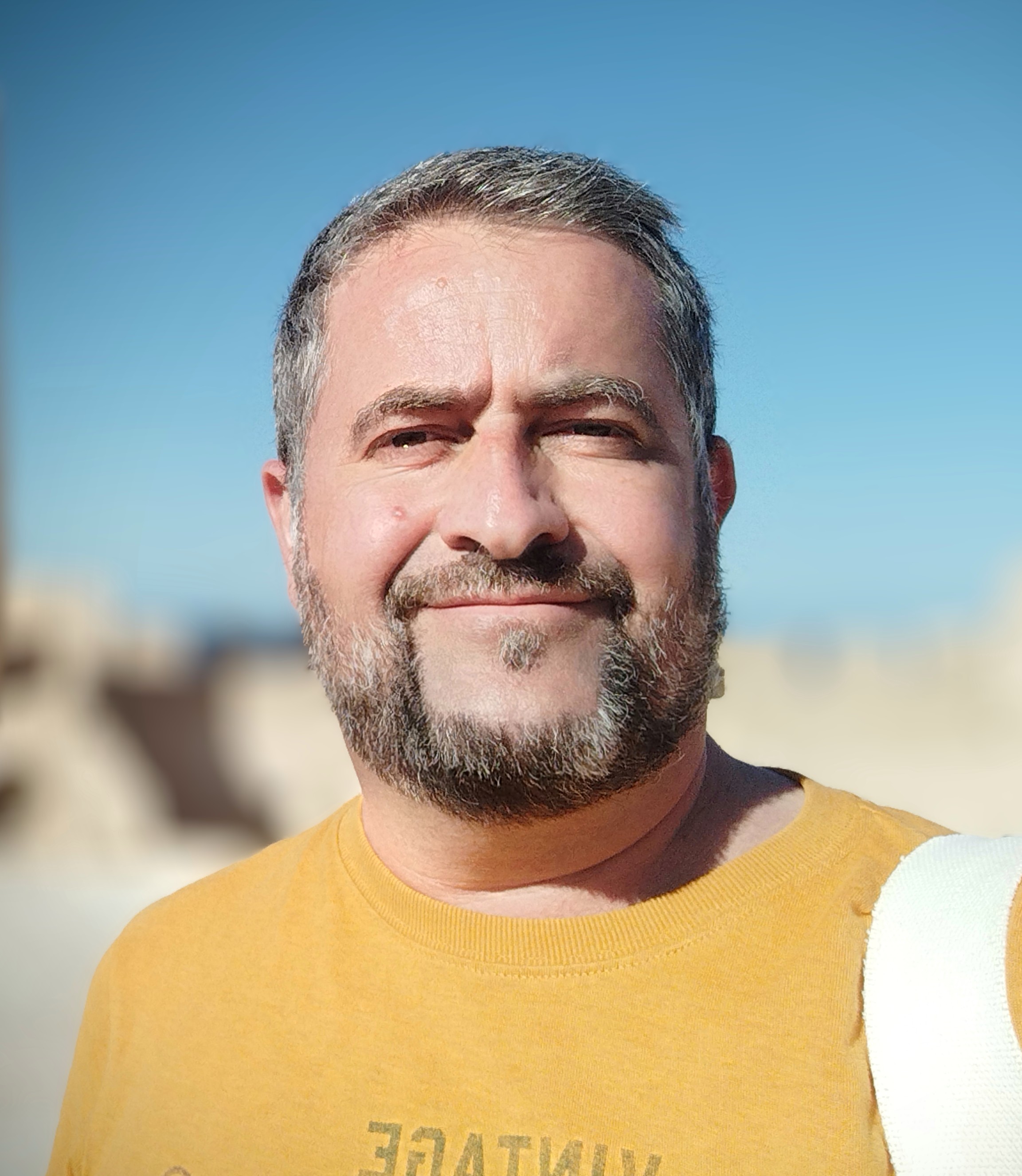
Horacio Gil Gil
Research Scientist
ORCID code: 0000-0002-7114-6686
Degree in Veterinary Medicine in 1995 and PhD in Veterinary Medicine in 2002 from the University of Zaragoza. He did his PhD thesis at NEIKER Tecknalia (Derio, Vizcaya) and the National Center for Microbiology of Instituto de Salud Carlos III (CNM-ISCIII, Majadahonda, Madrid) on the biological cycle of Lyme disease in the Basque Country. After that, he developed his postdoctoral training in different aspects of the pathogenesis of tularemia at the Center for Infectious Diseases, Stony Brook University, New York (USA) for 3 years. In December 2005, he joined the Reference and Research Laboratory in Special Pathogens of the CNM-ISCIII where he developed diagnostic, reference and research activities, in Bartonella, Leptospira and pathogens of interest in bioterrorism. Between 2014-2016 he participated in the European Program for the Training of Microbiologists in Public Health (EUPHEM), organized by the European Centre for Disease Prevention and Control. During this program, he participated in an international mission for the investigation of a cholera outbreak in Ghana, proposed by the Bernhard Nocht Institute for Tropical Diseases in Hamburg (Germany). In December 2016, he worked as a laboratory consultant for the World Health Organization at their office in Phnom Penh (Cambodia). Subsequently, he worked one year with Médecins Sans Frontières as director and quality manager of the TB laboratory in Nukus (Uzbekistan).
In 2019, he joined the HIV Variability and Biology Unit at CNM-ISCIII, where he developed different reference and research activities, including his contribution to the molecular epidemiological surveillance of HIV-1 in Spain and the study of HIV-1 antiretroviral resistance. Since September 2022 he has been leading the Human Papillomavirus Unit at the CNM-ISCIII. -
Alicia Inés García Señán
Predoctoral Student UNED
Degree in Pharmacy in 2013 from the Complutense University of Madrid. She completed specialized health training in Microbiology and Parasitology at the Complejo Asistencial Universitario de Salamanca (2014-2018). During this period he studied a master's degree in Tropical Diseases at the University of Salamanca (2016). She has developed her professional activity as a clinical microbiologist at the Hospital de Santa Bárbara (Soria) (2018), Hospital Universitario Vall d'Hebrón (Barcelona) (2019-2022), and Hospital Central de la Defensa (Gómez Ulla) C.S.V.E, since 2022. In September 2024 she has started PhD studies at the Human Papillomavirus Unit of the CNM-ISCIII.
-
Manuela Rodríguez Vargas
Técnico de Laboratorio


List of staff
Additional Information
The AIDS Immunopathology Unit has been coordinated since 2000 by Dr. José Alcamí, bringing together during its history more than 20 independent researchers who collaboratively study different aspects of HIV infection. During this years, more than 30 visiting researchers and more than 50 national and international students have passed through the unit. From the beginning of the year 2025, Javier García Pérez and Francisco Díez Fuertes assumed the coordination of the AIDS Immunopathology Unit, with the aim of projecting its scientific competitiveness following multidisciplinary approaches and through the maintenance of the current close collaborations, as well as the promotion of participation in new national and international research networks.
Historically, the current members of the unit have focused on different lines of basic research that include the study of antibodies and the development of vaccines against HIV-1, the study of viral entry and tropism of the virus or the study of the host through the genomic characterization of populations with an extreme phenotype. Currently, the activity of our unit in the field of HIV-1 is focused on three main lines:
1. Mecanismos moleculares asociados a la protección de la infección por VIH-1 en pacientes con distrofia muscular de cinturas dominante D2 (LGMDD2).
2. Generación de anticuerpos neutralizantes de uso terapéutico basados en la respuesta neutralizante de amplio espectro frente a virus fundadores.
3. Cribado y caracterización de nuevos fármacos anti-latencia frente al VIH-1.
A partir del año 2020, nuestra unidad se vuelca con la investigación sobre COVID-19, participando y liderando diferentes proyectos de investigación aplicada y clínica. Fruto de esta fuerte implicación en el campo, en la actualidad se mantienen diferentes estudios sobre la caracterización de la respuesta inmune frente a SARS-CoV-2, integrando diferentes técnicas de virología molecular, estrategias de inteligencia epidemiológica y tecnologías de célula única.
We also participate in different research consortiums and networks, such as the Spanish AIDS Research Network or the Center for Biomedical Research in Infectious Diseases Network (CIBER-INFEC), in which we participate as researchers in different lines and work packages within the research programs “Global Health, emerging and re-emerging infections” as well as “HIV/AIDS and sexually transmitted infections”.
Supervised doctoral theses
1. GENOMIC AND FUNCTIONAL ANALYSIS OF HIV-1 PROTECTION PARAMETERS IN PATIENTS WITH SLOW PROGRESSION OF INFECTION.
Student: Erick de la Torre Tarazona.
Supervisors: José Alcamí and Francisco Díez Fuertes.
Academic entity: Universidad Autónoma de Madrid.
Defense date: July 14th, 2020.
2. ANALYSIS OF MIARN EXPRESSION PROFILES AND FUNCTIONAL CHARACTERIZATION IN HIV-POSITIVE INDIVIDUALS WITH DIFFERENT PROGRESSION TO AIDS.
Student: Rubén Ayala Suárez.
Supervisors: José Alcamí and Francisco Díez Fuertes.
Academic entity: Universidad de Alcalá.
Defense date: June 12nd, 2023.
The AIDS Immunopathology Unit has been coordinated since 2000 by Dr. José Alcamí, bringing together during its history more than 20 independent researchers who collaboratively study different aspects of HIV infection. During this years, more than 30 visiting researchers and more than 50 national and international students have passed through the unit. From the beginning of the year 2025, Javier García Pérez and Francisco Díez Fuertes assumed the coordination of the AIDS Immunopathology Unit, with the aim of projecting its scientific competitiveness following multidisciplinary approaches and through the maintenance of the current close collaborations, as well as the promotion of participation in new national and international research networks.
Historically, the current members of the unit have focused on different lines of basic research that include the study of antibodies and the development of vaccines against HIV-1, the study of viral entry and tropism of the virus or the study of the host through the genomic characterization of populations with an extreme phenotype. Currently, the activity of our unit in the field of HIV-1 is focused on three main lines:
1. Mecanismos moleculares asociados a la protección de la infección por VIH-1 en pacientes con distrofia muscular de cinturas dominante D2 (LGMDD2).
2. Generación de anticuerpos neutralizantes de uso terapéutico basados en la respuesta neutralizante de amplio espectro frente a virus fundadores.
3. Cribado y caracterización de nuevos fármacos anti-latencia frente al VIH-1.
A partir del año 2020, nuestra unidad se vuelca con la investigación sobre COVID-19, participando y liderando diferentes proyectos de investigación aplicada y clínica. Fruto de esta fuerte implicación en el campo, en la actualidad se mantienen diferentes estudios sobre la caracterización de la respuesta inmune frente a SARS-CoV-2, integrando diferentes técnicas de virología molecular, estrategias de inteligencia epidemiológica y tecnologías de célula única.
We also participate in different research consortiums and networks, such as the Spanish AIDS Research Network or the Center for Biomedical Research in Infectious Diseases Network (CIBER-INFEC), in which we participate as researchers in different lines and work packages within the research programs “Global Health, emerging and re-emerging infections” as well as “HIV/AIDS and sexually transmitted infections”.
Supervised doctoral theses
1. GENOMIC AND FUNCTIONAL ANALYSIS OF HIV-1 PROTECTION PARAMETERS IN PATIENTS WITH SLOW PROGRESSION OF INFECTION.
Student: Erick de la Torre Tarazona.
Supervisors: José Alcamí and Francisco Díez Fuertes.
Academic entity: Universidad Autónoma de Madrid.
Defense date: July 14th, 2020.
2. ANALYSIS OF MIARN EXPRESSION PROFILES AND FUNCTIONAL CHARACTERIZATION IN HIV-POSITIVE INDIVIDUALS WITH DIFFERENT PROGRESSION TO AIDS.
Student: Rubén Ayala Suárez.
Supervisors: José Alcamí and Francisco Díez Fuertes.
Academic entity: Universidad de Alcalá.
Defense date: June 12nd, 2023.