



We protect your health through science

Investigación
Leishmaniasis and Chagas Disease
Líneas de investigación
Content with Investigacion .
Resistencia a Antibióticos
Nuestro objetivo general es aportar conocimiento precoz sobre cualquier mecanismo de resistencia a antibióticos emergente en nuestro país. Dicho aporte de conocimiento se fundamenta en unos objetivos transversales clave:
1) La capacidad de adaptar la investigación a los problemas de resistencia emergentes
2) La promoción de estudios de investigación cooperativos y multidisciplinares con diferentes centros españoles y extranjeros
3) La transferencia ágil de los resultados de la investigación a la práctica clínica del Sistema Nacional de Salud
4) El fomento de la interrelación de la investigación con la referencia, la asesoría, la formación y la divulgación.
Nuestros principales objetivos científicos son la caracterización de las bases moleculares de la resistencia a antibióticos en bacterias patógenas, el estudio de la epidemiología molecular y la estructura poblacional de las bacterias resistentes, la caracterización de los elementos genéticos móviles que portan los genes de resistencia, y el desarrollo de técnicas diagnósticas y alternativas terapéuticas frente a bacterias con resistencia extensa, basado en nuevas tecnologías como la secuenciación de genomas bacterianos. La investigación en las vías de diseminación de enterobacterias, Acinetobacter baumannii y Pseudomonas aeruginosa productores de carbapenemasas es uno de nuestros objetivos prioritarios.
Algunas iniciativas en las que participamos son la red europea de vigilancia de la resistencia a antibióticos (EARS-Net), el sistema de la OMS desarrollado para apoyar el plan de acción mundial sobre la resistencia a los antimicrobianos (GLASS), la red española de investigación en patología infecciosa (REIPI), el Plan nacional contra la resistencia a antibióticos (PRAN), el Comité Coordinador de la red de laboratorios para la vigilancia de microorganismos resistentes, y la coordinación nacional de los proyectos CARBA-ES-2019 (nacional) y CCRE-survey (ECDC).
Líneas de investigación
- Detección y caracterización de mecanismos de resistencia a antibióticos emergentes, sobre todo a antibióticos de última línea como los antibióticos carbapenémicos y la colistina.
- Caracterización y trazabilidad interregional, mediante el análisis de secuencias de genomas completos (WGS), de clones de alto riesgo con múltiple resistencia a antibióticos, y de plásmidos epidémicos portadores de genes de resistencia.
- Identificación mediante recursos bio-informáticos de posibles dianas para el desarrollo de nuevos productos o moléculas relacionadas con el control de la resistencia a antibióticos (vacunas, pruebas diagnósticas, atenuantes de virulencia y otros).
- Análisis de las tendencias evolutivas de la resistencia a antibióticos en patógenos bacterianos productores de bacteriemia; European Antimicrobial Resistance Surveillance Net (EARS-Net) del ECDC y Global Antimicrobial Resistance Surveillance System (GLASS) de la OMS.
- Análisis del microbioma y resistoma del tracto gastrointestinal humano y su relación con la colonización por bacterias multi-resistentes y desarrollo de infecciones (metagenómica).
Investigación en infecciones multirresistentes

La emergencia y diseminación global de cepas bacterianas de diferentes especies con resistencia a distintas clases de antibióticos (cepas multirresistentes) supone una amenaza para la eficacia del tratamiento antibiótico. El Antibiotic Resistance Global Report publicado por la Organización Mundial de la Salud en 2014 destacó altas tasas de resistencia en varias especies de bacterias patógenas en cada una de las seis regiones incluidas en el estudio (WHO; 2014). Las infecciones causadas por bacterias resistentes están asociadas a una mortalidad significativa, produciendo más de 700.000 muertes al año, y se estima que esta cifra llegará a 10 millones de muertes anuales en 2050, si no cambia la tendencia actual (Antimicrobial Resistance Rev; 2015). En 2017, la Organización Mundial de la Salud identificó las especies bacterianas frente a las que deberían implementarse nuevas medidas de tratamiento y prevención (WHO 2017). En este informe se clasificaron las especies Gram negativas multirresistentes.
Acinetobacter baumannii, Pseudomonas aeruginosa y Klebsiella pneumoniae con la prioridad más alta (Priority 1: Critical). Las tasas de resistencia a los antimicrobianos de primera línea de estas bacterias Gram-negativas multirresistentes se han incrementado a nivel global durante la última década, complicando significativamente el manejo clínico de las infecciones producidas por estos microorganismos. En este contexto, nuestro grupo está desarrollando las siguientes líneas de investigación:
1. Desarrollo de vacunas para infecciones multirresistentes
Esta línea de investigación tiene como objetivo del desarrollo preclínico de vacunas profilácticas y anticuerpos monoclonales terapéuticos para infecciones producidas por bacterias Gram negativas multirresistentes de difícil manejo clínico debido a la resistencia antimicrobiana. La investigación realizada en esta línea tiene como objetivo identificar y caracterizar antígenos de las bacterias multirresistentes (Acinetobacter baumannii, Klebsiella pneumoniae y Pseudomonas aeruginosa) que sirvan para el desarrollo de anticuerpos monoclonales y vacunas a través de estudios epidemiológicos, genómicos y proteómicos.
2. Caracterización de tratamientos novedosos para infecciones multirresistentes
Esta línea de investigación tiene como objetivo identificar y caracterizar nuevos tratamientos basados en moléculas novedosas y/o combinaciones de antibióticos existentes para infecciones producidas por bacterias Gram negativas multirresistentes. También se emplean técnicas moleculares y "omicas" para la identificación de nuevas dianas para el desarrollo de antibióticos novedosas.
3. Desarrollo de vacunas frente a SARS-CoV-2
Debido la situación producida por la propagación del SARS-CoV-2 urge la realización de estudios que tienen como objetvo el desarrollo de vacunas profilácticas. Nuestro grupo lidera el desarrollo de un prototipo de vacuna basado en ADN plasmídico que expresa antígenos de SARS-CoV-2 y la caracterización de la respuesta inmune inducida por esta vacuna en un modelo murino de inmunización.
Caracterización molecular de los estafilococcus
El Laboratorio de Referencia e investigación en Infecciones Relacionadas con la Asistencia Sanitaria dispone de un Programa de Vigilancia de Staphylococcus aureus y Estafilococos coagulasa negativa y de la siguiente cartera de servicios:
Estafilococos coagulasa negativa
Identificación:
Por secuencia del gen 16S del ARN ribosómico
Por secuencia del gen rpoB
Por secuencia del gen tuf
Marcadores moleculares
Perfil por PFGE
SSC
mec
MLST
Detección de genes
Genes mec
Genes de resistencia
Mecanismos de resistencia al linezolid
Dominio V del gen 23S ARNr
Gen rplC (riboproteína L3)
Gen rplD (riboproteína L4)
Gen rplV (riboproteína L22)
Staphylococcus aureus
Identificación:
PCR del gen Sau
Por secuencia del gen 16S del ARN ribosómico
Por secuencia del gen rpoB
Por secuencia del gen tuf
Marcadores moleculares
PFGE
MLST
SSC
mec
Spa-tipo
Detección de genes
Genes mec
Gen PVL
Toxinas exfoliativas (SST)
Toxina del Shock Tóxico (TSST)
Publicaciones destacadas
Pediatric drug-resistant tuberculosis in Madrid family matters
7. Santiago B, Baquero-Artiago F, Mejias A, Blázquez D, Jimenez MS, Mellado-Peña MJ, EREMITA Study group. Pediatric drug-resistant tuberculosis in Madrid: family matters. The Pediatric Infectious Disease Journal. 2014; 33:345-350.
PUBMED DOIMycobacterium kumamotonense, another Member of the Mycobacterium terrae Complex Unusually Carrying Two Copies of the Ribosomal RNA Operon
8. Menéndez MC, Jiménez MS, Yubero J, García MJ. Mycobacterium kumamotonense, another Member of the Mycobacterium terrae Complex Unusually Carrying Two Copies of the Ribosomal RNA Operon. Mycobac Dis; 2014; 4:176.
DOIMycobacterium mageritense meningitis in an immunocompetent patient with an intrathecal catheter.
9. Muñoz-Sanz A, Rodríguez Vidigal FF, Vera-Tome A, Jimenez MS. Mycobacterium mageritense meningitis in an immunocompetent patient with an intrathecal catheter. Enfer Infecc Microbiol Clin. 2013; 31:59-6
PUBMED DOIMeasles virus genotype D4 strains with non-standard length M-F non-coding region circulated during the major outbreaks of 2011-2012 in Spain.
2. Gil H, Fernández-García A*, Mosquera MM, Hübschen JM, Castellanos AM, de Ory F, Masa-Calles J, Echevarría JE.Measles virus genotype D4 strains with non-standard length M-F non-coding region circulated during the major outbreaks of 2011-2012 in Spain. PLoS One. 2018 Jul. 16;13(7):e0199975. * Corresponding author.
PUBMED DOIIsolation, antigenicity and immunogenicity of Lleida Bat Lyssavirus
3. Banyard AC, Selden D, Wu G; Thorne L, Jennings D, Marston D, Finke S, Freuling CM, Mueller T, Echevarria JE, Fooks AR. Isolation, antigenicity and immunogenicity of Lleida Bat Lyssavirus. Journal of General Virology, 2018. 99(12):1590-1599
PUBMED DOIShift within age-groups of mumps incidence, hospitalizations and severe complications in a highly vaccinated population
6. López-Perea N, Masa-Callesa J, Torres de Miera MV, Fernández-García A, Echevarría JE, de Ory F, Martínez de Aragón MV. Shift within age-groups of mumps incidence, hospitalizations and severe complications in a highly vaccinated population. Spain, 1998–2014. Vaccine, 2017, 35(34): 4339-4345.
PUBMED DOIThe Complexity of Antibody Responses Elicited against the Respiratory Syncytial Virus Glycoproteins in Hospitalized Children Younger than 2 Years
2. Trento A, Rodriguez-Fernandez R, Gonzalez-Sanchez MI, Gonzalez-Martinez F, Mas V, Vazquez M, et al. The Complexity of Antibody Responses Elicited against the Respiratory Syncytial Virus Glycoproteins in Hospitalized Children Younger than 2 Years. Front Microbiol. 2017;8:2301.
PUBMED DOIPotent single-domain antibodies that arrest respiratory syncytial virus fusion protein in its prefusion state.
3. Rossey I, Gilman MS, Kabeche SC, Sedeyn K, Wrapp D, Kanekiyo M, et al. Potent single-domain antibodies that arrest respiratory syncytial virus fusion protein in its prefusion state. Nat Commun. 2017;8:14158.
PUBMED DOIRapid profiling of RSV antibody repertoires from the memory B cells of naturally infected adult donors
6. Gilman MS, Castellanos CA, Chen M, Ngwuta JO, Goodwin E, Moin SM, et al. Rapid profiling of RSV antibody repertoires from the memory B cells of naturally infected adult donors. Sci Immunol. 2016;1(6).
PUBMED DOICharacterization of a Prefusion-Specific Antibody That Recognizes a Quaternary, Cleavage-Dependent Epitope on the RSV Fusion Glycoprotein.
8. Gilman MS, Moin SM, Mas V, Chen M, Patel NK, Kramer K, et al. Characterization of a Prefusion-Specific Antibody That Recognizes a Quaternary, Cleavage-Dependent Epitope on the RSV Fusion Glycoprotein. PLoS Pathog. 2015;11(7):e1005035.
PUBMED DOIPolyclonal and monoclonal antibodies specific for the six-helix bundle of the human respiratory syncytial virus fusion glycoprotein as probes of the protein post-fusion conformation.
9. Palomo C, Mas V, Vazquez M, Cano O, Luque D, Terron MC, et al. Polyclonal and monoclonal antibodies specific for the six-helix bundle of the human respiratory syncytial virus fusion glycoprotein as probes of the protein post-fusion conformation. Virology. 2014;460-461:119-27.
PUBMED DOIBiophysical properties of single rotavirus particles account for the functions of protein shells in a multilayered virus
Jiménez-Zaragoza M., Yubero M.L., Martín-Forero E., Castón J.R., Reguera D., Luque D.*, de Pablo P.J., Rodríguez J.M. 2018. Biophysical properties of single rotavirus particles account for the functions of protein shells in a multilayered virus. eLife 7: e37295. *Corresponding author.
PUBMED DOIAcquisition of functions on the outer capsid surface during evolution of double-stranded RNA fungal viruses
Mata C.P., Luque D., Gómez-Blanco J., Rodríguez J.M., González J.M., Suzuki N., Ghabrial S.A., Carrascosa J.L., Trus B.L., Castón J.R. 2017. Acquisition of functions on the outer capsid surface during evolution of double-stranded RNA fungal viruses. PLoS Pathog. 13(12):e1006755.
PUBMED DOIStructural Insights into the Assembly and Regulation of Distinct Viral Capsid Complexes
Sarker S., C. Terrón M., Khandokar Y., Aragão D., Hardy J.M., Radjainia M., Jiménez-Zaragoza M., de Pablo P.J., Coulibaly F., Luque D., Raidal D.R., Forwood J.K. 2016. Structural Insights into the Assembly and Regulation of Distinct Viral Capsid Complexes. Nat. Commun. 7:13014. IF: 12.124; D1.
PUBMED DOIHeterodimers as the structural unit of the T=1 capsid of the fungal dsRNA Rosellinia necatrix quadrivirus 1
Luque D., Mata C.P., González-Camacho F., González J.M., Gómez-Blanco J., Alfonso C., Rivas G., Havens W.M., Kanematsu S., Suzuki N., Ghabrial S.A., Trus B.L., Castón J.R. 2016. Heterodimers as the structural unit of the T=1 capsid of the fungal dsRNA Rosellinia necatrix quadrivirus 1. J Virol. 90(24):11220-11230. IF: 4.666, Q1.
PUBMED DOISelf-assembly and characterization of small and monodisperse dye nanospheres in a protein cage
Luque D., de la Escosura A., Snijder J., Brasch M., Burnley R.J, Koay M.S.T., Carrascosa J.L., Wuite G.J.L., Roos W.H., Heck A.J.R., J.J.L.M Cornelissen, Torres T., Castón J.R. 2014. Self-assembly and characterization of small and monodisperse dye nanospheres in a protein cage. Chem. Sci.,5, 575-581. IF: 9.211, D1.
DOIContent with Investigacion .
-

María Dolores Pérez Vázquez
Científica Titular OPI
Licenciada y doctora en Farmacia (Universidad de Santiago de Compostela, Universidad Complutense de Madrid). Especialista en Microbiología y Parasitología clínicas (F.I.R.). Mi trayectoria investigadora se ha centrado en la resistencia a los antibióticos y la epidemiología de patógenos resistentes, desarrollándose principalmente en el Centro Nacional de Microbiología (ISCIII), así como en el ámbito hospitalario (HU Ramón y Cajal) y en el Wellcome Sanger Institute (Cambridge). Desde 2012, tras mi formación en bioinformática, he consolidado una línea de investigación basada en la secuenciación masiva (WGS) aplicada a la vigilancia microbiológica, promoviendo la creación de la RedLabRA para la vigilancia nacional de bacterias multirresistentes. Mi producción científica alcanza 111 publicaciones (7056 citas; h-index 39/36) y he destacado por integrar investigación, vigilancia y transferencia al Sistema Nacional de Salud, junto con una sólida actividad docente y formadora.
-
Michael McConnell
Científico Titular
-
Federico Román Alonso
Científico Titular de OPIs
-

María Belén Aracil García
Científica Titular OPI
ORCID code: 0000-0002-6156-8252
Licenciada y doctora en Medicina y Cirugía (Universidad Autónoma de Madrid, y Universidad Complutense de Madrid, respectivamente). Especialista en Microbiología y Parasitología clínicas (M.I.R.). Experiencia clínica en enfermedades infecciosas y microbiología desarrollada en el ámbito hospitalario (HU de Móstoles y HM Hospitales- Madrid-Montepríncipe) y en el Laboratorio de Referencia e Investigación de .Resistencia a Antibióticos y Enfermedades Relacionadas con la Asistencia Sanitaria (IRAS) del Centro Nacional de Microbiología del Instituto de Salud Carlos III, donde desde 2000 se ha desarrollado también mi actividad investigadora, enfocada en el estudio de la resistencia a los antibióticos esencialmente en patógenos multirresistentes gnosocomiales desde el punto de vista de la epidemiología molecular y la salud pública. Desde 2012, responsable de calidad del laboratorio, punto focal alternate de resistencia a antibióticos en España y coordinadora de la red EARS-Net en España, red del ECDC para la vigilancia de la resistencia a antibióticos en infecciones invasivas causadas por los principales microorganismos involucrados en la multirresistencia. Labor formativa de posgrado en la Universidad de Alcalá y la UNED y en otros ciclos formativos relacionados. Destacada producción científica con 114 publicaciones e informes técnicos y 30 proyectos de investigación.
-
Carmen Marcos Moreno
Ayudante de Investigación de OPIs
-
Antonio Javier Martín Galiano
Investigador Miguel Servet II
-
Mireia López Siles
Investigadora Posdoctoral
-
Andrés Corral Lugo
Investigador Posdoctoral
-
Ana Tajuelo Moreno-Palancas
Investigadora predoctoral
-
Marta Vicente Pazos
Investigador predoctoral
-
Astrid Pérez Gomez
Investigador posdoctoral
-
Mar Cordero Alba
Investigador posdoctoral
-
Sonia Prieto Martín Gil
Investigador predoctoral
-
Beatriz Cano Castaño
Investigador predoctoral
-
Miriam García López
Contratada predoctoral pFIS
-

Noelia Lara Fuella
Técnico Superior
ORCID code: 0009-0004-8912-7741
Noelia Lara Fuella (NLF) es Técnica Superior Especialista en Anatomía Patológica y Citología, con amplia experiencia en técnicas fenotípicas y genotípicas de identificación de mecanismos de resistencia en enterobacterias y gran positivos, amplia experiencia en técnicas de biología molecular, incluyendo aislamiento de ADN, PCR, RT-Y qPCR, campo Pulsante, preparación de librerías para su posterior análisis por secuenciación masiva, análisis de secuencias mediante herramienta Galaxy. Posee experiencia en manipulación de animales, realizando técnicas de inoculación y posterior sangrado para realización de posteriores ensayos, cultivo de células tumorales y mantenimiento de líneas celulares. Su trayectoria investigadora abarca un periodo de 22 años llevados a cabo en el Centro Nacional de Microbiología, en el Laboratorio de Referencia e Investigación en Resistencia a Antibióticos e IRAS, durante todo este tiempo NLF ha sido clave para la realización y puesta a punto de diversas técnicas moleculares y pruebas diagnósticas del programa de vigilancia de Haemophilus Influenzae y Programa de Vigilancia de Resistencia a Antibióticos donde permanece en la actualidad.
-

Verónica Casquero García
Técnico Superior Especializado de OPIs
ORCID code: 0000-0002-2365-394X
Verónica Casquero García es Licenciada en Bioquímica y en Biología, con amplia experiencia en técnicas de biología molecular, incluyendo aislamiento de ADN y ARN, PCR, RT- y qPCR, clonaje, mutagénesis dirigida, silenciamiento génico mediante shRNA y edición génica con CRISPR-Cas9. Posee experiencia en cultivo y manipulación de células madre embrionarias de ratón, células primarias de ratón y humano y líneas celulares, así como en técnicas de bioquímica de proteínas y en microscopía. Su trayectoria investigadora abarca varios centros incluyendo CSIC, CNIC y CNIO. Desde su incorporación al CNM en el Laboratorio de Referencia e Investigación en Resistencia a Antibióticos e IRAS ha sido clave en la actualización y desarrollo de técnicas moleculares y pruebas diagnósticas del Programa de Vigilancia en Infecciones Estafilocócicas. Domina la extracción de ADN/ARN bacteriano de distintos tipos de muestras y la preparación de librerías para secuenciación genómica, metagenómica y metatranscriptómica.
-
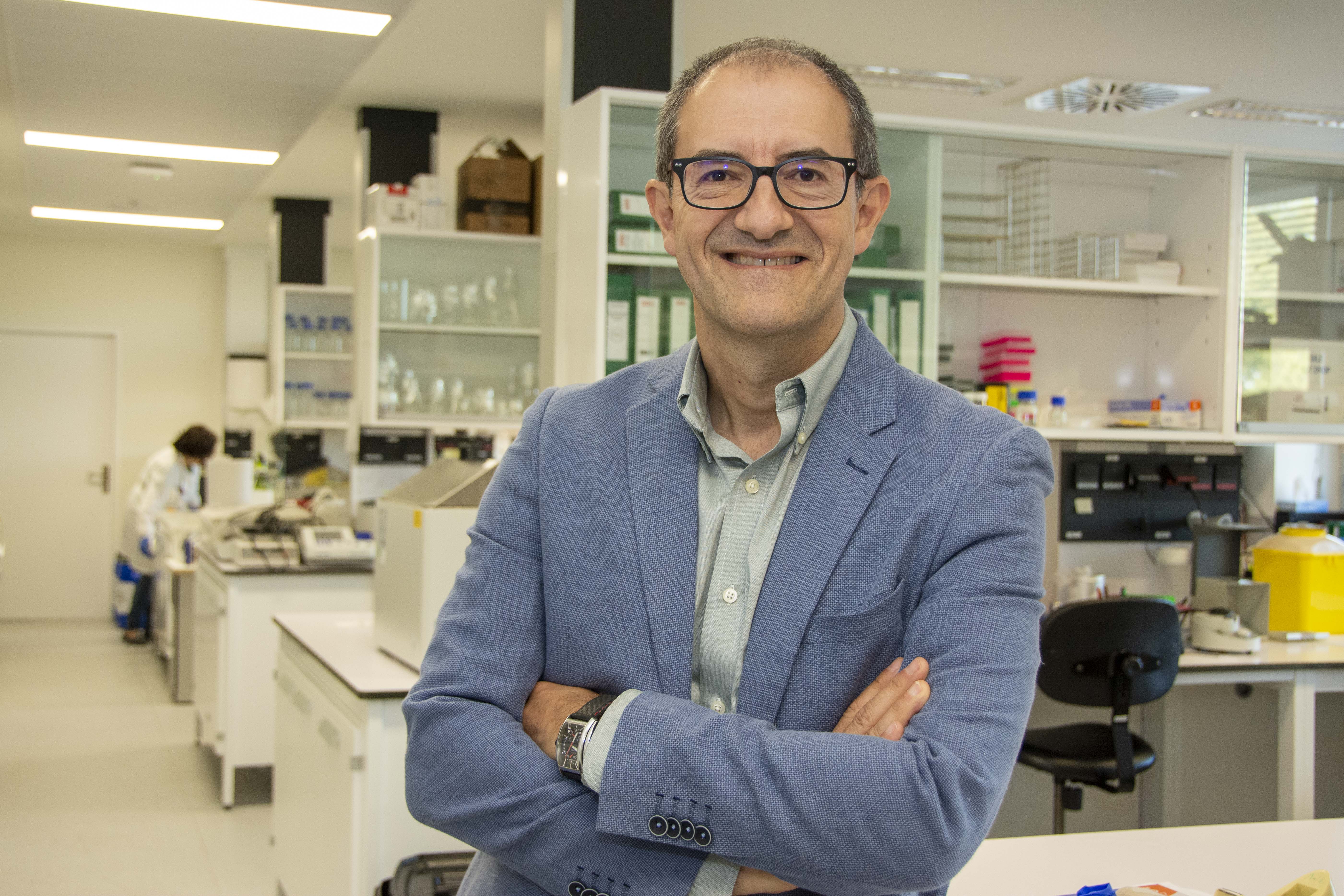
Jesús Oteo Iglesias
Investigador Científico OPI
ORCID code: 0000-0003-3327-8263
Licenciado en Medicina y Cirugía en 1992 y Doctor en 2005 por la Universidad Complutense de Madrid. Realizó la especialidad en Microbiología y Parasitología en el Hospital de Móstoles (2000) y desde 2001 ha desarrollado su carrera profesional en el CNM del ISCIII, del cual fue Director entre 2019-2021 liderando el plan de acción del CNM-ISCIII frente a la pandemia de COVID-19. Es profesor de investigación de OPIs, director científico del CIBER de Enfermedades Infecciosas (CIBERINFEC), coordinador de la Red Nacional de Laboratorios para la Vigilancia de Microorganismos Resistentes (RedLabRA) y National Focal Point español en resistencia a antimicrobianos. Su actividad investigadora está centrada en el campo de la resistencia a antibióticos, ha publicado más de 200 artículos en revistas con índice de impacto y ha sido investigador principal de numerosos proyectos. Ha sido secretario científico de la Junta Directiva de la SEIMC, y presidente de su grupo para el estudio de los mecanismos de acción y resistencia a antibióticos (GEMARA).
-

Silvia García Cobos
Investigador Posdoctoral
ORCID code: 0000-0002-1417-5691
Doctora en Biología por la Universidad Complutense de Madrid (2009), realizó su tesis en el Centro Nacional de Microbiología (CNM) del Instituto de Salud Carlos III, donde investigó los mecanismos de resistencia a antibióticos β-lactámicos en Haemophilus influenzae. Continuó su investigación en el mismo centro hasta el 2013, especializándose en la caracterización molecular de mecanismos de resistencia a antibióticos y su vigilancia epidemiológica, colaborando en redes nacionales como REIPI. Entre 2013 y 2019 desarrolló su labor en el University Medical Center Groningen (UMCG), Países Bajos, donde aplicó la secuenciación completa de genomas en el estudio de la diseminación de bacterias resistentes a los antibióticos bajo el enfoque One Health y la colaboración transfronteriza (programa INTERREG), además de investigar el resistoma intestinal humano en proyectos europeos de investigación. En 2019 regresó a España con financiación del programa Atracción de Talento de la Comunidad de Madrid para iniciar una línea de investigación sobre el papel del microbioma humano en las enfermedades infecciosas bacterianas y la resistencia a antibióticos, mediante secuenciación y análisis de datos metagenómicos y metatranscriptómicos.
-

Isabela Alonzo González
Dra.
ORCID code: 0009-0007-4291-4870
La Dra. Isabela Alonso González es licenciada en Biología por la Universidad Complutense de Madrid, en 2002. Realizó su tesis doctoral en el ámbito de la regulación de la expresión génica en células de mamífero en el Centro de Biología Molecular Severo Ochoa (CBMSO-UAM), donde concluyó su doctorado en Biología Molecular en 2009. Tras varias estancias posdoctorales, se especializó mediante un Máster en Gestión de Proyectos de I+D y es experta en la coordinación y gestión de redes de investigación. Desde 2023 trabaja como Project Manager del proyecto MePRAM, contratada por el CIBER y, en paralelo, desarrolla su labor en el Centro Nacional de Microbiología (CNM) en el grupo de investigación del Dr. Jesús Oteo, explorando oportunidades en una nueva línea de trabajo relacionada con la proteómica y la resistencia a antimicrobianos en patógenos de interés para el Sistema Nacional de Salud (SNS), así como en el estudio de nuevas terapias celulares frente a las infecciones producidas por bacterias multirresistentes.


List of staff
Información adicional
The Leishmaniasis and Chagas Disease Unit supports the National Health System through a multidisciplinary approach that includes the development and validation of diagnostic tests, the molecular characterization of parasites, molecular epidemiology, field studies, as well as experimental research into new therapeutic and prophylactic approaches for their control.
The laboratory has extensive experience in the characterization of the cellular and humoral immune response of leishmaniasis and post-treatment monitoring, as well as in asymptomatic individuals and in experimental animal models. The laboratory also contributes to immunological studies of the pathogenesis of leishmaniasis under immunosuppressive conditions (HIV/Leishmania co-infection, malnutrition, immunosuppressive treatment...). The laboratory has been a WHO Collaborating Center for Leishmaniasis since 1997, providing technical support to the various research and training activities of the WHO and participating in the evaluation of outbreaks of human leishmaniasis in endemic countries.
The laboratory also participates in the evaluation of prognostic markers for the evolution of T. cruzi infection and vertical (transplacental) transmission, an important public health problem in our country. It also carries out studies on the pharmacokinetics of drugs against Chagas disease.
The current director of CNM is Dr. José Miguel Rubio Muñoz.
Dr. José Miguel Rubio has a degree in Biological Sciences from the Universidad Autónoma de Madrid (1986) and a PhD in Biological Sciences from the same university (1992). He carried out his doctoral thesis at the Department of Genetics of the Universidad Autónoma de Madrid, as Associate Professor (1988-1989), and at the School of Biology of the University of East Anglia in Norwich, UK, as Senior Research Assistant (1989-1992).
During his postdoctoral period he obtained a grant from the European Commission within the Human Capital and Mobility Program to be carried out at the University of “La Sapienza” in Rome, Italy and the Institute of Molecular Biology and Biotechnology in Crete, Greece (1993-1994). Subsequently, he made a further stay funded by the WHO and the university itself at the Department of Entomology, Wageningen University, The Netherlands (1994-1996).
Since 1997 he has been a member of the Instituto de Salud Carlos III (ISCIII), where he joined the Department of Parasitology of the National Center of Microbiology, as an EU-INCO postdoctoral fellow and later with a grant from the Autonomous Community of Madrid (CAM). She was part of the founding group of the National Center for Tropical Medicine (2003-2006) and of the 24/7 Alerts and Emergencies Unit (2006-2018) and is currently Head of the Malaria and Emerging Parasitosis Unit of the National Microbiology Center and is part, as research staff, of the Center for Biomedical Research Network on Infectious Diseases (CIBERINFEC/ISCIII).
During his scientific career he has been Visiting Scientist at the Leonidas e Marie Dean Center (FIOCRUZ-AMAZONAS, Manaus, Brazil) and is an External Consultant of the Parasitology Departments of Cairo University (Egypt) and the Medical Research Center (MRC) of Kuala Lumpur (Malaysia). He also belongs or has belonged to different national and international committees: Member of the expert group for malaria control of the European Centre for Disease Control (ECDC) since 2011; Expert-Evaluator for health programs of the European Commission since 2004; Spanish Representative (commissioned by ISCIII and MSC) in the Technical Scientific Committee of the TDR (WHO) 2007-2008; Spanish Deputy Focal Point for microbiology at the European Centre for Disease Control (ECDC) from 2012 to 2020; and, member of the Research Ethics Committee of ISCIII until 2019.
In this period he has published more than 100 articles in international indexed journals, 10 book chapters and has been co-editor of two books in the area of malaria, tropical medicine and neglected diseases. He has participated in 58 competitively funded research projects, 20 of them international, having been the principal investigator in 8 national and 11 international projects as PI of the project or WP leader. In addition, he has led five agreements with companies. Currently he has been awarded four sexenios of research, being presented this year 2025 to the fifth. In the teaching field, he participates in different postgraduate programs in the areas of microbiology and parasitology, having directed seven doctoral theses and more than 20 Master's or Degree final projects, both nationally and internationally.
El laboratorio de Referencia e Investigación en Resistencia a Antibióticos ofrece una amplia cartera de servicios al Sistema Nacional de Salud, las cuales pueden solicitarse en cnm-laboratorios.isciii.es. Jefe del Laboratorio: Jesús Oteo Iglesias (Punto focal Nacional de Resistencia antibiótica).
Dispone de dos programas de Vigilancia oficiales y gratuitos que engloban los ensayos ofertados ya sea como aislamientos individuales o mediante estudio de brotes. El Laboratorio utiliza asimismo técnicas de PCR en tiempo real para la detección de genes de resistencia, estas técnicas se han adaptado a un formato multiplex que permite detectar varios genes en la misma reacción. En los últimos años se han incluido metodologías basadas en la secuenciación de genomas completos para el análisis de bacterias multiresistentes (WGS).
Programa de vigilancia de Haemophilus influenzae. Responsables: María Pérez Vázquez (Punto focal Nacional de Haemophilus influenzae) y Belén Aracil. Laboratorio encargado de la identificación, estudio de sensibilidad y análisis genotípico de aislados de Haemophilus influenzae, centrándose esencialmente en la patología invasiva debida este patógeno.
Programa de vigilancia de Resistencia a Antibióticos. Responsables: María Pérez Vázquez y Belén Aracil (Punto focal Nacional de Resistencia antibiótica). Laboratorio encargado de la identificación, el estudio de sensibilidad antibiótica, y el diagnóstico fenotípico y genotípico de los diferentes mecanismos de resistencia a antibióticos fundamentalmente en enterobacterias y gram-negativos no fermentadores y Enterococcus spp.
Estudio de brotes. Responsables: Belén Aracil y María Pérez Vázquez. El programa incluye la caracterización de brotes nosocomiales y clones emergentes de alto riesgo mediante diferentes técnicas moleculares (tabla resumen). Éstas, nos permiten realizar estudios filogenéticos con el fin de obtener una información detallada acerca la relación entre los diferentes aislados y su trazabilidad. El objetivo final es generar datos que se transfieren a los hospitales como ayuda para la prevención o control de la propagación del brote.
Acreditación y Calidad. Responsable: Belén Aracil. El laboratorio Referencia e Investigación en Resistencia a Antibióticos ha sido de los primeros en el ISCIII en la utilización de técnicas acreditadas por la Entidad Nacional de Acreditaciones (ENAC). Este laboratorio consiguió la primera acreditación homologada de técnicas diagnósticas en 2012, programa que ha sido ampliado, de manera que en la actualidad más de la mitad de las técnicas ofrecidas al Sistema Nacional de Salud están debidamente acreditadas por ENAC.
Técnicos responsables de las técnicas realizadas en el Laboratorio: Noelia Lara Fuella y Verónica Bautista Sánchez.
En la siguiente imagen se resumen las técnicas ofrecidas al Sistema Nacional de Salud.
| PROGRAMAS | NOMBRE CARTERA SERVICIO | PATÓGENO | DETERMINACIÓN, DETECCIÓN, ANÁLISIS | MÉTODOS |
|
Programa de vigilancia de Haemophilus Programa de vigilancia de resistencia a antibióticos. |
Identificación bacteriana |
Haemophilus sp. Enterobacterias, gram-negativos no fermentadores, Enterococcus spp |
Identificación bacteriana |
Bioquímicos MALDI TOF Secuenciación de RNAr |
| | Identificación capsular |
Haemophilus influenzae
|
Identificación capsular fenotípica y genotípica |
Aglutinación serológica en latex PCR ind/multiplex |
| | Determinación de Sensibilidad |
Haemophilus sp. Enterobacterias, gram-negativos no fermentadores, Enterococcus
|
Determinación de Sensibilidad |
Microdilución Tiras epsilon Kirby Bauer |
| | Métodos fenotípicos de detección de mecanismos de resistencia |
Enterobacterias, gram-negativos no fermentadores,
|
Métodos fenotípicos de detección de mecanismos de resistencia |
Discos y tabletas combinados con inhibidores Tiras combinadas Test de Hodge modificado CabaNP Inmunocromatografía CBP |
| | Métodos genotípicos de detección de mecanismos de resistencia |
Haemophilus sp. Enterobacterias, gram-negativos no fermentadores, Enterococcus
|
ADN, PCR y secuenciación |
PCR ind/multiplex Análisis comparativo de las secuencias |
| | Tipificación molecular/análisis filogenéticos |
Haemophilus sp. Enterobacterias, gram-negativos no fermentadores, Enterococcus
|
Corte enzimas de restricción, electroforesis ADN, PCR y secuenciación Preparación de librerías y secuenciación y análisis de genomas completos |
PFGE
MLST
WGS |