



We protect your health through science

Investigación
Malaria and Emerging Parasitosis
Publicaciones destacadas
Cryptococcus neoformans induces antimicrobial responses and behaves as a facultative intracellular pathogen in the non mammalian model Galleria mellonella
Trevijano-Contador N, Herrero-Fernández I, García-Barbazán I, Scorzoni L, Rueda C, Rossi SA, García-Rodas R, Zaragoza O. Cryptococcus neoformans induces antimicrobial responses and behaves as a facultative intracellular pathogen in the non mammalian model Galleria mellonella. Virulence. 2015;6(1):66-74. PMCID: PMC4603429.
PUBMED DOIThe formation of titan cells in Cryptococcus neoformans depends on the mouse strain and correlates with induction of Th2-type responses
García-Barbazán I, Trevijano-Contador N, Rueda C, de Andrés B, Pérez-Tavárez R, Herrero-Fernández I, Gaspar ML, Zaragoza O. The formation of titan cells in Cryptococcus neoformans depends on the mouse strain and correlates with induction of Th2-type responses. Cell Microbiol. 2016 Jan;18(1):111-24.
PUBMED DOIPrevalence and undiagnosed fraction of hepatitis C infection in 2018 in Spain: results from a national population-based survey.
• Estirado Gómez A, Justo-Gil S, Limia A, Avellón A, Arce-Arnáez A, González-Rubio R, Diaz A, Del Amo J; Prevalence and undiagnosed fraction of hepatitis C infection in 2018 in Spain: results from a national population-based survey. Sci Rep. 2018 Jan 30;8(1):1858.
PUBMED DOIContent with Investigacion .
-
Maria Jesús Perteguer Prieto
Investigadora Titular, Jefa de grupo
-

Sara Vázquez Ávila
Técnico de Laboratorio
Obtuve mi título como Técnico de Laboratorio Clínico y Biomédico en el año 2020 y en el 2021obtuve el Grado Superior de Anatomía Patológica y Citodiagnóstico. Trabajé en el Centro Andaluz de Biología Molecular y Medicina Regenerativa (Sevilla) y en el Departamento de Farmacología de la Facultad de Medicina (Universidad Complutense de Madrid). Actualmente soy Técnico de Laboratorio en el Laboratorio de Helmintos del CNM (ISCIII).
-
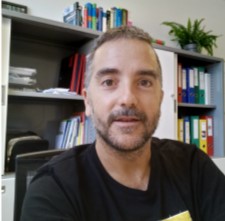
Javier Sotillo Gallego
Científico Titular
ORCID code: 0000-0002-1443-7233
En el año 2011 obtuve mi título de doctor “cum laude” por la Universidad de Valencia. Durante mi etapa postdoctoral en la James Cook University en Australia (2012-2019) me especialicé en estudiar las interacciones parásito-hospedador usando diferentes técnicas ómicas. En 2019 volví España y comencé a trabajar en el Laboratorio de Helmintos del CNM (ISCIII) primero como Investigador Miguel Servet y más adelante como Investigador Ramón y Cajal. Actualmente soy Científico Titular en el mismo laboratorio.
-

Ana Hernández González
Laboral Fijo Doctor
ORCID code: 0000-0001-6762-8175
Licenciada en Biología y doctora en Enfermedades Tropicales por la Universidad de Salamanca. Puestos ocupados con anterioridad: investigadora predoctoral en el IRNASA-CSIC (contrato JAE predoc), investigadora postdoctoral en el CNM (contrato Sara Borrell) e investigadora contratada como técnico superior en el CNM (RICET). Actualmente, personal Laboral Fijo Doctor en el laboratorio de Helmintos del CNM.
-
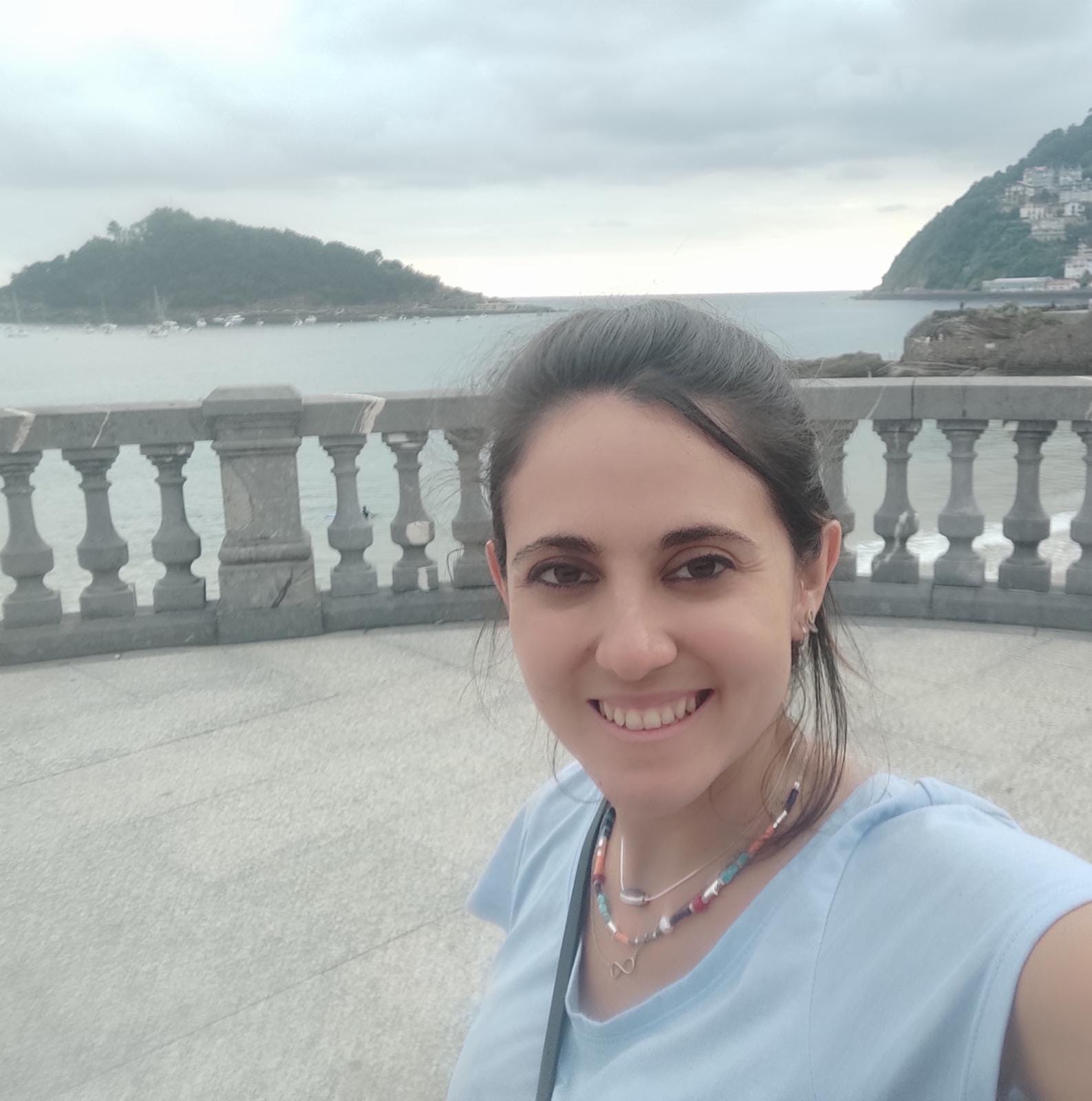
Esther Rodríguez Pérez
Técnico de Laboratorio
ORCID code: 0000-0002-3680-7733
Obtuve mi título como Graduada en Biología Sanitaria en el año 2015 y en el año 2019 obtuve el Grado Superior de Laboratorio de Diagnóstico Clínico. De 2019 a 2022 trabajé en el Museo Nacional de Ciencias Naturales (MNCN-CSIC), en el Departamento de Biogeoquímica y Ecología Microbiana. Actualmente trabajo como Técnico de Laboratorio en el Laboratorio de Helmintos del CNM (ISCIII).
-

Lourdes Castro Companioni
Ayudante de Investigación
ORCID code: 0009-0003-2746-4067
Bióloga sanitaria graduada en la Universidad de Alcalá de Henares (UAH), con master de Microbiología y Salud pública en la UAH en colaboración con el ISCIII.


List of staff
Información adicional
Despite progress, parasitic diseases remain a major challenge for humans. Its rapid and accurate detection, as well as the identification of specific genes related to virulence and/or resistance to treatments, is a necessity for management and planning control strategies.
The main objective of the group is to carry out quality, competitive and innovative research, to acquire, disseminate and apply in clinical parasitology with the ultimate goal of improving and innovating in the diagnoses, therapies and control of parasitic diseases. This general objective is implemented through external projects and collaborations with different funding sources:
- Characterization of submicroscopic malaria. National Hospital Network. (FIS-ISCIII).
- Design, optimization and validation of advanced diagnostic methods for the detection of blood parasites (Retos-MICINN).
- Control of onchocerciasis in Equatorial Guinea. CNMTrop-ISCIII (Task Force, USA).
- Characterization and control of Mansonellosis and Onchocerciasis in the Amazon region in Brazil. FIOCRUZ from Amazonas, Brazil. (Cpnqt-Brazil).
- Plasmodium knowlesi and its implication as the fifth species of human malaria. MRC, Malaysia.
- Intestinal parasitosis in Egypt from Cryptosporidium (protozoan) to Capillaria (Nematode). Cairo University and Al-Azhar University, Egypt. (MHESR, AECID).