



We protect your health through science
Investigation
Viral Pathogenesis and Immunity
Publications
Telomere Length Increase in HIV/HCV-Coinfected Patients with Cirrhosis after HCV Eradication with Direct-Acting Antivirals JOURNAL OF CLINICAL MEDICINE.
Molina-Carrion, Silvia; Brochado-Kith, Oscar; Gonzalez-Garcia, Juan; et al; Jimenez-Sousa, Maria Angeles. (12/12). 2020. Telomere Length Increase in HIV/HCV-Coinfected Patients with Cirrhosis after HCV Eradication with Direct-Acting Antivirals JOURNAL OF CLINICAL MEDICINE. 9. ISSN 2077-0383. https://doi.org/10.3390/jcm9082407.
Treatment of Chronic Pulmonary Aspergillosis: Current Standards and Future Perspectives. Respiration. 2018 Jul
Alastruey-Izquierdo A, Cadranel J, Flick H, Godet C, Hennequin C, Hoenigl M, Kosmidis C, Lange C, Munteanu O, Page I, Salzer HJF; on behalf of CPAnet. Treatment of Chronic Pulmonary Aspergillosis: Current Standards and Future Perspectives. Respiration. 2018 Jul 6:1-12. doi: 10.1159/000489474. [Epub ahead of print] Review. PMID: 29982245.
PUBMED DOIThe Diagnostic Laboratory Hub: A New Health Care System Reveals the Incidence and Mortality of Tuberculosis, Histoplasmosis, and Cryptococcosis of PWH in Guatemala. Open Forum Infect Dis. 2019 Dec
Samayoa B, Aguirre L, Bonilla O, Medina N, Lau-Bonilla D, Mercado D, Moller A, Perez JC, Alastruey-Izquierdo A, Arathoon E, Denning DW, Rodríguez-Tudela JL; “Fungired”. The Diagnostic Laboratory Hub: A New Health Care System Reveals the Incidence and Mortality of Tuberculosis, Histoplasmosis, and Cryptococcosis of PWH in Guatemala. Open Forum Infect Dis. 2019 Dec 15;7(1):ofz534. doi: 10.1093/ofid/ofz534. PMID: 31915715.
PUBMED DOIFungired. Comparative performance of the laboratory assays used by a Diagnostic Laboratory Hub for opportunistic infections in people living with HIV. AIDS. 2020 Sep 1
Medina N, Alastruey-Izquierdo A, Mercado D, Bonilla O, Pérez JC, Aguirre L, Samayoa B, Arathoon E, Denning DW, Rodriguez-Tudela JL; Fungired. Comparative performance of the laboratory assays used by a Diagnostic Laboratory Hub for opportunistic infections in people living with HIV. AIDS. 2020 Sep 1;34(11):1625-1632. doi: 10.1097/QAD.0000000000002631. PMID: 32694415.
PUBMED DOIPopulation-Based Program of filamentous fungi and Antifungal Resistance in Spain (FILPOP STUDY). Antimicrob Agents Chemother. 2013 Jul
Ana Alastruey-Izquierdo*, Emilia Mellado, Teresa Pelaez, Javier Pemán, Soledad Zapico, María Álvarez, Juan L Rodriguez-Tudela, Manuel Cuenca-Estrella Population-Based Program of filamentous fungi and Antifungal Resistance in Spain (FILPOP STUDY). Antimicrob Agents Chemother. 2013 Jul;57(7):3380-7. doi: 10.1128/AAC.01287-13. PMID: 28319466
PUBMED DOIThe global problem of antifungal resistance: prevalence, mechanisms, and management. Lancet Infect Dis. 2017 Dec
Perlin DS, Rautemaa-Richardson R, Alastruey-Izquierdo A. The global problem of antifungal resistance: prevalence, mechanisms, and management. Lancet Infect Dis. 2017 Dec;17(12. doi: 10.1016/S1473-3099(17)30316-X. PMID: 28774698.
PUBMED DOISequence Analysis of In Vivo-Expressed HIV-1 Spliced RNAs Reveals the Usage of New and Unusual Splice Sites by Viruses of Different Subtypes.
Vega Y, Delgado E, de la Barrera J, Carrera C, Zaballos Á, Cuesta I, Mariño A, Ocampo A, Miralles C, Pérez-Castro S, Álvarez H, López-Miragaya I, García-Bodas E, Díez-Fuertes F, Thomson MM. Sequence Analysis of In Vivo-Expressed HIV-1 Spliced RNAs Reveals the Usage of New and Unusual Splice Sites by Viruses of Different Subtypes. PLoS One. 2016 Jun 29;11(6):e0158525.
PUBMED DOIY155H amino acid substitution in influenza A(H1N1)pdm09 viruses does not confer a phenotype of reduced susceptibility to neuraminidase inhibitors
Perez-Sautu U, Pozo F, Cuesta I, Monzon S, Calderon A, Gonzalez M, Molinero M, Lopez-Miragaya I, Rey S, Cañizares A, Rodriguez G, Gonzalez-Velasco C, Lackenby A, Casas I. Y155H amino acid substitution in influenza A(H1N1)pdm09 viruses does not confer a phenotype of reduced susceptibility to neuraminidase inhibitors. Euro Surveill. 2014 Jul 10;19(27):14-20.
PUBMED DOIContent with Investigacion .
-

Sara Vázquez Ávila
Técnico de Laboratorio
Obtuve mi título como Técnico de Laboratorio Clínico y Biomédico en el año 2020 y en el 2021obtuve el Grado Superior de Anatomía Patológica y Citodiagnóstico. Trabajé en el Centro Andaluz de Biología Molecular y Medicina Regenerativa (Sevilla) y en el Departamento de Farmacología de la Facultad de Medicina (Universidad Complutense de Madrid). Actualmente soy Técnico de Laboratorio en el Laboratorio de Helmintos del CNM (ISCIII).
-
Maria Jesús Perteguer Prieto
Investigadora Titular, Jefa de grupo
-

Javier Sotillo Gallego
Científico Titular
ORCID code: 0000-0002-1443-7233
En el año 2011 obtuve mi título de doctor “cum laude” por la Universidad de Valencia. Durante mi etapa postdoctoral en la James Cook University en Australia (2012-2019) me especialicé en estudiar las interacciones parásito-hospedador usando diferentes técnicas ómicas. En 2019 volví España y comencé a trabajar en el Laboratorio de Helmintos del CNM (ISCIII) primero como Investigador Miguel Servet y más adelante como Investigador Ramón y Cajal. Actualmente soy Científico Titular en el mismo laboratorio.
-

Ana Hernández González
Laboral Fijo Doctor
ORCID code: 0000-0001-6762-8175
Licenciada en Biología y doctora en Enfermedades Tropicales por la Universidad de Salamanca. Puestos ocupados con anterioridad: investigadora predoctoral en el IRNASA-CSIC (contrato JAE predoc), investigadora postdoctoral en el CNM (contrato Sara Borrell) e investigadora contratada como técnico superior en el CNM (RICET). Actualmente, personal Laboral Fijo Doctor en el laboratorio de Helmintos del CNM.
-
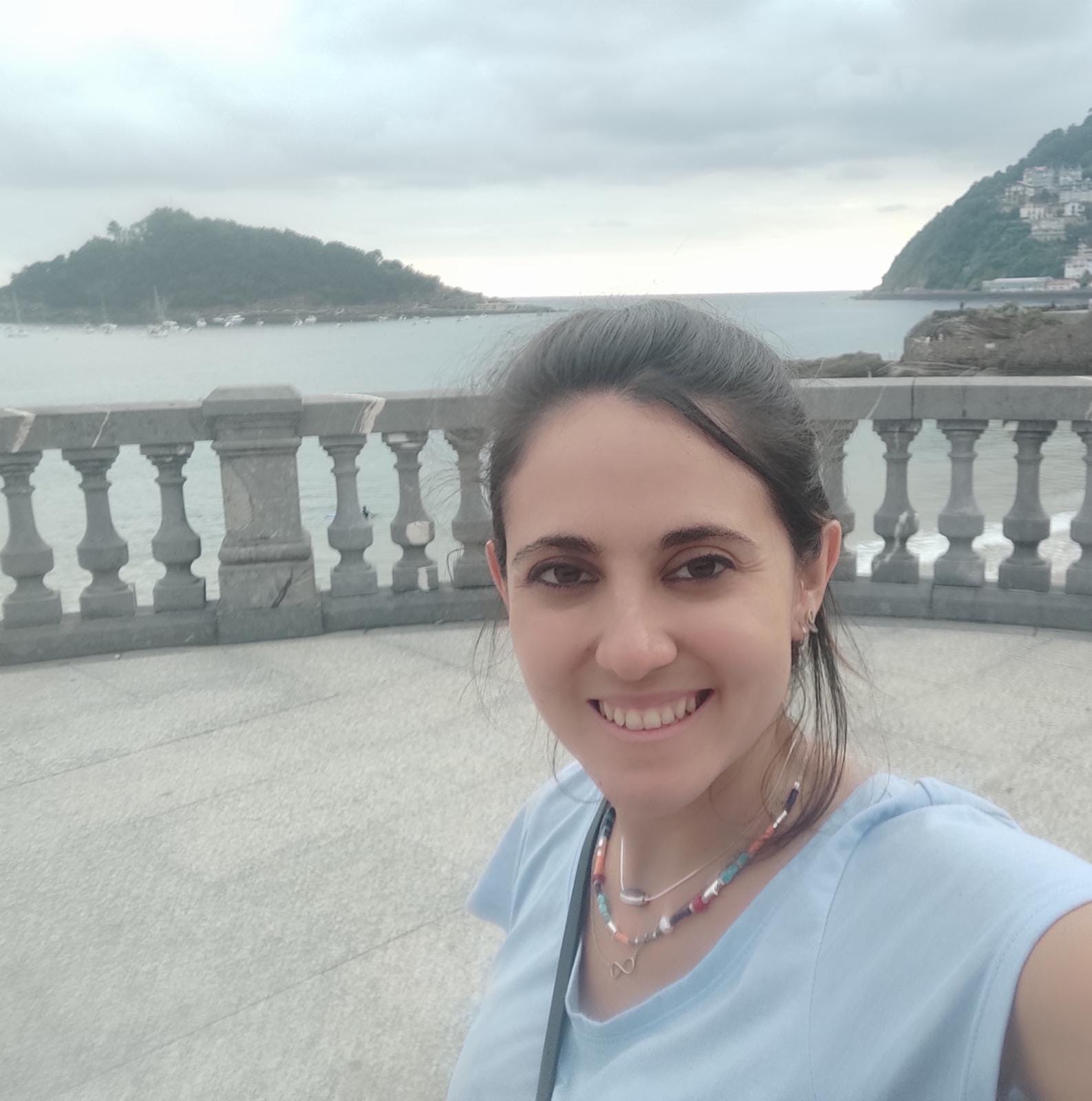
Esther Rodríguez Pérez
Técnico de Laboratorio
ORCID code: 0000-0002-3680-7733
Obtuve mi título como Graduada en Biología Sanitaria en el año 2015 y en el año 2019 obtuve el Grado Superior de Laboratorio de Diagnóstico Clínico. De 2019 a 2022 trabajé en el Museo Nacional de Ciencias Naturales (MNCN-CSIC), en el Departamento de Biogeoquímica y Ecología Microbiana. Actualmente trabajo como Técnico de Laboratorio en el Laboratorio de Helmintos del CNM (ISCIII).
-

Lourdes Castro Companioni
Ayudante de Investigación
ORCID code: 0009-0003-2746-4067
Bióloga sanitaria graduada en la Universidad de Alcalá de Henares (UAH), con master de Microbiología y Salud pública en la UAH en colaboración con el ISCIII.


List of staff
Additional Information
The activity of this unit focuses on the development and clinical validation of point-of-care diagnostic methodology against liver viruses based on an emerging field, nanotechnology, a line of research that is developed in collaboration with BioAssays SL. Likewise, this unit focuses on delving into the immuno-virological mechanisms underlying viral infections and coinfections with other microorganisms and their influence on the host through a comprehensive approach to laboratory techniques.
One of the main lines of research involves the study of the coinfection of viral hepatitis with the Human Immunodeficiency Virus (HIV), evaluating the impact of coinfection and elimination of hepatitis C on the HIV reservoir, as well as its impact on virus-induced senescence, among others through the use of “omic” technologies.
Our group leads the Multidisciplinary HIV/Hepatitis Coinfection Group (COVIHEP), and maintains collaborations with national and international research groups of excellence, facilitating greater harmonization and quality in the biomedical research carried out. On the other hand, Dr. Briz maintains close collaboration with private companies, promoting intersectoral alliances that represent a competitive advantage.
The activity of this unit focuses on the development and clinical validation of point-of-care diagnostic methodology against liver viruses based on an emerging field, nanotechnology, a line of research that is developed in collaboration with BioAssays SL. Likewise, this unit focuses on delving into the immuno-virological mechanisms underlying viral infections and coinfections with other microorganisms and their influence on the host through a comprehensive approach to laboratory techniques.
One of the main lines of research involves the study of the coinfection of viral hepatitis with the Human Immunodeficiency Virus (HIV), evaluating the impact of coinfection and elimination of hepatitis C on the HIV reservoir, as well as its impact on virus-induced senescence, among others through the use of “omic” technologies.
Our group leads the Multidisciplinary HIV/Hepatitis Coinfection Group (COVIHEP), and maintains collaborations with national and international research groups of excellence, facilitating greater harmonization and quality in the biomedical research carried out. On the other hand, Dr. Briz maintains close collaboration with private companies, promoting intersectoral alliances that represent a competitive advantage.