



We protect your health through science
Investigation
Immune Presentation and Regulation
Research Lines
Content with Investigacion .
Patogénesis e inmunidad viral
A) Desarrollo de metodología point of care frente a hepatitis virales en el reservorio del VIH
El tratamiento precoz de las hepatitis virales reduce el deterioro progresivo del hígado y evita el trasplante hepático. Resulta esencial disponer de métodos diagnóstico rápido, sencillos y coste-efectivos, para el cribado, en la vigilancia epidemiológica y el diagnóstico virológico temprano de enfermedades virales hepáticas. Línea de investigación llevada a cabo en colaboración con el Dr. Ricardo Madrid (BioAssays S.L).
B) Impacto de la coinfección y eliminación de las hepatitis virales en el reservorio del VIH
La coinfección por el VHC impacta en el reservorio del VIH, principal obstáculo para eliminar esta infección. Se realizan distintos abordajes del estudio del reservorio del VIH en pacientes VIH+ con distinta exposición al VHC, y tras su eliminación espontánea o con antivirales de acción directa, con el objetivo de identificar y proponer nuevas estrategias de eliminación/curación del VIH. Esta línea de Investigación se desarrolla en el seno del Grupo Multidisciplinar COVIHEP (COinfección por VIH y HEPatitis).
C) Identificación de marcadores de senescencia inducida por virus y estrategias paliativas
Las infecciones virales inducen una senescencia acelerada cuyo impacto afecta a la evolución de la enfermedad y a posibles comorbilidades. Nuestro objetivo es profundizar en los mecanismos que desencadenan la inmunosenescencia y estrés oxidativo asociado a infecciones virales e identificar nuevas estrategias terapéuticas que palien el envejecimiento prematuro en estos pacientes.
D) Impacto de SARS-CoV-2 en la infección por el VIH y hepatitis virales
Se desconocen las complicaciones a largo plazo de la infección por SARS-CoV-2 en personas que viven con VIH y/o hepatitis virales que podrían experimentar un desarrollo clínico de la enfermedad más desfavorable. La identificación de biomarcadores de gravedad no invasivos (como en sangre/plasma) resulta de especial interés en estos pacientes.
E) Origen y Epidemiología de la enfermedad hepática
Estudio del origen y la dinámica de transmisión espacio-temporal de los virus hepáticos, clave para el entendimiento de su evolución y propagación, así como en el análisis de la carga global de las enfermedades, lo que podría ayudar a desarrollar programas de Salud Pública encaminados a prevenir y frenar su transmisión.
F) Impacto de la viremia de bajo grado del VIH
Se desconoce tanto el origen como los mecanismos de la viremia de bajo grado, presente entre el 3 y 16% que las personas que viven con VIH. Su presencia podría desembocar en un mayor riesgo de sufrir comorbilidades relacionadas con enfermedades cardiovasculares, cáncer y trastornos metabólicos.
G) Calidad del aire y su impacto en poblaciones vulnerables
La contaminación del aire agrava las patologías infecciosas y la salud cardiovascular y respiratoria. La evolución de la enfermedad en personas con enfermedades crónicas con VIH y hepatitis puede verse agravada tras la inhalación continua de contaminantes ambientales. Línea de investigación llevada a cabo en colaboración con el CNSA y el CNE del ISCIII.
H) Coinfección por VHE y protistas entéricos en el reservorio humano y animal: vigilancia e investigación
La coinfección entre virus y protistas entéricos podría influir en la cotransmisión y patogenicidad de dichas especies. Línea de investigación, bajo el concepto “One Health” que se centra en la vigilancia y estudio de la coinfección del VHE y protistas entéricos. Colaboración con el grupo multidisciplinar COHEPROEN (COinfección HEpatitis y PROtistas ENtéricos).
Research projects
Content with Investigacion .
A) Proyectos de investigación financiados en los últimos 10 años
-
Como investigadora principal
1. Impact of long-tem HCV eradication on HIV infection: integration of Immune-virologic HIV markers, host transcriptome, and plasma microbiome data. Ministerio de Ciencia (Proyectos de Generación de Conocimiento 2021). Expediente: PID2021-126781OB-I00 financiado por por MICIU/AEI /10.13039/501100011033 y por FEDER, UE Septiembre 2022 - agosto 2025. 157.300€.

2. Identificación de biomarcadores inmunológicos asociados a las infecciones virales crónicas hepatitis C y VIH relacionados con la infección por SARS-COV-2 y su pronóstico. Consejo de Educación e Investigación. Comunidad de Madrid. Doctorados Industriales. Expediente: IND2020/BMD-17373. 2021-2024. 150.000€.
3. Impacto de la erradicación y aclaramiento del VHC con los nuevos antivirales de acción directa, en pacientes coinfectados VIH/VHC en el reservorio VIH en sangre periférica y sistema inmune. Organismo Financiador: Fondo de Investigación Sanitaria (ISCIII). Expediente: PI18CIII/00020. 2019-2021. 154.000€.
4. Desarrollo de un sistema de diagnóstico in vitro para la determinación del virus de la Hepatitis C mediante nanosondas. Organismo Financiador: Comunidad Autónoma de Madrid. Doctorados Industriales. Expediente: IND2017/BMD7683. 2018-2020. 128.000€.
5. Validación preclínica de un nuevo método de diagnóstico in vitro para la determinación de la infección por el virus de la hepatitis C en humanos. Organismo financiador: BioAssays SL. Expediente: MVP-325/19. 2019-2023. 193.400€.
6. Estudio del reservorio VIH en sangre periférica y su relación con la infección por VHC, sistema inmune y perfil de microARNs. Organismo Financiador: Fondo de Investigación Sanitaria (ISCIII). Expediente: PI15CIII/00031. 2016-2018. 154.000€.
7. Development of a cell-based assay to characterize resistance mutations and drug susceptibility to protease inhibitors against hepatitis C virus and evaluation in vivo as predictors of failure. Organismo Financiador: Fondo de Investigación Sanitaria (ISCIII). Expediente: CP13/00098. 2014-2016. 120.000€.
- Como investigadora asociada
1. URBANOME (Urban Observatory for Multi-participatory Enhancement of Health and Wellbeing). IP: Saúl García Dos Santos-Alves. Agencia Financiadora: Horizon 2020 H2020-SC1-BHC-2018-2020 / H2020-SC1-2020-Two-Stage-RTDework. Call topic: Innovative actions for improving urban health and wellbeing - addressing environment, climate and socioeconomic factors". Expediente: 945391. 01/04/2021 - 01/04/2025. 268.000 €.
2. Antibiotics, hormones, persistent and mobile organic contaminants and pathogens, the complex mixture in agriculture and livestock scenario. Risk to health or natural attenuation? (Nat4Health). IP: Ana de Santiago y Raffaella Meffe. Agencia Financiadora: Ministerio de ciencia e Innovación. Convocatoria: Proyectos I+D+i 2020. Modalidad: Retos Investigación. Expediente: PID2020-118521RB-I00. 01/09/2021 - 01/09/2025. 170.000 €.
3. Inmunopatogenía del VIH. Red Temática De Investigación Cooperativa (RIS). Expediente: RD16CIII/00025. IP: Salvador Resino. (Instituto de Salud Carlos III). 01/01/2017-06/03/2022. 250.000 €.
4. Efectos de la erradicación del VHC en pacientes con cirrosis avanzada por VHC. Una aproximación traslacional. Investigador principal: Salvador Resino García. Organismo Financiador: Fondo de Investigación Sanitaria (ISCIII). Expediente: PI14/CIII/00011. 2016-2018. 154.000 €.
5. Desarrollo y mecanismo de acción de dendrímeros como microbicidas para frenar la infección por el VIH por transmisión sexual (vaginal y anal): prueba de concepto. IP: Mª Angeles Muñoz Fernández. Organismo Financiador: Fondo de Investigación Sanitaria (ISCIII). Expediente: PI13/02016. 2014-2016. 180.000 €.
6. Peptides-associated dendrimers in dendritic cells for the development of new nano-HIV vaccines. DENPEPTHIV. EuroNanoMed. IP: Mª Angeles Muñoz Fernández. Organismo financiador: Instituto de Salud Carlos III. Proyectos al amparo del Espacio Europeo de Investigación dentro del VII Programa Europeo. FP7 Cooperation Work Programme: Health-2010. Expediente: PS09102669. 2010-2013. 220.000 €.
Publications
Sequence analysis of in vivo-expressed HIV-1 spliced RNAs reveals the usage of new and unusual splice sites by viruses of different subtypes
Vega Y, Delgado E, de la Barrera J, Carrera C, Zaballos Á, Cuesta I, Mariño A, Ocampo A, Miralles C, Pérez-Castro S, Álvarez H, López-Miragaya I, García-Bodas E, Díez-Fuertes F, Thomson MM. Sequence analysis of in vivo-expressed HIV-1 spliced RNAs reveals the usage of new and unusual splice sites by viruses of different subtypes. PLoS One. 2016; 11:e0158525.
PUBMED DOIHIV-1 genetic diversity in recently diagnosed infections in Moscow: predominance of AFSU, frequent branching in clusters, and circulation of the Iberian subtype G variant.
Karamov E, Epremyan K, Siniavin A, Zhernov Y, Cuevas MT, Delgado E, Sánchez-Martínez M, Carrera C, Kornilaeva G, Turgiev A, Bacqué J, Pérez-Álvarez L, Thomson MM. HIV-1 genetic diversity in recently diagnosed infections in Moscow: predominance of AFSU, frequent branching in clusters, and circulation of the Iberian subtype G variant. AIDS Res Hum Retroviruses. 2018; 34:629-634.
PUBMED DOIBayesian phylogeographic analyses clarify the origin of the HIV-1 subtype A variant circulating in former Soviet Union's countries.
Díez-Fuertes F, Cabello M, Thomson MM. Bayesian phylogeographic analyses clarify the origin of the HIV-1 subtype A variant circulating in former Soviet Union's countries. Infect Genet Evol. 2015; 33:197-205.
PUBMED DOIAlcazar-Fuoli L, Clavaud C, Lamarre C, Aimanianda V, Seidl-Seiboth V, Mellado E, Latgé JP. Functional analysis of the fungal/plant class chitinase family in Aspergillus fumigatus.
Alcazar-Fuoli L, Clavaud C, Lamarre C, Aimanianda V, Seidl-Seiboth V, Mellado E, Latgé JP. Functional analysis of the fungal/plant class chitinase family in Aspergillus fumigatus. Fungal Genet Biol. 2011 Apr;48(4):418-29. doi: 10.1016/j.fgb.2010.12.007. Epub 2010 Dec 22. PMID: 21184840.
PUBMED DOIImpact of DARC rs12075 Variants on Liver Fibrosis Progression in Patients with Chronic Hepatitis C: A Retrospective Study.
Jiménez-Sousa MA (AC); Gómez-Moreno AZ; Pineda-Tenor D; et al. (1/9) Impact of DARC rs12075 Variants on Liver Fibrosis Progression in Patients with Chronic Hepatitis C: A Retrospective Study. Biomolecules 2019; 9(4).
DBP rs16846876 and rs12512631 polymorphisms are associated with progression to AIDS naïve HIV-infected patients: a retrospective study.
Jiménez-Sousa MA (AC); Jiménez JL; Fernández-Rodríguez A; et al. (1/10). DBP rs16846876 and rs12512631 polymorphisms are associated with progression to AIDS naïve HIV-infected patients: a retrospective study. Journal of Biomedical Science. 2019; 23;26(1):83. doi: 10.1186/s12929-019-0577-y.
TRPM5 rs886277 Polymorphism Predicts Hepatic Fibrosis Progression in Non-Cirrhotic HCV-Infected Patients.Journal of Clinical Medicine.
Resino S; Fernández-Rodríguez A; Pineda-Tenor D; et al; Jiménez-Sousa MA. (11/11). 2021. TRPM5 rs886277 Polymorphism Predicts Hepatic Fibrosis Progression in Non-Cirrhotic HCV-Infected Patients.Journal of Clinical Medicine. 10-3, pp.483. ISSN 2077-0383. https://doi.org/10.3390/jcm10030483.
Plasma metabolomic fingerprint of advanced cirrhosis stages among HIV/HCV-coinfected and HCV-monoinfected patients
Salguero, Sergio; Rojo, David; Berenguer, Juan; et al; Jimenez-Sousa, Maria A. (AC) (15/15). 2020. Plasma metabolomic fingerprint of advanced cirrhosis stages among HIV/HCV-coinfected and HCV-monoinfected patients LIVER INTERNATIONAL. 40-9, pp.2215-2227. ISSN 1478-3223. https://doi.org/10.1111/liv.14580 3
Content with Investigacion .
-
Concepción Casado Herrero
Tenure Scientist of Public Research Organizations (OPIs)
ORCID code: 0000-0003-3412-2877
-
María Pernas Escario
Senior Specialized Technician of Public Research Organizations (OPIs)
ORCID code: 0000-0003-2966-0160
-
Virginia Sandonís Martín
Senior Specialized Technician of Public Research Organizations (OPIs)
ORCID code: 0000-0001-5762-7531
-
Rosa Fuentes Fernández
Laboratory Technician
List of staff
Additional Information
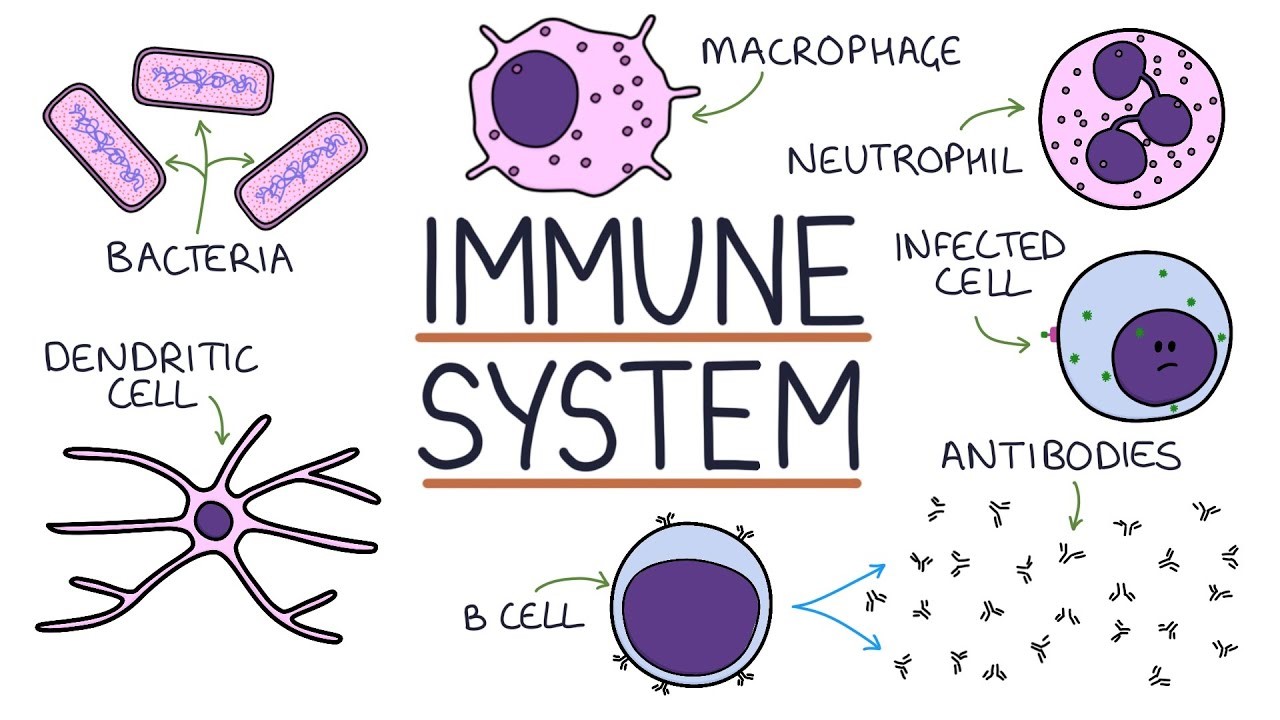
The group is interested in the study of the immune response from a multidisciplinary perspective that includes genomic, biochemical, proteomic, in vivo and biotechnological models aimed at the design of therapeutic strategies against various chronic, infectious and rare diseases that have a clear immunological component in their etiology.
The current specific objectives focus on:
- Antigenic presentation: Identification of antigenic presentation rules for their application in the design of therapeutic treatments including vaccines.
- Study of CD69 function and its regulation; its use as a therapeutic target in the mobilization of hematopoietic precursors and in the potentiation of the immune response mediated by CD69 with the potentiation of vaccines using the vaccinia virus as a vector.
The group is interested in the study of the immune response from a multidisciplinary perspective that includes genomic, biochemical, proteomic, in vivo and biotechnological models aimed at the design of therapeutic strategies against various chronic, infectious and rare diseases that have a clear immunological component in their etiology.
The current specific objectives focus on:
- Antigenic presentation: Identification of antigenic presentation rules for their application in the design of therapeutic treatments including vaccines.
- Study of CD69 function and its regulation; its use as a therapeutic target in the mobilization of hematopoietic precursors and in the potentiation of the immune response mediated by CD69 with the potentiation of vaccines using the vaccinia virus as a vector.