



We protect your health through science
Investigation
Immune Presentation and Regulation
Research Lines
Content with Investigacion .
Patogénesis e inmunidad viral
A) Desarrollo de metodología point of care frente a hepatitis virales en el reservorio del VIH
El tratamiento precoz de las hepatitis virales reduce el deterioro progresivo del hígado y evita el trasplante hepático. Resulta esencial disponer de métodos diagnóstico rápido, sencillos y coste-efectivos, para el cribado, en la vigilancia epidemiológica y el diagnóstico virológico temprano de enfermedades virales hepáticas. Línea de investigación llevada a cabo en colaboración con el Dr. Ricardo Madrid (BioAssays S.L).
B) Impacto de la coinfección y eliminación de las hepatitis virales en el reservorio del VIH
La coinfección por el VHC impacta en el reservorio del VIH, principal obstáculo para eliminar esta infección. Se realizan distintos abordajes del estudio del reservorio del VIH en pacientes VIH+ con distinta exposición al VHC, y tras su eliminación espontánea o con antivirales de acción directa, con el objetivo de identificar y proponer nuevas estrategias de eliminación/curación del VIH. Esta línea de Investigación se desarrolla en el seno del Grupo Multidisciplinar COVIHEP (COinfección por VIH y HEPatitis).
C) Identificación de marcadores de senescencia inducida por virus y estrategias paliativas
Las infecciones virales inducen una senescencia acelerada cuyo impacto afecta a la evolución de la enfermedad y a posibles comorbilidades. Nuestro objetivo es profundizar en los mecanismos que desencadenan la inmunosenescencia y estrés oxidativo asociado a infecciones virales e identificar nuevas estrategias terapéuticas que palien el envejecimiento prematuro en estos pacientes.
D) Impacto de SARS-CoV-2 en la infección por el VIH y hepatitis virales
Se desconocen las complicaciones a largo plazo de la infección por SARS-CoV-2 en personas que viven con VIH y/o hepatitis virales que podrían experimentar un desarrollo clínico de la enfermedad más desfavorable. La identificación de biomarcadores de gravedad no invasivos (como en sangre/plasma) resulta de especial interés en estos pacientes.
E) Origen y Epidemiología de la enfermedad hepática
Estudio del origen y la dinámica de transmisión espacio-temporal de los virus hepáticos, clave para el entendimiento de su evolución y propagación, así como en el análisis de la carga global de las enfermedades, lo que podría ayudar a desarrollar programas de Salud Pública encaminados a prevenir y frenar su transmisión.
F) Impacto de la viremia de bajo grado del VIH
Se desconoce tanto el origen como los mecanismos de la viremia de bajo grado, presente entre el 3 y 16% que las personas que viven con VIH. Su presencia podría desembocar en un mayor riesgo de sufrir comorbilidades relacionadas con enfermedades cardiovasculares, cáncer y trastornos metabólicos.
G) Calidad del aire y su impacto en poblaciones vulnerables
La contaminación del aire agrava las patologías infecciosas y la salud cardiovascular y respiratoria. La evolución de la enfermedad en personas con enfermedades crónicas con VIH y hepatitis puede verse agravada tras la inhalación continua de contaminantes ambientales. Línea de investigación llevada a cabo en colaboración con el CNSA y el CNE del ISCIII.
H) Coinfección por VHE y protistas entéricos en el reservorio humano y animal: vigilancia e investigación
La coinfección entre virus y protistas entéricos podría influir en la cotransmisión y patogenicidad de dichas especies. Línea de investigación, bajo el concepto “One Health” que se centra en la vigilancia y estudio de la coinfección del VHE y protistas entéricos. Colaboración con el grupo multidisciplinar COHEPROEN (COinfección HEpatitis y PROtistas ENtéricos).
Research projects
Content with Investigacion .
A) Proyectos de investigación financiados en los últimos 10 años
-
Como investigadora principal
1. Impact of long-tem HCV eradication on HIV infection: integration of Immune-virologic HIV markers, host transcriptome, and plasma microbiome data. Ministerio de Ciencia (Proyectos de Generación de Conocimiento 2021). Expediente: PID2021-126781OB-I00 financiado por por MICIU/AEI /10.13039/501100011033 y por FEDER, UE Septiembre 2022 - agosto 2025. 157.300€.

2. Identificación de biomarcadores inmunológicos asociados a las infecciones virales crónicas hepatitis C y VIH relacionados con la infección por SARS-COV-2 y su pronóstico. Consejo de Educación e Investigación. Comunidad de Madrid. Doctorados Industriales. Expediente: IND2020/BMD-17373. 2021-2024. 150.000€.
3. Impacto de la erradicación y aclaramiento del VHC con los nuevos antivirales de acción directa, en pacientes coinfectados VIH/VHC en el reservorio VIH en sangre periférica y sistema inmune. Organismo Financiador: Fondo de Investigación Sanitaria (ISCIII). Expediente: PI18CIII/00020. 2019-2021. 154.000€.
4. Desarrollo de un sistema de diagnóstico in vitro para la determinación del virus de la Hepatitis C mediante nanosondas. Organismo Financiador: Comunidad Autónoma de Madrid. Doctorados Industriales. Expediente: IND2017/BMD7683. 2018-2020. 128.000€.
5. Validación preclínica de un nuevo método de diagnóstico in vitro para la determinación de la infección por el virus de la hepatitis C en humanos. Organismo financiador: BioAssays SL. Expediente: MVP-325/19. 2019-2023. 193.400€.
6. Estudio del reservorio VIH en sangre periférica y su relación con la infección por VHC, sistema inmune y perfil de microARNs. Organismo Financiador: Fondo de Investigación Sanitaria (ISCIII). Expediente: PI15CIII/00031. 2016-2018. 154.000€.
7. Development of a cell-based assay to characterize resistance mutations and drug susceptibility to protease inhibitors against hepatitis C virus and evaluation in vivo as predictors of failure. Organismo Financiador: Fondo de Investigación Sanitaria (ISCIII). Expediente: CP13/00098. 2014-2016. 120.000€.
- Como investigadora asociada
1. URBANOME (Urban Observatory for Multi-participatory Enhancement of Health and Wellbeing). IP: Saúl García Dos Santos-Alves. Agencia Financiadora: Horizon 2020 H2020-SC1-BHC-2018-2020 / H2020-SC1-2020-Two-Stage-RTDework. Call topic: Innovative actions for improving urban health and wellbeing - addressing environment, climate and socioeconomic factors". Expediente: 945391. 01/04/2021 - 01/04/2025. 268.000 €.
2. Antibiotics, hormones, persistent and mobile organic contaminants and pathogens, the complex mixture in agriculture and livestock scenario. Risk to health or natural attenuation? (Nat4Health). IP: Ana de Santiago y Raffaella Meffe. Agencia Financiadora: Ministerio de ciencia e Innovación. Convocatoria: Proyectos I+D+i 2020. Modalidad: Retos Investigación. Expediente: PID2020-118521RB-I00. 01/09/2021 - 01/09/2025. 170.000 €.
3. Inmunopatogenía del VIH. Red Temática De Investigación Cooperativa (RIS). Expediente: RD16CIII/00025. IP: Salvador Resino. (Instituto de Salud Carlos III). 01/01/2017-06/03/2022. 250.000 €.
4. Efectos de la erradicación del VHC en pacientes con cirrosis avanzada por VHC. Una aproximación traslacional. Investigador principal: Salvador Resino García. Organismo Financiador: Fondo de Investigación Sanitaria (ISCIII). Expediente: PI14/CIII/00011. 2016-2018. 154.000 €.
5. Desarrollo y mecanismo de acción de dendrímeros como microbicidas para frenar la infección por el VIH por transmisión sexual (vaginal y anal): prueba de concepto. IP: Mª Angeles Muñoz Fernández. Organismo Financiador: Fondo de Investigación Sanitaria (ISCIII). Expediente: PI13/02016. 2014-2016. 180.000 €.
6. Peptides-associated dendrimers in dendritic cells for the development of new nano-HIV vaccines. DENPEPTHIV. EuroNanoMed. IP: Mª Angeles Muñoz Fernández. Organismo financiador: Instituto de Salud Carlos III. Proyectos al amparo del Espacio Europeo de Investigación dentro del VII Programa Europeo. FP7 Cooperation Work Programme: Health-2010. Expediente: PS09102669. 2010-2013. 220.000 €.
Publications
Viral Characteristics Associated with the Clinical Nonprogressor Phenotype Are Inherited by Viruses from a Cluster of HIV-1 Elite Controllers
Casado C, Marrero-Hernández S, Márquez-Arce D, Pernas M, Marfil S, Borràs-Grañana F, Olivares I, Cabrera-Rodríguez R, Valera MS, de Armas-Rillo L, Lemey P, Blanco J, Valenzuela-Fernández A, Lopez-Galíndez C. mBio. 2018 Apr 10,9(2): e02338-17
PUBMED DOIViral and Cellular Factors Leading to the Loss of CD4 Homeostasis in HIV-1 Viremic Nonprogressors.
Colomer-Lluch M, Kilpelainen A, Pernas M, Peña R, Ouchi D, Jimenez-Moyano E, Dalmau J, Casado C, López-Galíndez C, Clotet B, Martinez-Picado J, Prado JG. J Virol. 2022 Jan 12, 96(1): e0149921. doi: 10.1128/JVI.01499-21. Epub 2021 Oct 20.
PUBMED DOIContribution of the HIV-1 Envelope Glycoprotein to AIDS Pathogenesis and Clinical Progression
Valenzuela-Fernández A, Cabrera-Rodríguez R, Casado C, Pérez-Yanes S, Pernas M, García-Luis J, Marfil S, Olivares I, Estévez-Herrera J, Trujillo-González R, Blanco J, Lopez-Galindez C. Biomedicines. 2022 Sep 2,10(9):2172.
PUBMED DOIPrevalence of HIV-1 dual infection in LTNP-Elite Controllers
María Pernas, Concepción Casado, Virginia Sandonis, Carolina Arcones, Carmen Rodríguez , Ezequiel Ruiz-Mateos , Eva Ramírez de Arellano , Norma Rallón , Margarita Del Val , Eulalia Grau, Mariola López-Vazquez , Manuel Leal , Jorge del Romero , Cecilio López Galíndez . (2013). J.of AIDS. 64, 3, 225-231. IF 4.262
PUBMED DOIA Genome-to-Genome Analysis of Associations between Human Genetic Variation, HIV-1 Sequence Diversity, and Retroviral Control.
Istvan Bartha Jonathan M Carlson, Chanson J Brumme, Paul J McLaren, Zabrina L Brumme, Mina John, David W Haas, Javier Martinez-Picado, Cecilio López Galíndez, Andri Rauch, Huldrych F Günthard, Enos Bernasconi, Pietro Vernazza, Thomas Klimkait, Sabine Yerly, Jennifer Listgarten, Nico Pfeifer, Zoltan Kutalik, Todd M Allen, Viktor Müller, P Richard Harrigan, David Heckerman, Amalio Telenti, and Jacques Fellay, for the HIV Genome-to-Genome Study and the Swiss HIV Cohort Study. (2013). Elife. 2013;2:e01123
PUBMED DOIContent with Investigacion .
-
Óscar Zaragoza Hernández
Research Professor
ORCID code: 0000-0002-1581-0845
Dr. Oscar Zaragoza graduated in Biology from the Complutense University of Madrid in 1995 and obtained his PhD from the Autonomous University of Madrid. He completed his doctoral thesis (2000) at the CSIC under the direction of Dr. Juana María Gancedo on the topic of glucose catabolite repression in Saccharomyces cerevisiae. During this period, he was also tutored by Dr. Carlos Gancedo in collaborative projects, that allowed him to start working with the pathogenic yeast Candida albicans.
After a brief postdoctoral stay in the same laboratory, in 2001, he joined the laboratory of Dr. Arturo Casadevall (Albert Einstein College of Medicine, New York), where he specialized in research into virulence mechanisms of pathogenic fungi, mainly Cryptococcus neoformans. In 2006 he joined the National Center for Microbiology of the ISCIII thanks to a “Ramón y Cajal” contract and he became staff scientist in 2009. Currently, he occupies the rank of Research Professor of the OPIs.
During his career, he has published more than 140 articles, 4 book chapters and a popular book ("Microscopic fungi: Friends or Enemies?"). He has obtained public and private projects, and participates as CoIP of a CIBERINFEC group. He has supervised seven doctoral theses, and numerous master's thesis projects.
-
Alba Torres Cano
PhD student (FPI contract)
ORCID code: 0009-0008-3151-1803
Alba Torres Cano has a degree in Health Biology from the University of Alcalá de Henares (UAH), and completed the master's degree "Microbiology Applied to Public Health and Infectious Diseases" from the UAH. He completed his master's thesis at the CNM under the direction of Dr. Zaragoza in 2022, focusing on pathogenic yeasts. In that year, he joined the ISCIII with an FPI predoctoral contract under the direction of Dr. Óscar Zaragoza.
-
-
Alejandra Lora Plaza
PhD student (FPI contract)
ORCID code: 0009-0004-4344-1583
Alejandra Lora Plaza graduated in Health Biology and completed the Master in Applied Microbiology in Public Health and Infectious Diseases Research (2021) at the University of Alcalá in both cases. She joined the Department of Microbiology of the Faculty of Biology of the University of Barcelona to carry out her internship and her final degree work. Subsequently, she did her Master's thesis at the Microbiology Laboratory of the Hospital Universitario Príncipe de Asturias. In 2022 she joined the Public Health and Epidemiology group at the Marqués de Valdecilla Research Institute (IDIVAL), Santander, as a research support technician. In 2024 he joined Dr. Concha Gil's group in the Department of Microbiology and Parasitology at the Faculty of Pharmacy of the Complutense University of Madrid focusing on yeasts.
In 2025 she joined ISCIII with a predoctoral FPI fellowship under the direction of Dr. Óscar Zaragoza.
List of staff
Additional Information
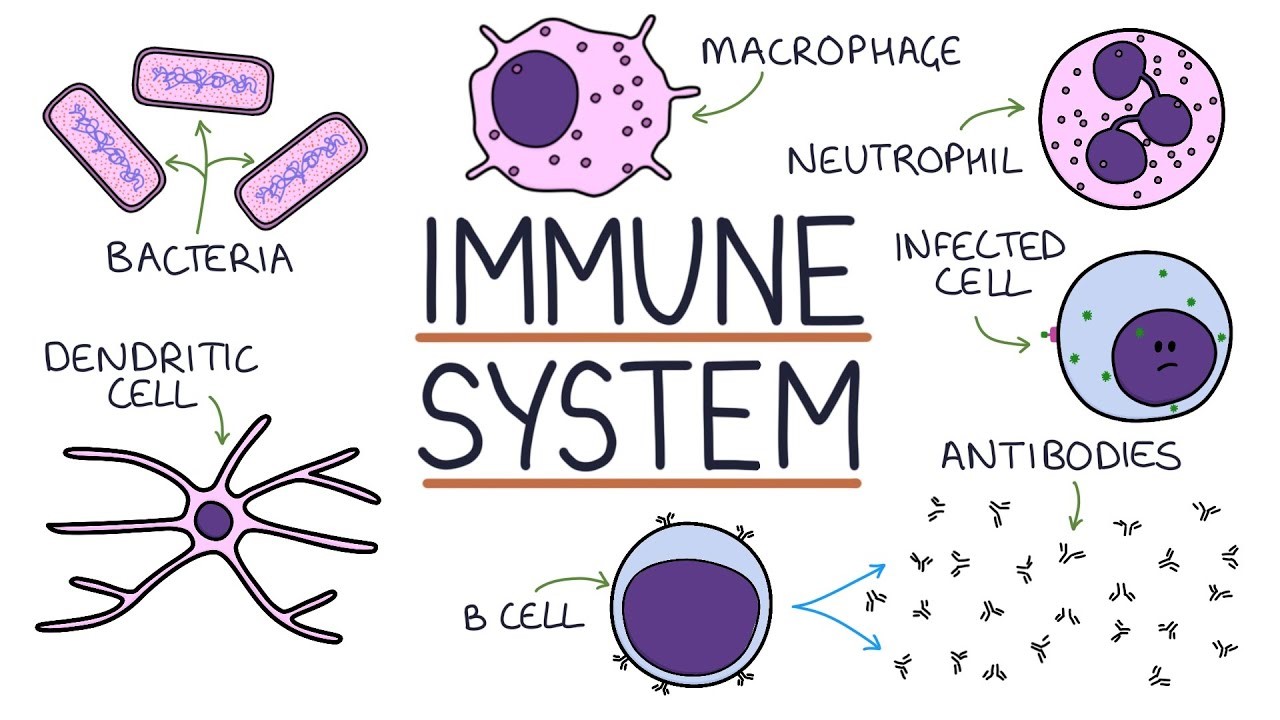
The group is interested in the study of the immune response from a multidisciplinary perspective that includes genomic, biochemical, proteomic, in vivo and biotechnological models aimed at the design of therapeutic strategies against various chronic, infectious and rare diseases that have a clear immunological component in their etiology.
The current specific objectives focus on:
- Antigenic presentation: Identification of antigenic presentation rules for their application in the design of therapeutic treatments including vaccines.
- Study of CD69 function and its regulation; its use as a therapeutic target in the mobilization of hematopoietic precursors and in the potentiation of the immune response mediated by CD69 with the potentiation of vaccines using the vaccinia virus as a vector.
The group is interested in the study of the immune response from a multidisciplinary perspective that includes genomic, biochemical, proteomic, in vivo and biotechnological models aimed at the design of therapeutic strategies against various chronic, infectious and rare diseases that have a clear immunological component in their etiology.
The current specific objectives focus on:
- Antigenic presentation: Identification of antigenic presentation rules for their application in the design of therapeutic treatments including vaccines.
- Study of CD69 function and its regulation; its use as a therapeutic target in the mobilization of hematopoietic precursors and in the potentiation of the immune response mediated by CD69 with the potentiation of vaccines using the vaccinia virus as a vector.