



We protect your health through science
Investigation
Serology
Research Lines
Content with Investigacion .
Virus entéricos
1. Vigilancia microbiológica y epidemiológica a nivel nacional de las infecciones causadas por enterovirus y parechovirus y de los casos de parálisis flácida aguda en menores de 15 años. Caracterización, asociación clínica y epidemiología molecular.
2. Investigación de los enterovirus y parechovirus que causan infecciones neurológicas y sistémicas severas en población pediátrica. Estudio de los factores virológicos implicados en la patogenicidad.
3. Estudio virológico de muestras ambientales (aguas residuales y tratadas para consumo) de la CAM.
4. Estudio virológico (diagnóstico y caracterización) de las infecciones gastrointestinales causadas por virus (norovirus, rotavirus y otros). Epidemiología molecular y caracterización de brotes.
Investigación y vigilancia de los poliovirus y la poliomielitis
El Laboratorio de Enterovirus (actualmente de Virus Entéricos) del CNM fue designado Laboratorio Nacional de Poliovirus en 1998 y desde entonces es certificado anualmente por la OMS, como parte del Plan Global de Erradicación de la Poliomielitis. Es responsable, junto a 3 laboratorios primarios en 3 CCAA, de la vigilancia de la poliomielitis a nivel nacional, estudiando e investigando (clínica, epidemiológica y virológicamente) todos los casos compatibles, incluidos los de parálisis flácida aguda en menores de 15 años (enfermedad de notificación obligatoria) para descartar la presencia y circulación de poliovirus en España.
Además, desde 1999 (y gracias a un convenio con el CYII) posee toda la infraestructura y metodología necesaria para realizar vigilancia medioambiental en aguas, tanto para medir la calidad de las aguas potables de ETAP, como para monitorizar la excreción de virus por parte de la población con el estudio de la presencia de poliovirus y otros enterovirus en aguas residuales de EDAR. Esto ha permitido que, a partir de marzo de este año, se estén realizando, además, ensayos de presencia de SARS-CoV-2 en las muestras procedentes de diferentes EDAR situadas en la CAM.
Investigación y referencia en infecciones por enterovirus y parechovirus
El Laboratorio también es Laboratorio de Referencia para las infecciones por Enterovirus y Parechovirus realizando: 1) el diagnostico virológico en muestras clínicas; 2) la caracterización de todos los enterovirus y parechovirus detectados (Programa de Vigilancia Microbiológica del CNM); 3) el desarrollo, mantenimiento y transferencia de métodos de diagnóstico y tipado, tanto moleculares como de cultivo viral; y 4) la investigación para profundizar en el conocimiento de aquellos virus implicados en casos de excepcional importancia clínica o epidemiológica. La larga experiencia del grupo en la propagación de cultivos virales de enterovirus y en técnicas celulares y moleculares de caracterización, ha permitido que el CNM posea una amplia colección de cepas, muy valiosa para la investigación de estos virus.
Investigación y referencia en infecciones gastrointestinales causadas por virus
Desde 2016, el laboratorio realiza: 1) el diagnostico virológico de Norovirus, Rotavirus, Adenovirus 40/41, Astrovirus y otros virus productores de gastroenteritis aguda en muestras clínicas; 2) el genotipado de los virus detectados y la caracterización de brotes; 3) el desarrollo y mantenimiento de métodos de diagnóstico y genotipado; y 4) la investigación básica y epidemiológica de aquellos virus de mayor importancia clínica.
Research projects
Content with Investigacion .
Proyectos de investigación financiados en los últimos 5 años
- Investigación de las infecciones neurológicas graves en niños causadas por enterovirus emergentes en España: EV-A71 y EV-D68 (PI18CIII/00017). Financiación: ISCIII. 2019-2021. IP: M. Cabrerizo
- Metagenomic sequencing to identify viral etiologies in undiagnosed cases of meningitis and encephalitis (PI20CIII/00005). Financiación: ISCIII. 2021-2023. IP: M.D. Fernández-García
- Investigación en infecciones por enterovirus y parechovirus que causan patologías neurológicas y sistémicas graves en población infantil (PI15CIII/00020). Financiación: ISCIII. 2016-2019. IP: M. Cabrerizo
- Aplicación de la secuenciación masiva para el diagnóstico de infecciones neurológicas de origen vírico no filiadas (PI-0216-2019). Financiación: Junta de Andalucía, Consejería de Salud y Familias. 2019-2021. IP: M.D. Fernández-García (2019)/ Ana Belen Pérez-Jiménez (2020-21)
- Epidemiología y patogenia molecular de los enterovirus y parechovirus asociados a sepsis e infecciones neurológicas en población infantil en España (PI12/00904). Financiación: ISCIII. 2013-2016. IP: M. Cabrerizo
Otros proyectos de investigación relevantes en los que ha colaborado o colabora el grupo
- Dinámica de colonización e infección por E. coli enteroagregativo en poblaciones pediátricas y su asociación con la composición de la microbiota intestinal mediante análisis metagenómico (PI18CIII/00043). Financiación: ISCIII. 2019-2021. IP: S. Sánchez
- Paving the way for implementing a syndromic diagnostic scheme at the CNM for the diagnosis of diarrhoea-causing pathogens in stool samples based on molecular and metagenomics methods (PI19CIII/00029). Financiación: ISCIII. 2020-2022. IP: D. Carmena
- Engineering lactobacilli for intranasal immunization against the emerging enterovirus D68 (EV-D68) infections and prevention of acute flaccid myelitis. Financiación: ESCMID. 2019-2020. IP: M.C. Póvoa-Cabral
- Análisis epidemiológico y virológico de los agentes virales incluidos en la vacuna triple vírica: nuevos retos (PI15CIII/00023). Financiación: ISCIII. 2016-2019. IP: F. de Ory/A. Fernández
- Epidemiología general y molecular de la hepatitis E en España: ¿una zoonosis emergente? (PI080865). Financiación: ISCIII. 2009-2012. IP: M. Fogeda
- Etiología de las meningitis y encefalitis víricas en España (PI07/90154). Financiación: ISCIII. 2008-2010. IP: F. de Ory
- Investigation of the dynamics and geography of the spread of recombinant forms of human enteroviruses (WT081173MA). Financiación: Wellcome Trust. 2007-2010. IP: P. Simmonds.
Convenios
- Servicios para la realización de estudios virológicos previstos en el agua procedentes para Canal de Isabel II-Gestión (MVP-207/18). Financiación: Canal de Isabel II. 2018-2021. IP: M. Cabrerizo
- Análisis virológico en muestras de aguas procedentes del Canal de Isabel II (MVI-1005/99). Financiación: Canal de Isabel II. 2016-2017. IP: M. Cabrerizo
Publications
Interruption of onchocerciasis transmission in Bioko Island: Accelerating the movement from control to elimination in Equatorial Guinea
5. Herrador Z, Garcia B, Ncogo P, Perteguer MJ, Rubio JM, Rivas E, Cimas M, Ordoñez G, de Pablos S, Hernández-González A, Nguema R, Moya L, Romay-Barja M, Garate T, Barbre K, Benito A. Interruption of onchocerciasis transmission in Bioko Island: Accelerating the movement from control to elimination in Equatorial Guinea. PLoS Negl Trop Dis. 2018 May 3;12(5):e0006471.
PUBMED DOILAMP kit for diagnosis of non-falciparum malaria in Plasmodium ovale infected patients
7. Thuy-Huong Ta-Tang, Sergio L. B. Luz, Francisco J. Merino, Isabel de Fuentes, Rogelio López-Vélez, Tatiana A. P. Almeida, Marta Lanza, Cláudia M. M. Abrahim, and José M. Rubio (2016). Atypical Mansonella ozzardi Microfilariae from an Endemic Area of Brazilian Amazonia. Am. J. Trop. Med. Hyg 95(3), 2016, pp. 633–636.
PUBMED DOIComparison of Imported Plasmodium ovale curtisi and P. ovale wallikeri Infections among Patients in Spain, 2005-2011.
9. Rojo-Marcos G, Rubio-Muñoz JM, Ramírez-Olivencia G, García-Bujalance S, Elcuaz-Romano R, Díaz-Menéndez M, Calderón M, García-Bermejo I, Ruiz-Giardín JM, Merino-Fernández FJ, Torrús-Tendero D, Delgado-Iribarren A, Ribell-Bachs M,Arévalo-Serrano J, Cuadros-González J (2014). Comparison of Imported Plasmodium ovale curtisi and P. ovale wallikeri Infections among Patients in Spain, 2005-2011. Emerg Infect Dis. 2014 Mar;20(3):409-16.
PUBMED DOIArbovirus surveillance: first dengue virus detection in local Aedes albopictus mosquitoes in Europe, Catalonia, Spain, 2015.
1. C Aranda; MJ Martínez; T Montalvo; R Eritja; J Navero-Castillejos; E Herreros; E Marqués; R Escosa; I Corbella; E Bigas; L Picart; M Jané; I Barrabeig; N Torner; S Talavera; Ana Vázquez; María Paz Sánchez-Seco; Nuria Busquets. Arbovirus surveillance: first dengue virus detection in local Aedes albopictus mosquitoes in Europe, Catalonia, Spain, 2015.Eurosurveillance. 23 - 47, 2018.
PUBMED DOIPhylogenetic Characterization of Crimean-Congo Hemorrhagic Fever Virus, Spain
2. Eva Ramírez de Arellano; Lourdes Hernández; M José Goyanes; Marta Arsuaga; Ana Fernández Cruz; Anabel Negredo; María Paz Sánchez Seco. Phylogenetic Characterization of Crimean-Congo Hemorrhagic Fever Virus, Spain. Emerging infectious diseases. 23 - 12, pp. 2078 - 2080. 12/2017. ISSN 1080-6059
PUBMED DOIToscana virus infection in Catalonia (Spain).
4. Neus Cardeñosa; Diana Kaptoul; Pedro Fernández Viladrich; Carles Aranda; Fernando de Ory; Jordi Niubó; Pere Plans; Angela Domínguez; Giovanni Fedele; Antonio Tenorio; María Paz Sánchez Seco. Toscana virus infection in Catalonia (Spain). Vector borne and zoonotic diseases (Larchmont, N.Y.). 13 - 4, pp. 273 - 278. 04/2013. ISSN 1557-7759
PUBMED DOI. Autochthonous Crimean-Congo Hemorrhagic Fever in Spain
5. Anabel Negredo; Fernando de la Calle Prieto; Eduardo Palencia Herrejón; Marta Mora Rillo; Jenaro Astray Mochales; María P Sánchez Seco; Esther Bermejo Lopez; Javier Menárguez; Ana Fernández Cruz; Beatriz Sánchez Artola; Elena Keough Delgado; Eva Ramírez de Arellano; Fátima Lasala; Jakob Milla; Jose L Fraile; Maria Ordobás Gavín; Amalia Martinez de la Gándara; Lorenzo López Perez; Domingo Diaz Diaz; M Aurora López García; Pilar Delgado Jimenez; Alejandro Martín Quirós; Elena Trigo; Juan C Figueira; Jesús Manzanares; Elena Rodriguez Baena; Luis Garcia Comas; Olaia Rodríguez Fraga; Nicolás García Arenzana; Maria V Fernández Díaz; Victor M Cornejo; Petra Emmerich; Jonas Schmidt Chanasit; Jose R Arribas. Autochthonous Crimean-Congo Hemorrhagic Fever in Spain.The New England journal of medicine. 377 - 2, pp. 154 - 161. 13/07/2017. ISSN 1533-4406
PUBMED DOIZika Virus Screening among Spanish Team Members After 2016 Rio de Janeiro, Brazil, Olympic Games
6. Natalia Rodriguez Valero; Alberto M Borobia; Mar Lago; Maria Paz Sánchez Seco; Fernando de Ory; Ana Vázquez; Jose Luis Pérez Arellano; Cristina Carranza Rodríguez; Miguel J Martínez; Alicia Capón; Elias Cañas; Joaquin Salas Coronas; Arkaitz Azcune Galparsoro; Jose Muñoz. Zika Virus Screening among Spanish Team Members After 2016 Rio de Janeiro, Brazil, Olympic Games. Emerging infectious diseases. 23 - 8, pp. 1426 - 1428. 08/2017. ISSN 1080-6059
PUBMED DOIContent with Investigacion .
-
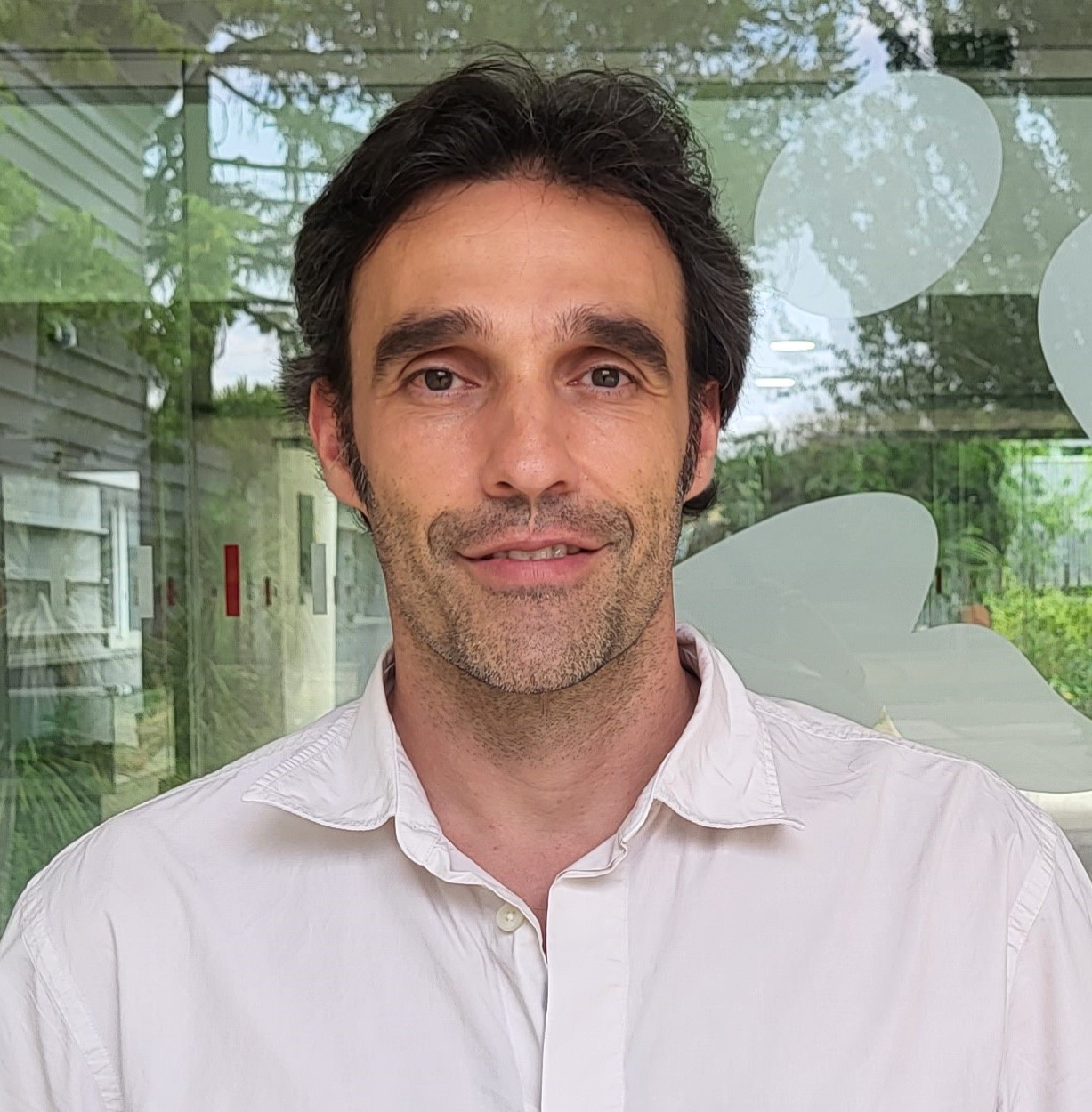
Javier García Pérez
Investigador Doctor
ORCID code: 0000-0001-7551-7803
Graduated in Biochemistry (1999) and Molecular Biology (2000) from the Autonomous University of Madrid (UAM), he obtained a predoctoral fellowship “ISCIII” in the AIDS Immunopathology laboratory, where he developed new techniques based on recombinant viruses. His doctoral thesis focused on the application of this technological development to the study of the replicative capacity of HIV-1 and its resistance to antiretroviral drugs, obtaining the degree of Doctor of Science from the UAM in 2007.
Thanks to a short postdoc in 2008 and several stays between 2009 and 2015 at the Viral Pathogenesis Unit of the Institut Pasteur in Paris he extended his training in the study of HIV-1 envelope and tropism. Between 2015 and 2019 he rejoins the AIDS Immunopathology Unit at ISCIII, focusing his work on the study of the functional capacity of founder viruses, as well as variants of the virus with interest in Public Health due to its recent expansion in our country. He is currently leading a project on the study of a mutation in transportin 3 observed in patients with a very rare muscular dystrophy (LGMDD2) that confers protection against HIV-1 infection.
During the last 5 years he combines this activity in HIV-1 with the participation and leadership of different clinical trials and studies investigating the immunity generated in people vaccinated against SARS-CoV-2 infection.
Since 2024 he is a “Investigador Doctor fuera de Convenio” at the Spanish National Centre of Microbiology and he currently coordinates together with Dr. Francisco Díez Fuertes the AIDS Immunopathology Unit.
-
Francisco Díez Fuertes
Investigador Doctor Indefinido
ORCID code: 0000-0003-2413-9229
Degree in Biology from the University of León, PhD specialized in molecular virology from the Complutense University of Madrid in 2010 and master's degree in bioinformatics and computational biology from the same university in 2012. He has done research stays at University of Illinois at Urbana Champaign (USA) in 2010, Nebraska Center for Virology (USA) in 2011, Institut Pasteur (France) in 2013 and J. Craig Venter Institute (USA) in 2015-2016.
He joined the AIDS Immunopathology Unit in 2013 with a contract from the “Sara Borrell” postdoctoral program. After a period at the August Pi i Sunyer Biomedical Research Institute in Barcelona he rejoins the AIDS Immunopathology Unit in 2020 as a PhD researcher.
His lines of research have focused on the genomic and transcriptomic characterization of extreme phenotypes in HIV-1 infection, including long-term non-progressors and elite controllers. He collaborates with other laboratories of the center in the analysis of outbreaks caused by viruses with interest in Public Health, as well as in evolutionary studies on genomic epidemiology. Since 2020 he has led different clinical studies on COVID-19. Currently, he combines omics sciences with different bioinformatics tools to answer different scientific questions in the field of virology, especially in HIV-1 and SARS-CoV-2 research. He currently coordinates together with Dr. Javier García Pérez the AIDS Immunopathology Unit.
-

Nuria González Fernández
Investigadora Contratada indefinida
ORCID code: 0000-0002-0087-5144
She completed her PhD in 2007 (Universidad Autónoma de Madrid), focused on the development of an envelope recombinant virus system to characterize HIV-1 tropism, as well as on the study of the role of the chemokine CXCL12 in virus propagation at the infectious synapse. Part of this work was carried out in the laboratory of Dr. Quentin Sattentau at the University of Oxford.
During her postdoctoral period, she expanded her research on the mechanisms of HIV entry and specialized in the study of the neutralizing response. She developed a system to measure neutralizing activity, which has been used in clinical trials of HIV vaccine candidates. During a stay at the Vaccine Research Center, NIH (USA), she acquired experience in various techniques for the characterization of broadly neutralizing antibodies, leading to new collaborations and research projects, which she is currently developing in the AIDS Immunopathology Unit of the Carlos III Health Institute.
She has participated in research networks such as EAVI2020 (co-PI), CIBERINFEC, RIS and EUROPRISE (EU). Since 2014 she is a professor of the Master in Microbiology applied to Public Health and Infectious Diseases Research at the University of the University of Alcalá and, since 2023, of the Master in Human Immunodeficiency Virus Infection at the University Rey Juan Carlos.
-
Mercedes Bermejo Herrero
Investigadora post-doctoral contratada
ORCID code: 0000-0001-9909-8578
Degree and PhD in Biological Sciences (Biochemistry and Molecular Biology) from the Autonoma University of Madrid. Her doctoral thesis studied the expression of CXCR4 and SDF-1/CXCL12 in lymphocytes and dendritic cells and their implications in HIV-1 infection.
She has completed internships in various laboratories: the Immunology Department of the Gregorio Marañón University Hospital in Madrid, the Research Center of the 12 de Octubre University Hospital in Madrid (where she was head of the flow cytometry service) and is currently at the CNM (National Research Center) of the Carlos III Health Institute.
Her research interests have focused on the study of HIV biology and its interaction with the immune system. She has currently participated in clinical trials, CombiVacs and ENE-Covid Senior, and in collaboration with Hipra.
-
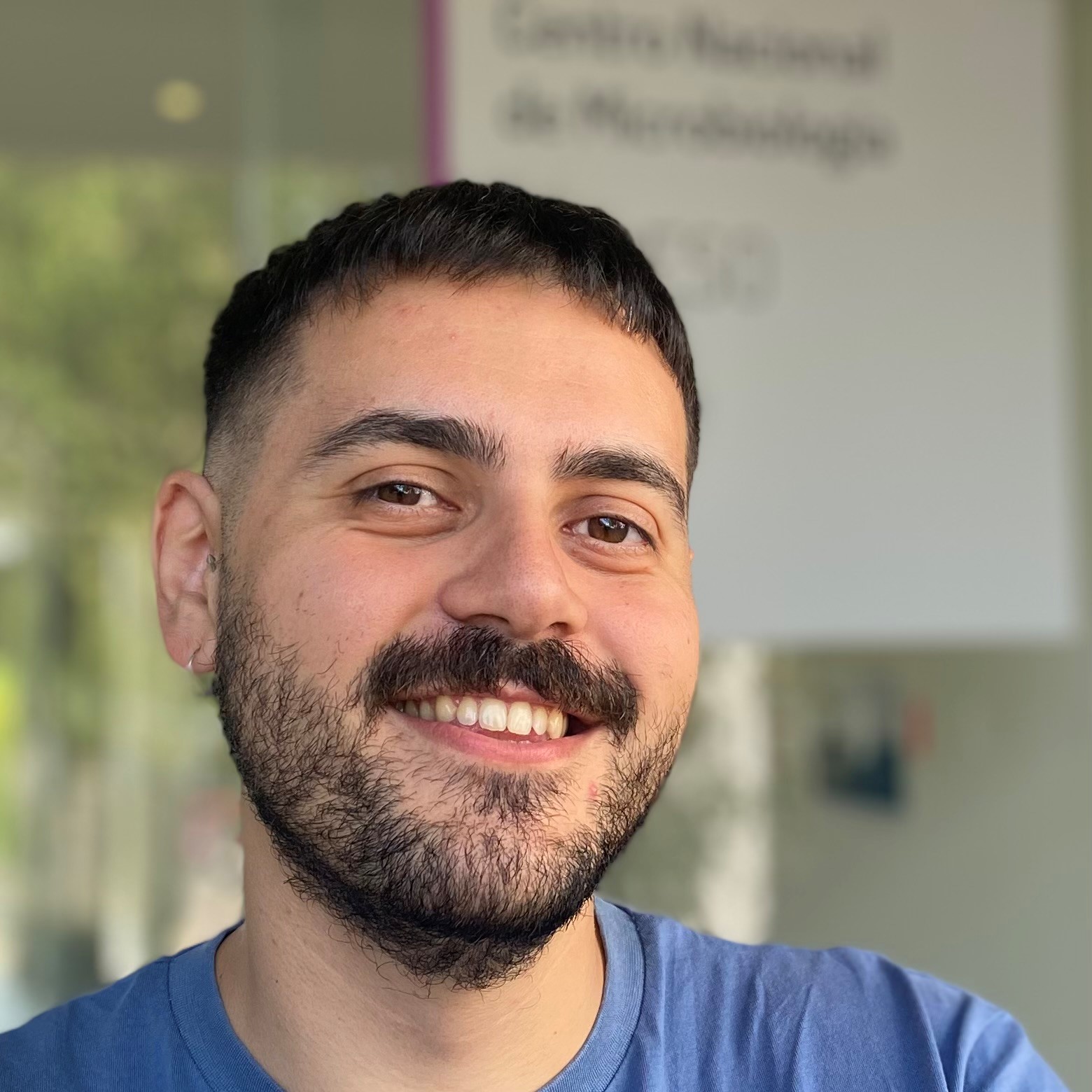
Rubén Ayala Suárez
Técnico Superior Especializado OPI
ORCID code: 0000-0002-1271-646.
Graduated in Biotechnology from the University of Cadiz (2015), Master in Microbiology of Infectious Diseases (2016) and PhD in Functional Biology from the University of Alcalá (2023). He carried out his PhD Thesis at the AIDS Immunopathology laboratory (CNM) on post-translational epigenetic mechanisms of natural control of HIV infection. In the same period, he completed a Diploma in Bioinformatics at Pablo de Olavide University (2021).
In 2023 he joined as a postdoctoral researcher in the HIV and AIDS research group at the August Pi i Sunyer Biomedical Research Institute (Barcelona), where he worked on the relationship of HIV and senescence until his incorporation as a Técnico Superior Especializado in the AIDS Immunopathology unit of the Spanish National Center of Microbiology (ISCIII) in 2025.
The main research projects in which he participates focus on resistance and natural control to HIV infection, as well as the evaluation of the immune response in vaccine trials, using mainly bioinformatics techniques focused on massive sequencing (RNA-Seq, single-cell, genome sequencing), the application of biostatistics and machine learning in data management.
-
-

Almudena Cascajero Díaz
Técnico de laboratorio
ORCID code: 0000-0002-9654-3100
Técnico Superior de Actividades Técnicas y Profesionales (Unidades de Inmunopatología del SIDA y Legionella, Centro Nacional de Microbiología). Clinical Diagnostic Laboratory Technician by IES Renacimiento de Madrid.
Experience in cloning techniques and characterization of neutralizing antibodies and participation in different projects on the pathogenesis of HIV by studying the viral envelope and the mechanisms of resistance to antiretroviral drugs. This experience has subsequently allowed me to participate in 5 multicenter clinical studies studying the immune response against different variants of SARS-CoV-2.
Since 2021, I also participate as a laboratory technician in the Legionella Unit as a support to the Spanish National Health System through the microbiological surveillance of the disease to contribute to the prevention and control of legionellosis.
-

Manuela Beltrán Vicente
Técnico de Laboratorio Indefinido
ORCID code: 0000-0001-6185-2280
Senior Technician of Technical and Professional Activities (AIDS Immunopathology Unit, Spanish National Center of Microbiology).
Clinical Analysis Laboratory Specialist Technician by IES Las Musas (Madrid, 1996). Demonstrated experience in the development of strategies against HIV, focused on the screening of compounds of both natural and synthetic origin with antiviral activity and identification and evaluation of potential therapeutic agents, as well as the screening of serological samples for the study of immunity for the identification of possible strategies for the development of vaccines against HIV. -

Silvia Jara Herrera
Técnico de Laboratorio Contratado CIBERINFEC
ORCID code: 0009-0001-2842-2040
Clinical and Biomedical Diagnostic Laboratory Technician.
She is currently working in the AIDS Immunopathology Unit of the Spanish National Center of Microbiology (ISCIII) with a contract through the Spanish Biomedical Research Networking Centre in Infectious Diseases (CIBER-INFEC).
She worked from March 2020 to September 2024 at the Department of Animal Health (Faculty of Veterinary Medicine) of the Universidad Complutense de Madrid.
She has experience in serological techniques (ELISA, Western Blot and IFA), cell culture and molecular biology.
-

Irene Díaz Marín
Técnico de laboratorio contratado
Clinical and Biomedical Diagnostics laboratory technician by CIFP Politécnico de Murcia-CESUR and graduated in Journalism from the Complutense University of Madrid.
She is currently at the AIDS Immunopathology Unit of the Spanish National Center of Microbiology with a contract of the “Garantía Juvenil” program (Community of Madrid), where she performs technical tasks in several research projects about HIV-1 and COVID-19.
-
Laura Capa Muñoz
Investigadora post-doctoral contratada
ORCID code: 0000-0002-0234-331X
Degree in Biological Sciences from the Universidad Autónoma de Madrid and PhD from the Universidad Complutense de Madrid, she has a master's degree in AIDS (Universidad Complutense de Madrid) and a master's degree in HIV infection (Universidad Rey Juan Carlos de Madrid).
Professional activity developed mainly in the study of infectious diseases, both in the field of basic research in public research centers and in the pharmaceutical industry, as well as in the field of public health and scientific management. She has worked in the international response to the HIV pandemic, representing the Ministry of Health as an expert in meetings of the European Commission and collaborated with the WHO. At the Instituto de Salud Carlos III, she has led the scientific management of national and European projects in the AIDS Immunopathology Unit and has been part of the Institute's Data Protection Working Group. Currently, she continues to coordinate the Cohort of Long-Term Non-Progressing Patients created by the Spanish AIDS Research Network (RIS), is part of the coordination team of the PhD Program in Biomedical Sciences and Public Health IMIENS-UNED-ISCIII and of the Institute's Working Group on Equality.
-
José Alcamí Pertejo
Profesor de Investigación
ORCID code: 0000-0003-0023-7377
Degree in Medicine from the Universidad Autónoma and Doctor of Medicine from the Universidad Complutense de Madrid. Specialist in Internal Medicine at Hospital 12 de Octubre (1982-1986). Training in immunology by means of a Research Staff grant (1986-1988). Research associate at the Viral Immunology Unit of the Pasteur Institute in Paris (1988-1992) where he obtained a Master in Immunopathology from the Institute. Research Professor since 2015, he directed the AIDS Immunopathology Unit at the National Microbiology Center since 2000. Coordinator since 2003 of the Spanish AIDS Research Network, he participates as group leader in European networks of excellence whose objective is the development of new vaccines, drugs and microbicides against HIV/AIDS: EUROPRISE, AIM-HIV, CHAARM and EAVI2020. Since 2019 he has been the Scientific Director of the HIV Unit at the Hospital Clinic of Barcelona. He has been Professor of Immunology and Virology at the European University of Madrid between 2012 and 2014 and Director of the Master in Public Health and Research in Infectious Diseases at the University of Alcalá de Henares from 2014 to 2023.
Author of more than 200 scientific articles in high impact journals such as Nature, Nature Reviews in Microbiology, Nature Medicine, Lancet and Journal of Clinical Investigation and more than 80 chapters in books. Scientific disseminator through his YouTube channel and on the X platform. He has been principal investigator of more than 50 research projects, including European projects and an American NIH project.
Consultant for FIS and ANEP since 1992, member of the scientific council of the French Evaluation Agency in AIDS between 2008 and 2014, evaluator of EU FP6, FP7 and H2020 programs, member of the external scientific council of the Global Health Institute (Hospital Ramón y Cajal), scientific collaborator of the EMA and AEMPS where he has been part of the biotechnology, antivirals and vaccines committees. Scientific member of the EU Vaccelerate consortium and associate editor of the Journal of Virology, Frontiers in Cellular and Infection Microbiology and HIV medicine.
-
Paloma Jiménez Santana
Técnico de laboratorio contratado


List of staff
Additional Information
The main objective of the Serology Laboratory is to provide services to centers of the National Health System, through the offer in the service portfolio of the National Microbiology Center, in carrying out diagnosis and reference through the detection of antibodies, both for primary diagnosis and for reference activities.
For this, it has the appropriate serological methodologies, many of them accredited by ENAC in accordance with the ISO15189 standard. Conducts test validation studies through collaboration agreements with private entities.
Participates in seroprevalence studies, carried out through management assignments with the Ministry of Health and with the Public Health authorities of different autonomous communities.
On the other hand, it participates in research projects in relation to infectious diseases, in recent years on neurological diseases, on emerging diseases and on the viruses included in the MMR vaccine.
The main objective of the Serology Laboratory is to provide services to centers of the National Health System, through the offer in the service portfolio of the National Microbiology Center, in carrying out diagnosis and reference through the detection of antibodies, both for primary diagnosis and for reference activities.
For this, it has the appropriate serological methodologies, many of them accredited by ENAC in accordance with the ISO15189 standard. Conducts test validation studies through collaboration agreements with private entities.
Participates in seroprevalence studies, carried out through management assignments with the Ministry of Health and with the Public Health authorities of different autonomous communities.
On the other hand, it participates in research projects in relation to infectious diseases, in recent years on neurological diseases, on emerging diseases and on the viruses included in the MMR vaccine.